Half-Day Trips From Reykjavik: What Fits in Three to Five Hours
Some days you have an afternoon, not a day. Two of the six routes we run finish inside half a day, and a handful of non-tour options fill the rest, but the famous full-day circuits do not compress no matter how the itinerary is written.
A genuine half day should leave room on either side of the experience. Compare verified durations and departure logistics before choosing wildlife, aurora, or geothermal bathing. Explore Whale Watching By Yacht
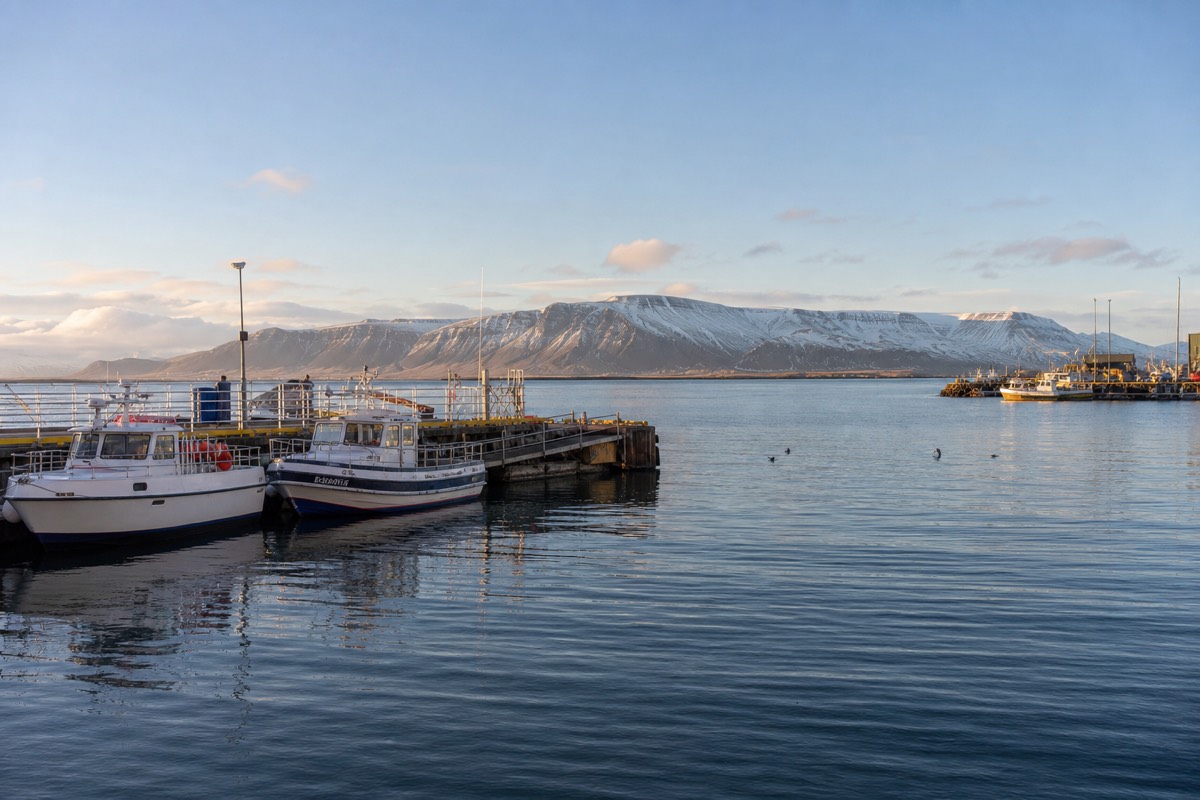
Booking Choice: A three-hour Old Harbour yacht cruise is a compact wildlife option. An aurora hunt uses four evening hours, while Sky Lagoon offers a geothermal break. Allow check-in and travel buffers; do not squeeze distant flagship routes into five hours. View Whale Watching By Yacht
The half-day line, drawn against real tour lengths
Only whale watching and the evening aurora hunt land under five hours. The flagship routes are long because the distances are, not because the itineraries are padded.
What counts as a half-day trip from Reykjavik?
Three to five hours door to door, which in practice means a destination within about an hour of the city or an activity that happens on the water or after dark. Of the six routes we run, only two qualify: whale watching at three hours and the evening aurora hunt at four.
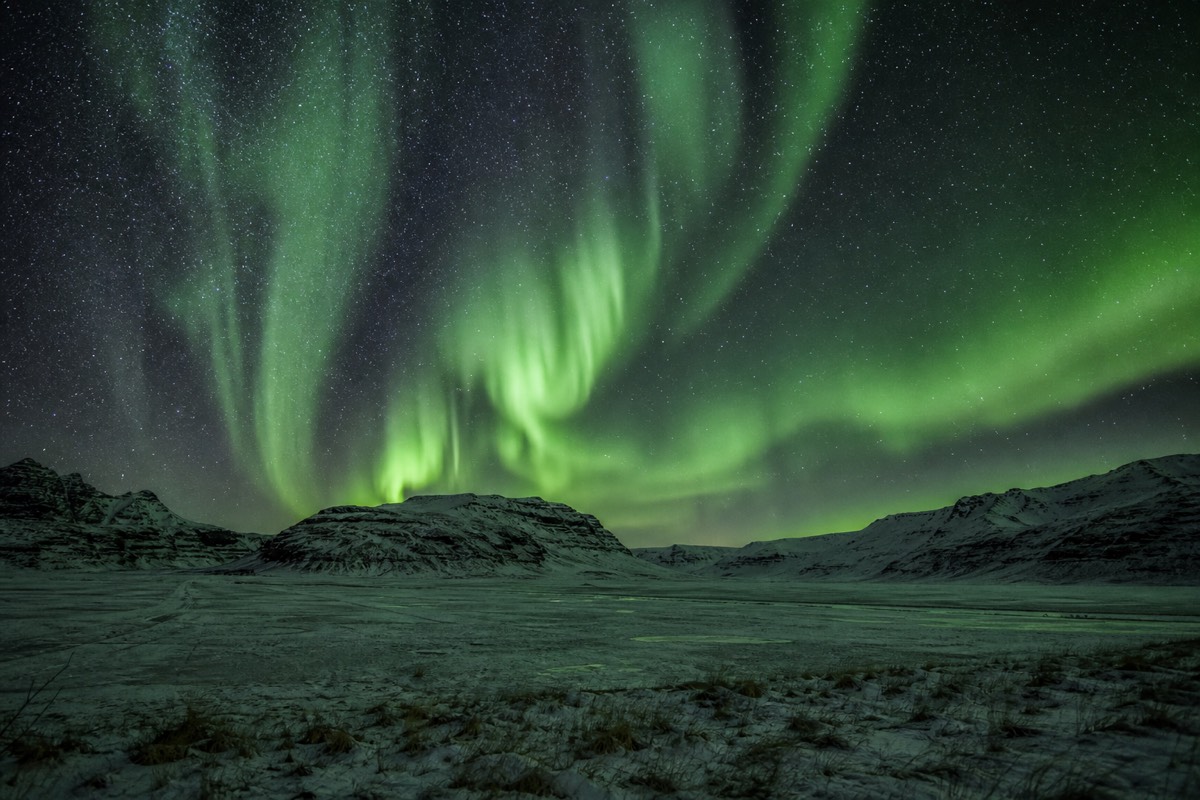
Both of them come from the same set of day trips from Reykjavik tours as the eleven-hour routes; they simply hand you the rest of the day back. That distinction matters more than it sounds, because the short formats are the ones that survive a bad forecast, a late arrival, a departure morning, or a travelling companion who has had enough of coaches.
This is a different question from how far you can physically get in a day, which is a matter of road distance and daylight. Here the constraint is the clock on one side of your day, and the answer is a list rather than a calculation.
| Half-day option | Time needed | Runs | Best slot |
|---|---|---|---|
| Whale watching from the old harbour | 3 hrs | Year round | Morning for calm water, afternoon for light |
| Northern Lights hunt | 4 hrs | September to April | Evening, after dark |
| Reykjanes Peninsula loop | 4 to 5 hrs | Year round | Any; good on an arrival or departure day |
| Sky Lagoon | 2.5 to 4 hrs | Year round | Late afternoon into sunset |
| Blue Lagoon | 4 to 5 hrs including transfer | Year round | On the way to or from the airport |
| Reykjadalur hot spring river | 4 to 5 hrs | Best May to September | Morning, in daylight |
| Central Reykjavik on foot | 3 to 4 hrs | Year round | Whenever the weather closes something else |
Notice what is absent. There is no half-day Golden Circle, no half-day South Coast and no compressed glacier lagoon, because the driving alone eats the budget. Anything sold as a compressed version of those is a longer day with fewer stops rather than a genuine half day.
Why is whale watching the benchmark three-hour trip?
Because it starts five minutes from downtown. Departures leave the old harbour rather than a distant terminal, run about three hours on the water in Faxaflói Bay, and put you back in the centre with the rest of the day intact. Thermal overalls are provided, which is the detail that makes it work in February.
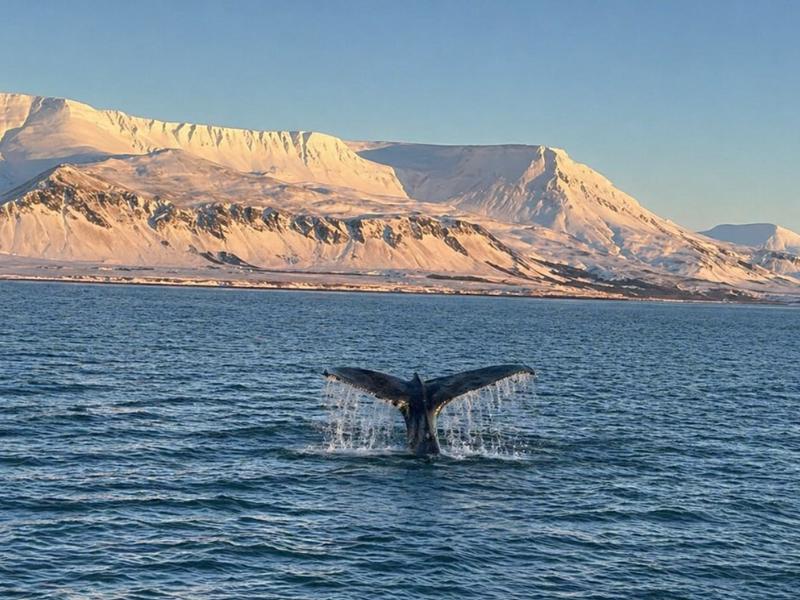
Faxaflói is genuinely productive water, sitting where cold and warm currents meet, and the bay holds minke whales and white-beaked dolphins year round with humpbacks moving through. Summer success rates reach 90 to 98 percent. Winter has changed noticeably: humpback sightings in the bay have climbed since 2021, and orca appear as they follow herring inshore. If no marine mammals are seen at all, the ticket converts to a free return trip, which removes most of the risk from booking a short weather window.
| Departure | What is better | What is worse | Pick it if |
|---|---|---|---|
| Morning | Calmer, glassier water; easier spotting of fins and blows | Colder on deck; earlier alarm | You are prone to seasickness |
| Early afternoon | Warmest part of the day; best light for photographs | Wind usually picks up after midday | You landed that morning |
| Late afternoon, summer | Low golden light; quieter boats | Choppier as the sea breeze builds | You want photographs more than comfort |
The one thing worth planning around is the puffin overlap. Puffins are ashore in Iceland from roughly mid-April to mid-August, nesting on the islands just off the harbour, so a summer sailing often doubles as a seabird trip. Outside those dates they are at sea and you will not see them from any boat. The seasonal detail sits in our guide to the best time for whale watching.
Does the Northern Lights hunt really only take four hours?
Yes, and it costs you no daylight at all. Departures leave after dark, drive 30 to 60 minutes out of the city's light dome to wherever the cloud forecast is thinnest, and return around midnight. The aurora season runs from late August to mid-April, so the trip only exists in the months when the day is short anyway.
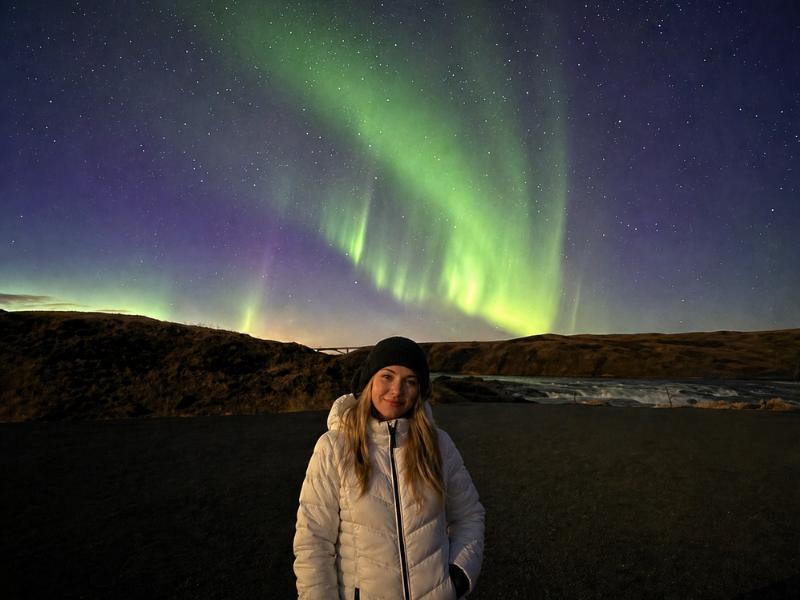
This is the most efficient item on the list for anyone with a packed itinerary, because it uses hours that a day trip cannot. You can finish an eleven-hour route, eat, and still make an aurora departure the same night if the forecast is good, which is a schedule that only works because both ends of the day are dark in winter.
The honest framing: nobody can promise the lights. What our departures carry instead is a free rebooking if the aurora does not appear, and an open ticket valid for three years if you leave the country without seeing them. Guides track cloud cover through the evening and change destination on the road, which is the single biggest advantage over driving yourself to a spot you read about online. Clear sky beats high solar activity almost every time.
Two things improve your odds more than anything technical. Book early in your stay so the free rebooking has room to work, and treat the tour as one of several attempts rather than the attempt. Month-by-month probabilities, including why February tends to outperform December, are in our guide to the best time for the Northern Lights.
What can you see on the Reykjanes Peninsula in half a day?
Lava fields, steaming geothermal ground, a continental rift you can walk across and the coast at Reykjanesviti, all within an hour of the city. Reykjanes is the closest genuinely dramatic landscape to Reykjavik, which makes it the natural half-day for arrival and departure dates.
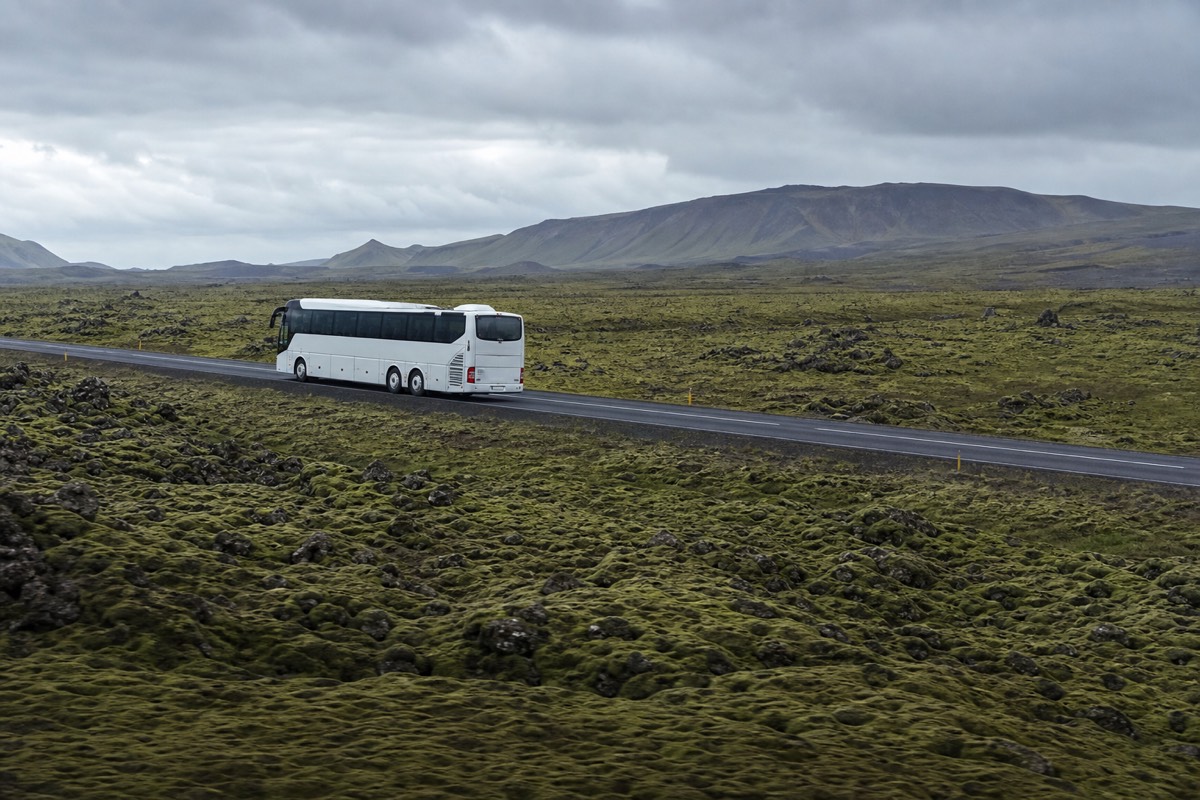
The peninsula is the same ground you crossed coming in from the airport, which is why people underrate it. Look past the road and it holds the Gunnuhver hot springs, the Brimketill lava rock pool, the bridge between continents at Sandvík, and the Krýsuvík geothermal field with its mud pots and sulphur colour. The volcanic activity of recent years has made parts of it a landscape of very new rock, and the areas that remain open are worth the detour.
Two rules apply here more than elsewhere. Geothermal ground is genuinely dangerous off the marked boardwalks, since the crust over a mud pot can be thin. And access around active or recently active areas changes; the current position is published by SafeTravel rather than guessed from an older blog post. Our roundup of volcano day tours from Reykjavik covers which operators go where.
Because the peninsula sits between the city and the airport, this is also the half-day that solves a late-afternoon flight. Bags in the car or in storage, three hours on the peninsula, and you are already most of the way to the terminal. The logistics of that side of the trip are in our guide to getting from Keflavík Airport to Reykjavik.
A short independent peninsula drive needs a route that fits your arrival time and current access conditions. A nine-hour volcano hike does not fit this half-day ground loop.
Which lagoon works better as a half day?
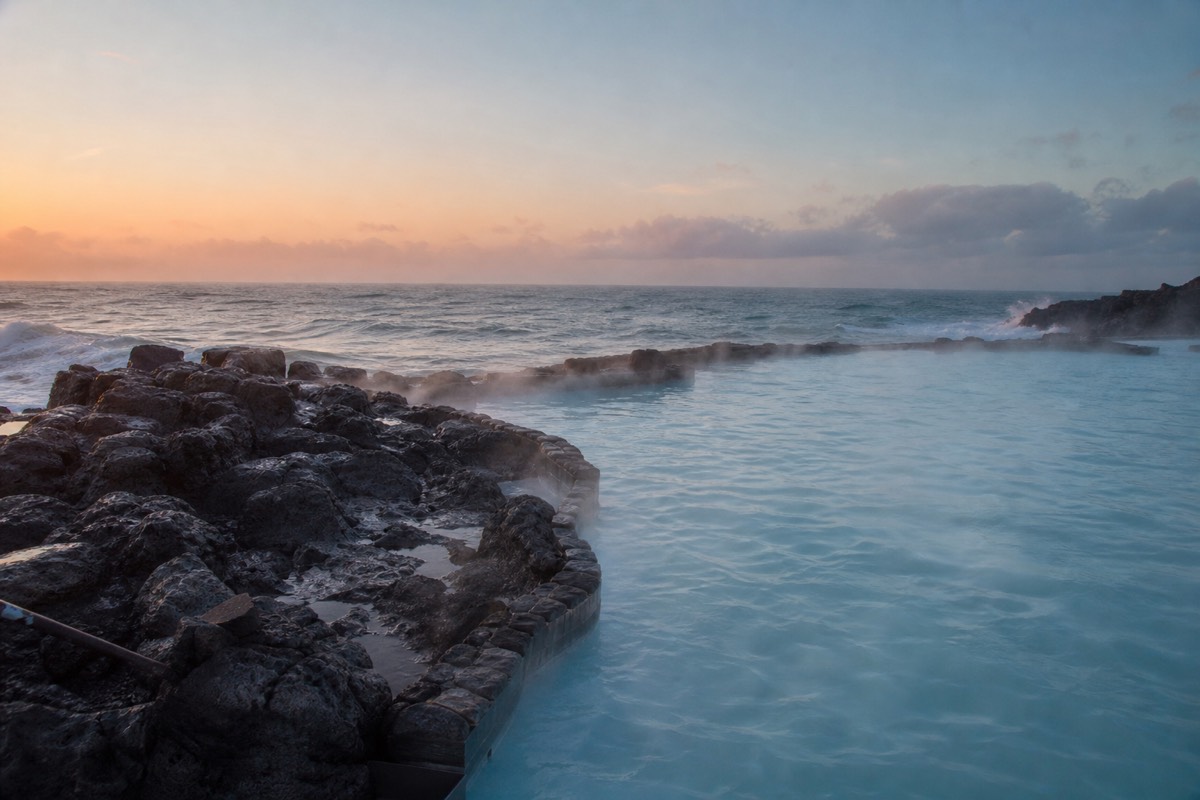
Sky Lagoon, for a half day starting in the city, because it is minutes from the centre and the visit itself runs two and a half to four hours. The Blue Lagoon is the better airport-day option, since it sits on the Reykjanes road, but the transfer pushes the whole thing towards five hours.
| Sky Lagoon | Blue Lagoon | Secret Lagoon | |
|---|---|---|---|
| Where | Kársnes shore, Kópavogur | Reykjanes Peninsula, near the airport road | Flúðir, on the Golden Circle route |
| Entry from | ISK 13,990 Saman; ISK 16,990 Sér | ISK 11,990 Comfort, dynamic pricing | ISK 4,500 adult, 15 and over |
| Half-day fit | Excellent from the city | Good on an airport day | Only as part of a longer route |
| Time on site | 2.5 to 4 hrs with the ritual | 2 to 3 hrs, plus transfer both ways | 1 to 2 hrs |
| Character | Oceanside infinity edge, turf walls | Milky silica water in a lava field | Older, plainer, far cheaper |
| Book ahead | Yes, slots sell out | Yes, always | Recommended in summer |
Sky Lagoon's seven-step ritual is the part that determines your timing, since doing it properly is what turns a soak into an experience and adds an hour. The sequence, and whether it is worth the Sér upgrade, is covered in Sky Lagoon's seven-step ritual. If you are choosing between the two big ones on price and atmosphere rather than logistics, that comparison lives in Sky Lagoon vs the Blue Lagoon.
The Secret Lagoon at Flúðir is the outlier. At ISK 4,500 it is a fraction of the price, but it sits out on the Golden Circle route rather than near the city, so it is a stop on a longer day rather than a half day of its own.
What about a half day without leaving Reykjavik?
The centre is small enough to cover properly in three to four hours on foot. Hallgrímskirkja and its tower view, the old harbour, the Sun Voyager sculpture on the seafront, Harpa, the pond at Tjörnin and the length of Laugavegur make a coherent loop with coffee stops built in.
This is the fallback that saves days when the weather cancels something, and it deserves better than that role. Reykjavik is a working capital of a small country rather than a museum piece, and the city's geothermal swimming pools are where that is most obvious: neighbourhood pools with hot tubs at different temperatures, used daily by locals in every season, at a fraction of what a lagoon costs.
The pool habit is the closest thing to a cultural shortcut in Iceland. Wash properly before entering, expect the water to be hot rather than warm, and expect the hot tub conversation to be in Icelandic. For a visitor with three spare hours and no transport, it beats another souvenir shop by a distance.
If you want a structured half day inside the city with no car involved, our guide to Reykjavik without a car covers the bus network, the city card and what is genuinely walkable in winter conditions.
Can you stack two half days into one full day?
Yes, and it is the most efficient way to use a single free date. A morning on the water and an evening under the aurora are three hours and four hours respectively, with a long gap between them, and neither competes for the same part of the day.
| Pairing | Total commitment | Season | Why it works |
|---|---|---|---|
| Whale watching plus aurora hunt | 7 hrs, split | September to April | One uses daylight, one uses darkness |
| Reykjanes loop plus Sky Lagoon | 7 to 8 hrs | Year round | Cold, windy morning followed by hot water |
| City walk plus evening aurora hunt | 7 hrs, split | September to April | Costs nothing if the sky closes in |
| Whale watching plus city pools | 5 hrs | Year round | Both start within walking distance of the centre |
| Blue Lagoon plus flight | 5 to 6 hrs | Year round | The lagoon is already on the airport road |
The pairing that does not work is two boat or bus departures back to back. Three hours on cold water takes more out of you than the clock suggests, and the second departure becomes something you endure. Keep one half of the day still.
Order matters as much as the pairing. Put the outdoor half first and the hot water second, never the reverse: a lagoon leaves you warm, relaxed and disinclined to stand on a windy deck, while the same soak after a cold morning feels like the point of the whole day. The same logic applies to the aurora, which is why an evening departure sits naturally at the end of any pairing rather than in the middle of one.
Which day trips genuinely do not compress?
The four flagship routes. The Golden Circle runs 11 hours, the South Coast 10, Snæfellsnes 11 and the glacier lagoon 11, and those numbers are set by road distance rather than by how many stops the itinerary lists. A shortened version is a longer drive with less time out of the vehicle.
| Route | Listed length | Why it cannot be halved |
|---|---|---|
| Golden Circle, with the Blue Lagoon | 11 hrs | 230 km loop with three major stops and a lagoon at the end |
| South Coast waterfalls and black sand | 10 hrs | Reynisfjara is 179 km east; the return leg alone is over two hours |
| Snæfellsnes Peninsula | 11 hrs | The peninsula tip is around 191 km northwest before the loop begins |
| Jökulsárlón glacier lagoon | 11 hrs | 380 km each way; the drive is most of the day by design |
People do try. The usual compromise is a Golden Circle that visits Þingvellir and Geysir and turns around before Gullfoss, which saves ninety minutes and removes the best waterfall in the sequence. If your date only holds five hours, spend them on something built for five hours rather than on a truncated version of something built for eleven. The distance mechanics behind all of this are set out in our guide to how far you can travel in one day.
The Golden Circle, South Coast, Snæfellsnes and Jökulsárlón need a full-day commitment. Choose a nearby experience if only half a day is available.
What does a half day actually cost?
Less than you would expect, and the cheapest options are the ones locals use. Our whale watching runs $105 and the aurora hunt $74, both about a third to a half of what the eleven-hour routes cost. Lagoon entries are quoted in ISK and range from 4,500 at Flúðir to 16,990 for the Sér pass at Sky Lagoon.
The currencies are mixed here for an honest reason: the tours are sold in dollars on their live listings, while entry tickets and local transport are priced in ISK. Your card converts at the rate on the day, so treat both columns as the shape of the cost rather than an exact total.
| Half-day option | Typical price | Time | What that buys |
|---|---|---|---|
| Whale watching from the old harbour | $105 | 3 hrs | Guided sailing, thermal overalls, free return ticket if nothing is seen |
| Northern Lights hunt | $74 | 4 hrs | Guided drive to clear sky, hot chocolate, free rebooking if the sky stays empty |
| Sky Lagoon, Saman | ISK 13,990 | 2.5 to 4 hrs | Entry, the seven-step ritual, public changing |
| Sky Lagoon, Sér | ISK 16,990 | 2.5 to 4 hrs | The same, with private changing |
| Blue Lagoon, Comfort | From ISK 11,990 | 4 to 5 hrs with transfers | Entry, silica mask, towel; dynamic pricing applies |
| Secret Lagoon, Flúðir | ISK 4,500 | 1 to 2 hrs on site | Entry only, and it sits out on the Golden Circle route |
| Reykjadalur hot spring river | Parking ISK 300 per hour, or 1,000 for five | 4 to 5 hrs | A free soak at the end of a 3 to 3.5 km walk each way |
| Neighbourhood city pool | Low, single-ticket | 1 to 2 hrs | The everyday version of the whole geothermal idea |
Reykjadalur deserves a note because it is the closest thing to a free half day with a real payoff. The walk in is 3 to 3.5 km each way with roughly 150 metres of climb, and at the top you sit in a river that runs at bathing temperature. It works best from May to September; in winter the path ices and the walk back in the dark is unpleasant. Bring a towel and something to change behind, because there is no building at the top.
Against those numbers, the eleven-hour routes run $137 to $253. That gap is the strongest argument for the half-day format on a tight budget: two short experiences and a pool day can cost less than one flagship route and still fill three separate afternoons.
Do half-day trips pick you up, or do you meet them?
Mostly you meet them, and for the short formats that is an advantage. Whale watching starts at the old harbour ticket office, a five-minute walk from downtown, and the evening aurora departures use designated bus stops around the centre rather than door-to-door collection.
The bus-stop system trips up visitors who expect a coach at the hotel entrance. Reykjavik restricts large vehicles on many central streets, so operators use numbered stops scattered through the centre and ask you to be there 15 to 30 minutes early. Your stop number is on the booking, and finding it the night before takes five minutes and removes the only real stress of the morning. The mechanics are set out in our note on whether Iceland day tours pick up from hotels.
For a half day this is genuinely better than door pickup, because the pickup loop on a full-day route can add 30 to 45 minutes at the start and again at the end. On a three-hour trip that overhead would be a quarter of the experience. Walking ten minutes to the harbour instead keeps the format short.
One consequence worth planning for: if your accommodation is out in the suburbs, the short formats lose some of their advantage, since you are adding a bus ride at each end. In that case the city bus at ISK 690 a ride is the practical fix, and the network is straightforward enough to use on day one.
Who should build a trip around half days?
Stopover passengers, families with young children, anyone visiting in the darkest weeks of winter, and travellers who have already done the famous routes on a previous visit. Half days also suit the first and last dates of any trip, when a full route is a bad bet.
Stopover itineraries are the clearest case. With 20 hours between flights you cannot do an eleven-hour route and still make check-in with any margin, but a lagoon on the airport road, a harbour departure, or a peninsula loop all fit comfortably. Families are the second case: three hours on a boat with hot chocolate holds a seven-year-old's attention in a way that eleven hours in a coach does not, and our notes on day trips with kids go through that by age.
Repeat visitors use half days differently again, treating them as filler between the things they came back for. And in December and January, when the daylight budget is four to five hours in total, half-day formats stop being a compromise and become the natural shape of the day. That seasonal logic is covered in our guide to winter day trips.
The one group who should not build a trip this way: first-time visitors with a full week. The long routes are long because Iceland's best scenery is spread out, and skipping all of them to stay near the city means going home having seen the capital and its suburbs. Do one flagship day, then fill the gaps with the short formats.