Day Trips From Reykjavik in Winter: What Runs and What Does Not
Winter does not close Iceland's day-trip routes. It shortens them, reorders them, and rewards anyone who plans around four or five hours of usable light instead of pretending the summer schedule still applies.
Winter routes remain possible, but the right choice depends on daylight, trip length and flexibility. Compare Reykjavik departures by month and available time before fixing the rest of your stay. Explore Golden Circle And Kerið
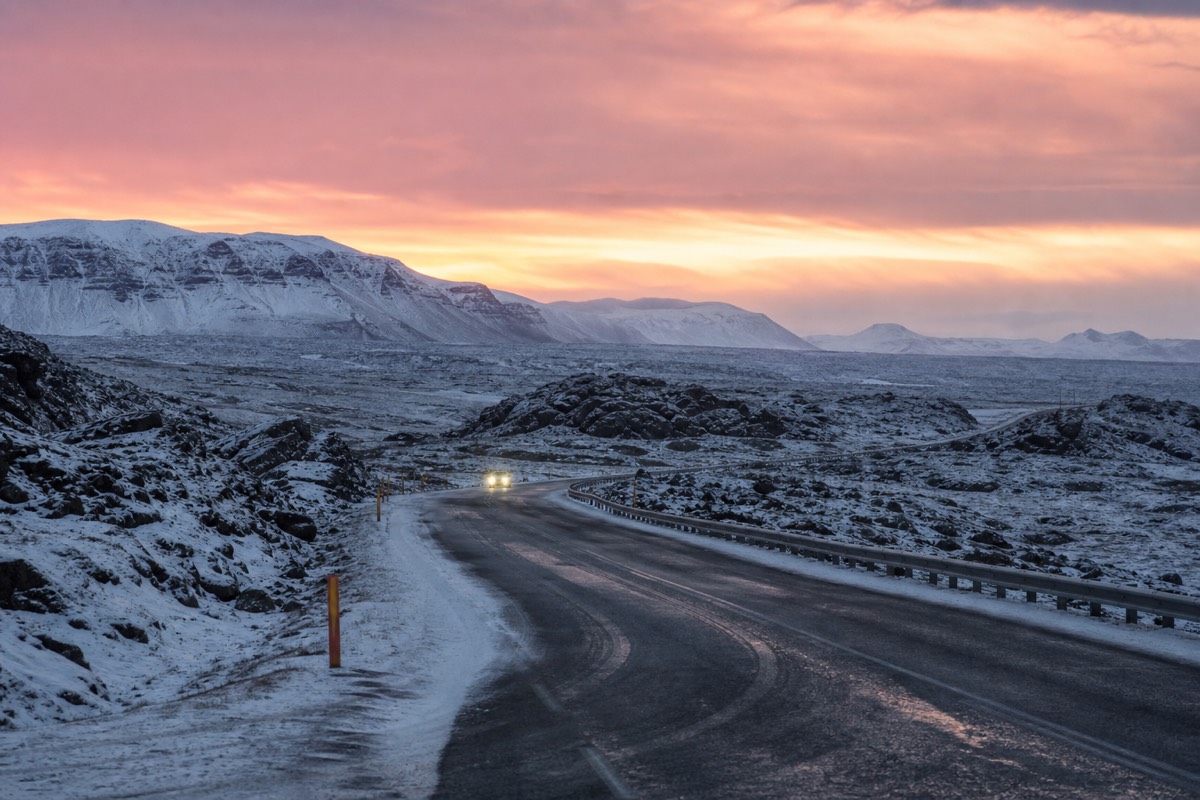
Booking Choice: Start with the eight-hour Golden Circle for a manageable classic winter route. Add an evening aurora attempt or choose the ten-hour South Coast when daylight and flexibility allow, confirming the selected date and pickup point. View Golden Circle And Kerið
How much light a winter day trip actually has
From November to January the whole daylight budget is smaller than one Golden Circle day with stops, which is why winter itineraries carry one route per day.
Can you still do day trips from Reykjavik in winter?
Yes. Every major route out of the city runs through the winter, including the Golden Circle, the South Coast and the peninsula loops. What changes is timing: December gives Reykjavik roughly four to five hours of usable daylight, sunrise near 11:20 and sunset near 15:30, so the day is built around a short window rather than a long one.
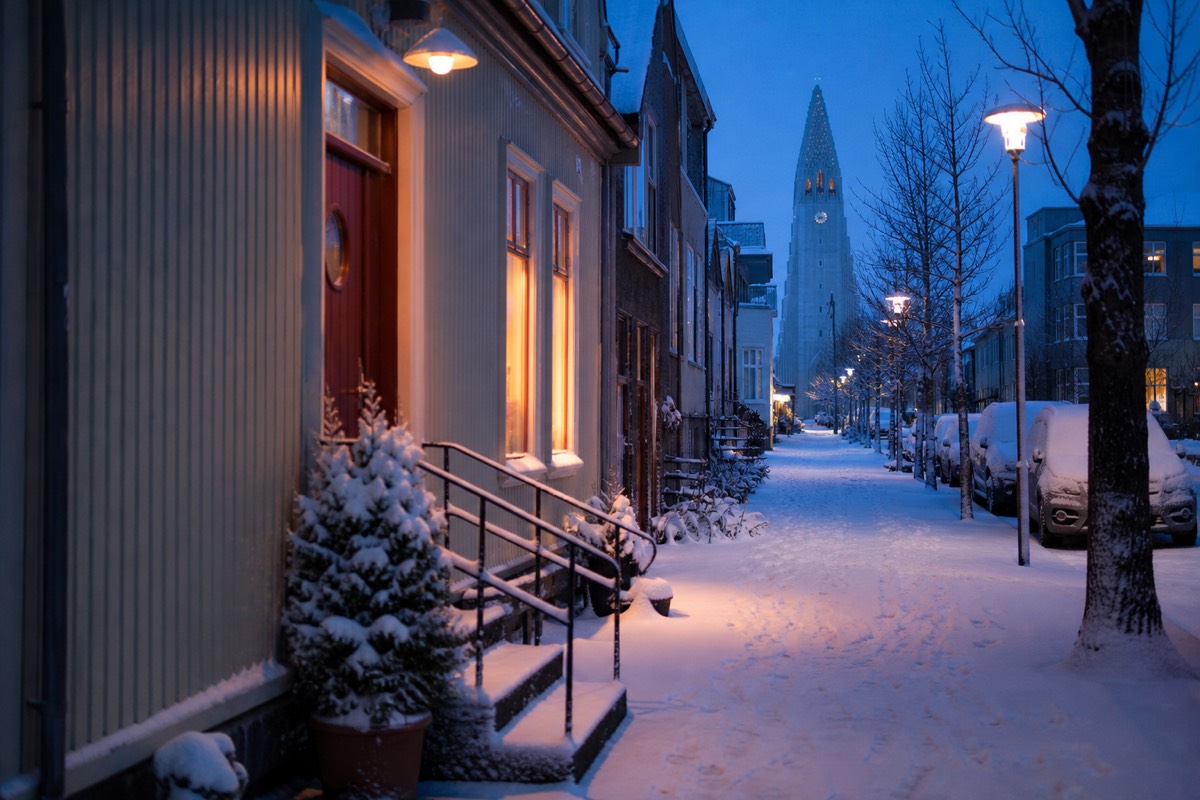
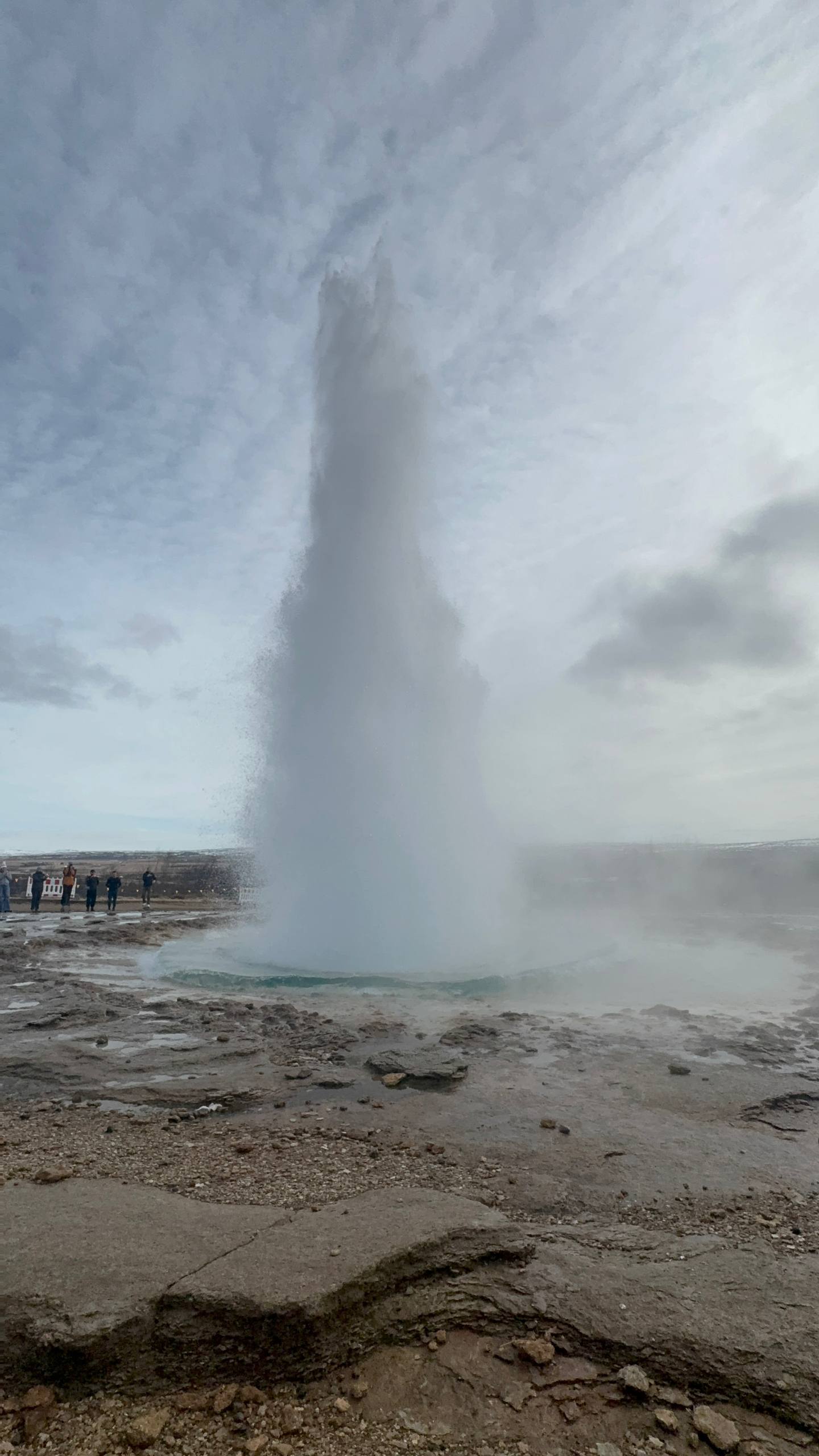
Day trips from Reykjavik tours run all winter for a simple reason: the fixed points on the routes do not close. Gullfoss does not shut for the season, the Reynisfjara basalt does not go anywhere, and the geothermal steam at Geysir is arguably better in cold air. What closes, occasionally and briefly, is the road, and that is a matter of hours rather than months.
The real winter question is not whether trips run but what you are trading. You get half the daylight, some of the most dramatic light in Europe, aurora season, ice caves that only exist in the cold months, and sites that feel almost private compared to July. You give up flexibility, some of the highland and peninsula extremities, and any illusion that you control the schedule.
Our own experience of guiding 9,800+ travellers through these months points at one behaviour that separates a good winter trip from a frustrating one: booking the flagship route early in the stay and leaving a spare day behind it. Weather in Iceland is not a risk to be eliminated, it is a variable to be absorbed.
How much daylight do you actually get, month by month?
Reykjavik sits at 64.1 degrees north, which makes the swing extreme. November through January gives four to seven hours of light, February and March recover to eight to twelve, and October still holds about ten. Late December is the floor: sunrise around 11:20, sunset around 15:30.
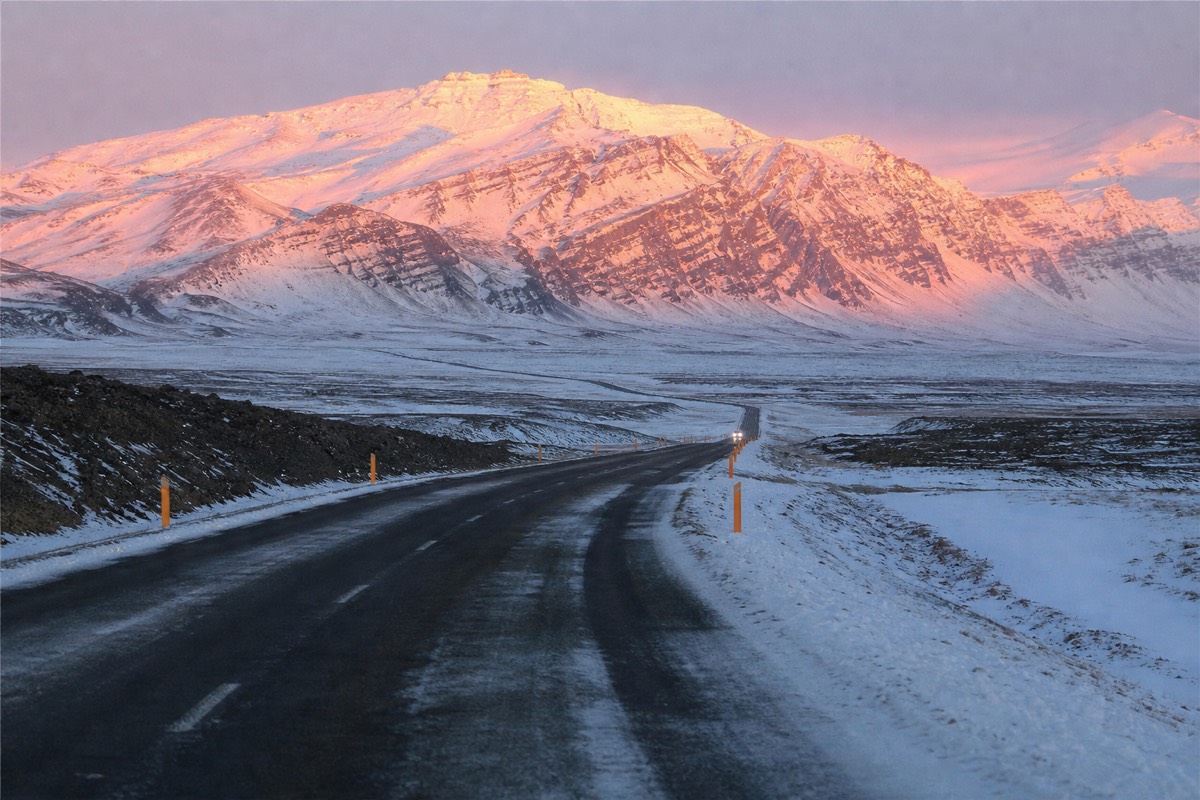
Those numbers are the single most useful planning input for a winter trip, more than temperature and more than the forecast. A route that needs six hours of light is comfortable in March and tight in December. A route that needs eight is a March or October proposition, not a January one.
| Month | Daylight in Reykjavik | Approx. sunrise / sunset | What fits comfortably |
|---|---|---|---|
| October | About 10 hrs | ~08:00 / ~18:00 | Golden Circle relaxed, South Coast to the waterfalls |
| November | 4 to 7 hrs | ~10:00 / ~16:30 | Golden Circle timed tightly, aurora season open |
| December | 4 to 5 hrs | ~11:20 / ~15:30 | One daylight route per day, nothing stacked |
| January | 4 to 7 hrs | ~11:00 / ~16:00 | Golden Circle, ice caves, aurora evenings |
| February | 8 to 10 hrs | ~09:00 / ~18:00 | South Coast returns comfortably; best aurora month overall |
| March | 10 to 12 hrs | ~08:00 / ~19:30 | Everything except the highlands; equinox aurora boost |
Two things soften the arithmetic. Icelandic winter twilight is long, so the hour either side of official sunrise and sunset is genuinely usable for driving and often the most photogenic light of the day. And the low sun angle means that even at noon in January the light is raking and golden rather than flat, which is why winter photographs of Gullfoss look nothing like summer ones.
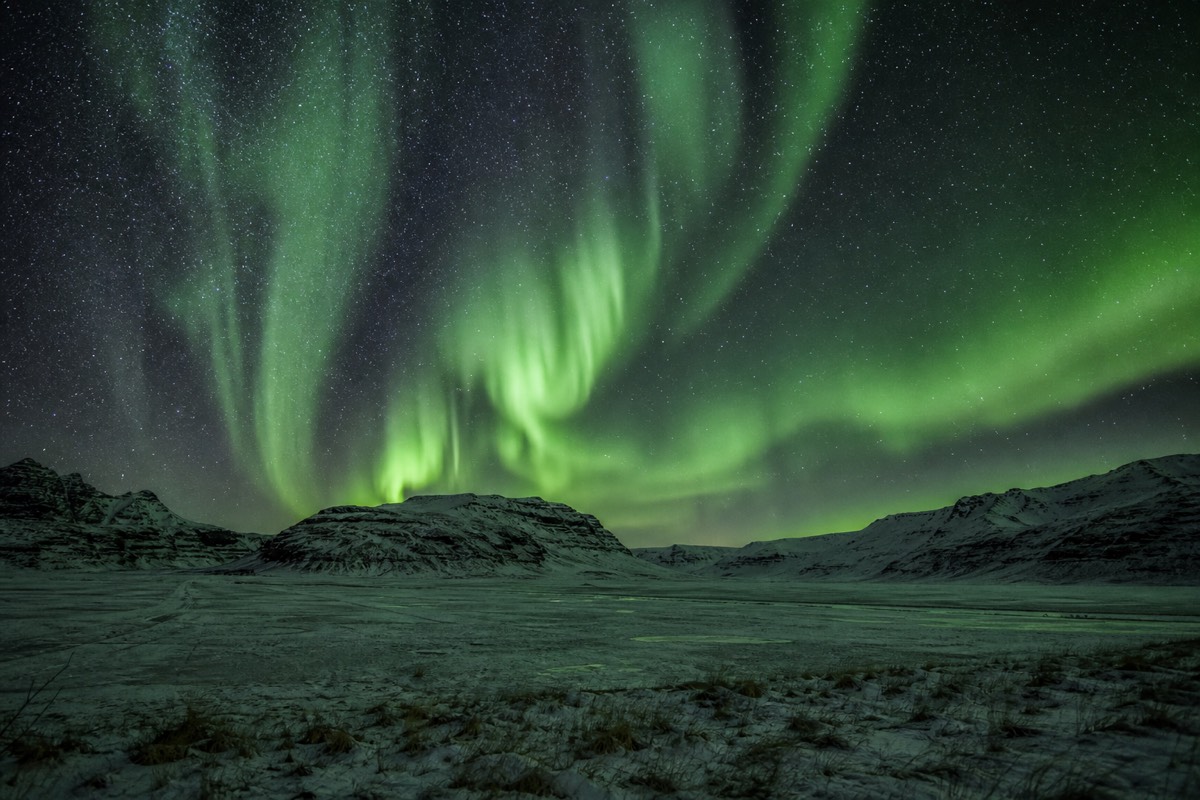
The other half of the equation is darkness, which winter has in abundance. From late August to mid-April the aurora is possible on any night with clear sky and enough solar activity, and the darkness peaks around the solstice at up to 21 hours. That is a resource, not a cost, provided you plan evenings as well as days.
Which day trips still run between November and March?
All six of the routes we run operate in winter, but two of them change character. The eleven-hour eastbound days become mostly dark at both ends, the aurora hunt only exists in these months, and whale watching keeps going from the old harbour with warmer clothing and rougher water.
| Route | Listed length | Winter status | What winter changes |
|---|---|---|---|
| Golden Circle, with the Blue Lagoon | 11 hrs | Runs all winter | The strongest winter route: short distances, three big stops, snow on the lava |
| South Coast waterfalls and black sand | 10 hrs | Runs all winter | Departs and returns in the dark from November to January; Reynisfjara wind is at its worst |
| Jökulsárlón glacier lagoon | 11 hrs | Runs, weather permitting | The longest eastbound day; February and March are the honest months for it |
| Snæfellsnes Peninsula | 11 hrs | Runs all winter | Exposed and windy; the loop is spectacular under snow but weather-sensitive |
| Northern Lights hunt | 4 hrs | September to April only | This is its season; free rebooking if the sky stays empty |
| Whale watching from the old harbour | 3 hrs | Runs year round | Winter humpback sightings in Faxaflói have climbed since 2021; orca possible |
Two additions exist only now. Ice caves under Vatnajökull form and stabilise in the cold months and are gone by spring, which is why ice cave tours from Reykjavik have a hard season. And frozen-margin waterfalls, where Gullfoss runs between shelves of ice, are a genuinely different sight from the summer version rather than a lesser one.
What does not run well in winter is anything highland. Roads into the interior close, and the routes that depend on them wait for June. If you want the rhyolite country, that is a summer trip.
What does a winter Golden Circle day actually look like?
Pickup in the dark around 08:00 to 09:00, first stop reached in pre-dawn twilight, peak light landing in the early afternoon across Geysir and Gullfoss, and the return drive starting as the light fades. The route is 230 km as a loop, which is why it survives a short day when longer routes do not.
| Clock | Where you are | Light | The winter detail |
|---|---|---|---|
| 08:15 | Bus stop pickup in central Reykjavik | Full dark | Boots and gloves on, not in the bag |
| 09:30 | Þingvellir, the rift walk | Blue twilight | The Almannagjá path can be icy; spikes earn their weight here |
| 11:20 | Geysir geothermal field | Sunrise | Steam plumes are twice the size in cold air |
| 12:45 | Gullfoss | Best light of the day | Spray freezes on railings; the upper viewpoint is often the safe one |
| 14:15 | Kerið crater or a geothermal stop | Low gold | The crater lake often holds ice |
| 15:30 | Driving back west | Sunset | This is when the aurora forecast starts to matter |
| 18:00 to 19:00 | Back in Reykjavik | Dark | Enough turnaround for an evening departure if you have the stamina |
The reason the Golden Circle holds up in December is geometry rather than luck. It is a loop of roughly 230 km with the furthest point about 115 km out, so no single leg is long, and the three headline stops are close enough together that losing an hour to weather costs you a stop rather than the day. What that looks like start to finish is covered in our account of what the Golden Circle day is really like.
What does winter give you that summer cannot?
Four things that are simply unavailable between May and August: the aurora, ice caves, snow-covered versions of the famous sites, and space. The most-photographed places in Iceland are quiet on a Tuesday in January in a way they never are in July.
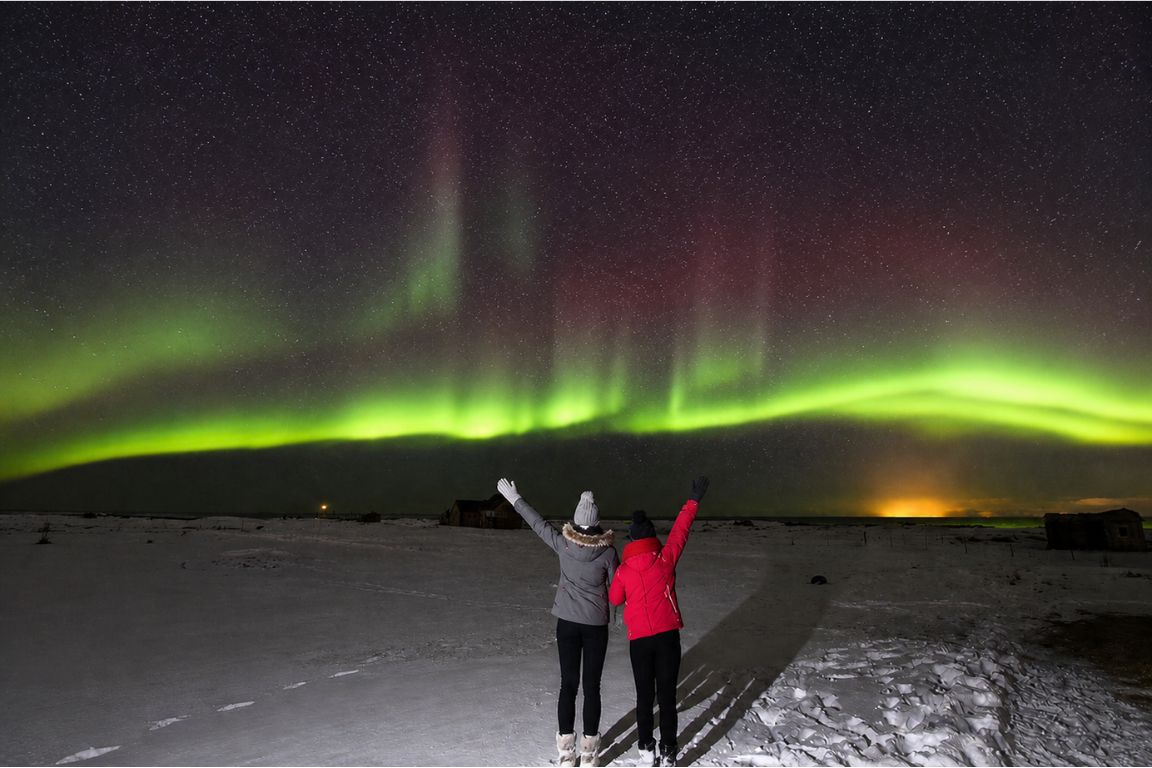
The aurora is the headline and deserves an accurate frame. The season runs from late August to mid-April, and within it February combines long darkness with the most stable winter weather, while September and March get an equinox boost in activity. Solar Cycle 25 peaked in 2024 and 2025, and elevated activity has carried into 2026, which makes this one of the stronger stretches in over a decade. Detail on the month-by-month pattern sits in our guide to the best time for the Northern Lights.
Ice caves are the other winter-only asset, and the honest version is that they are a cold-season formation under the Vatnajökull ice cap, accessed from the southeast, and gone once melt begins. They cannot be combined with a same-day lagoon trip from Reykjavik; the geography does not allow it.
Then there is the quiet. A January morning at Þingvellir with three other cars in the lot is a different experience from the same site in August. Photographers plan entire trips around it. Anyone who has queued for the Gullfoss viewing platform in summer understands the appeal immediately.
What does winter take away?
Range, certainty and margin. The corpus of routes shrinks at the far end, single closures can move a day, and anything that depends on a tight connection stops being safe. In exchange for dramatic light you accept that the itinerary is a proposal rather than a plan.
| Aspect | Summer version | Winter version |
|---|---|---|
| Usable daylight | 20 to 21 hrs in June and July | 4 to 5 hrs in late December |
| Realistic one-way range | 180 to 200 km | Roughly 100 km in the darkest weeks |
| Aurora | Impossible; no true darkness | Possible on any clear night from late August to mid-April |
| Ice caves | Closed | The only season they exist |
| Crowds at headline sites | Heavy, especially midday | Light, occasionally none |
| Schedule reliability | High | Weather-dependent; build in a spare day |
| Clothing demand | Layers and a rain shell | Full winter kit including traction devices |
The range figure is the one that surprises people. In the darkest weeks the practical one-way limit drops to about 100 km, which puts the Golden Circle comfortably inside and the far end of the South Coast at the boundary. The full mechanics of that, distances against realistic drive times, sit in our breakdown of how far you can travel in one day from the city.
How do winter closures and cancellations actually work?
Roads close by segment and reopen within hours, not days. Operators cancel proactively rather than run into a warning, and a cancelled departure is rebooked or refunded rather than lost. The failure mode of an Iceland winter is a moved day, not a wasted trip.
The system is unusually good, because Icelanders drive these roads for work every day. Conditions are published by segment and colour-coded, wind and precipitation warnings come from the national forecaster, and the travel-advisory layer is public. Checking road conditions at breakfast is a local habit, not a tourist precaution, and the Icelandic Met Office wind map explains more cancelled departures than snow ever does.
The third source is SafeTravel, run for exactly this purpose. If a route is genuinely unsafe it will say so plainly, and the advice there overrides any optimistic forecast app.
Wind is the variable that decides most winter cancellations, and it is the one visitors track least. Icelandic forecasts give wind speed in metres per second rather than kilometres per hour, and the numbers that matter are lower than they look: around 15 m/s doors become difficult, around 20 m/s exposed stops get cut short, and above that operators start standing departures down. Snow is comparatively easy, because the roads are cleared by people who do it every winter of their lives.
The second thing to understand is that a closure is local. Route 1 east of Vík can be shut while the Golden Circle runs normally 100 km to the northwest, which is exactly why a cancelled South Coast departure is often replaced with a different route on the same date rather than a lost day. Ask. Operators would rather move you than refund you, and the swap usually happens the evening before.
On the booking side, the policies that matter in winter are free cancellation windows and the rebooking guarantees attached to weather-dependent products. Our aurora departures rebook free when the lights do not show, and the whale watching runs a free return ticket if no marine mammals are sighted. What happens in practice, and what the ticket is actually worth, is spelled out in our note on what happens if you don't see the Northern Lights.
What do you need to wear and carry in winter?
Three layers, a genuinely windproof shell, waterproof boots with real tread, and traction spikes that slip over them. Wind is the variable that breaks people, not temperature: Reykjavik rarely goes far below freezing, but the wind chill on an exposed beach or clifftop is a different number entirely.
| Item | Why it matters in winter | Skip it if |
|---|---|---|
| Windproof outer shell | Wind, not cold, is what ends outdoor stops early | Never |
| Waterproof over-trousers | Spray freezes; wet legs stay wet for eleven hours | You are only doing city days |
| Boots with deep tread | Car parks and paths ice over between stops | Never |
| Slip-on traction spikes | Cheap, light, and the difference between walking and shuffling | You stay on cleared pavements only |
| Hat, buff, real gloves | Exposed skin is the first thing to fail in wind | Never |
| Head torch | Sunset lands mid-afternoon; aurora stops are unlit | You do no evening departures |
| Power bank | Cold flattens phone batteries fast | You are not photographing anything |
Swimwear belongs on the list too, since a geothermal soak is the standard winter reward after a cold day and every pool in the country expects you to have it. The full seasonal packing logic is in our guide on what to wear on an Iceland day trip.
How should you sequence a four-day winter stay?
Flagship route on day one or two, evening aurora attempts on as many nights as you have, a short-format day in the middle, and a genuinely empty slot at the end. That order gives weather two chances to cooperate on the thing you care most about.
| Day | Daytime | Evening | Why this order |
|---|---|---|---|
| Arrival | Lagoon soak or city walk | Aurora attempt if the sky is clear | Costs nothing if it fails; free rebooking if it does |
| Day 2 | Golden Circle | Rest | Shortest daylight demand of the big routes |
| Day 3 | South Coast, or an ice cave in season | Second aurora attempt | The long eastbound day, done while you still have spare days behind it |
| Day 4 | Whale watching or a peninsula half-day | Third aurora attempt | Short formats absorb a bad forecast easily |
| Spare | Whatever the weather moved | Whatever you missed | The single most valuable day of a winter itinerary |
Three aurora attempts across a four-night stay is the number that changes outcomes, because a single clear night is not something anyone can promise. The short formats also give you something to do when a long route is cancelled; our list of half-day trips from Reykjavik exists partly for exactly that scenario.
Which winter month should you actually pick?
February is the strongest all-round month: long darkness for the aurora, the most stable weather of the winter, and eight to ten hours of daylight for the routes. March runs it close on light and gets an equinox boost in aurora activity. December buys atmosphere and pays for it in daylight.
The months are not interchangeable, and picking on price alone is how people end up with four hours of light and a week of low cloud. Each has a specific shape.
| Month | Daylight | Aurora conditions | Weather stability | Crowds | Overall |
|---|---|---|---|---|---|
| November | 4 to 7 hrs | Good darkness, high activity | Stormier; cloud risk rising | Low | Solid value; keep routes short |
| December | 4 to 5 hrs | Maximum darkness around the solstice | Highest storm risk of the season | Busy over the holidays | Atmosphere over logistics |
| January | 4 to 7 hrs | Excellent darkness, activity still high | Unsettled | Lowest of the year after New Year | Quietest sites, hardest conditions |
| February | 8 to 10 hrs | Still 15 to 17 hrs of darkness | Most stable winter month | Moderate | Best overall winter month |
| March | 10 to 12 hrs | Spring equinox boost | Improving | Building towards spring | Best balance of light and aurora |
The trade to understand is between darkness and daylight, because winter forces you to choose which one you optimise for. December and January hand you up to 21 hours of darkness around the solstice, which is superb for the aurora and hopeless for seeing a waterfall from a coach window. February and March give back the daylight without closing the aurora season, which is why they are the months most repeat visitors settle on.
Price moves in the opposite direction to comfort, roughly. The quietest and cheapest stretch is January after the holiday period, when accommodation loosens and the famous sites are close to empty, and that is also the stretch with the least usable light and the most cancelled departures. If budget is the deciding factor, our note on the cheapest month to go to Iceland lays out where the savings actually sit.
One practical rule cuts through all of it: pick the month for the thing you most want to see. If it is the aurora, weight darkness and take three or more nights. If it is landscape, weight daylight and go late in the season. Trying to optimise for both in a four-night December trip is how winter itineraries get their reputation.
Who should skip a winter trip to Iceland?
Travellers with a fixed, unmovable itinerary; anyone whose priority is hiking rather than sightseeing; and visitors who are unhappy walking on ice. Winter rewards flexible plans and punishes rigid ones, and no amount of preparation changes that.
If you have three days, one target sight and no spare slot, February or March are far safer bets than December or January, and September or May are safer again. If mobility is a concern, the short-format and vehicle-based days work well while long walks on frozen gravel do not, and our guide to day trips for seniors goes through which routes have the easiest ground.
Families with young children can do winter well, provided the days are short and the gaps are warm. Eleven hours in a coach with a five-year-old in December is a hard sell; three hours on a boat with hot chocolate is not. Our notes on day trips with kids break that down by age.
Everyone else should come. The country in winter is doing the thing it is famous for, and the version of Iceland that appears in photographs, the low gold light, steam against snow, green light over a black landscape, is a winter version far more often than a summer one.
If your schedule cannot absorb weather changes or you need unconfirmed access arrangements, choose a more flexible season or establish those arrangements before booking.