Reykjavik to Vik: The Route 1 Drive, Stop by Stop
One hundred and seventy-nine kilometres of Route 1 separate Reykjavik from Vik, and almost everything worth stopping for on the south coast sits along them. Here is what the drive really takes, what each stop is worth in minutes, and where the road quietly becomes a different proposition in winter.
The same route can be self-driven or handled as a guided day. Compare the real time commitment, included stops and designated Reykjavik pickup arrangements before choosing. Explore South Coast Waterfalls
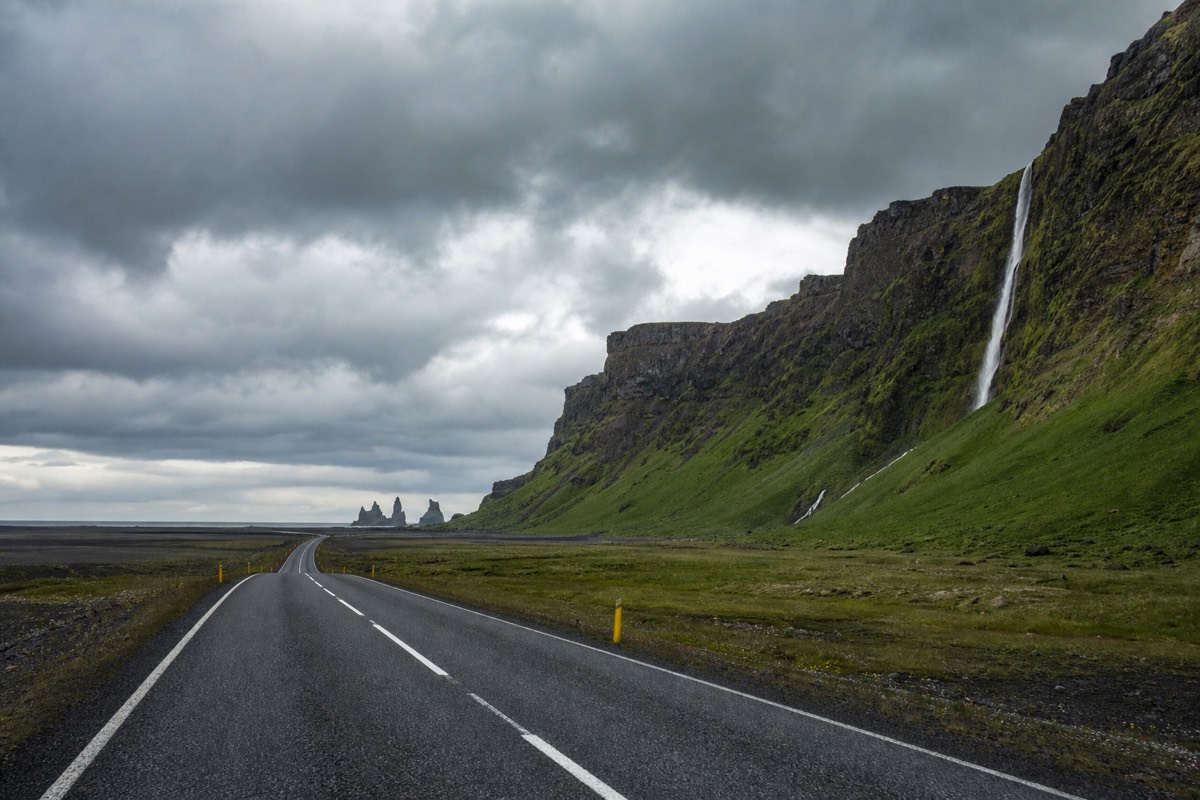
Booking Choice: Vik is a realistic full-day turnaround from Reykjavik. Self-driving preserves flexibility; a guided South Coast tour removes the driving burden and packages the principal waterfalls, Reynisfjara, a glacier viewpoint and Vik into one itinerary. View South Coast Waterfalls
Where Vik sits on the one-day map
Distances measured from central Reykjavik along Route 1. The dashed line is the realistic one-day limit of about 180 to 200 km each way in summer, which is exactly where Vik lands.
How far is Reykjavik to Vik, and how long does the drive really take?
Vik sits 179 km east of central Reykjavik on Route 1. Google Maps quotes about 2 hours 20 minutes. The realistic figure, with village speed limits, single-lane bridges and the stopping you did not plan, is 2 hours 30 to 3 hours each way in summer conditions.
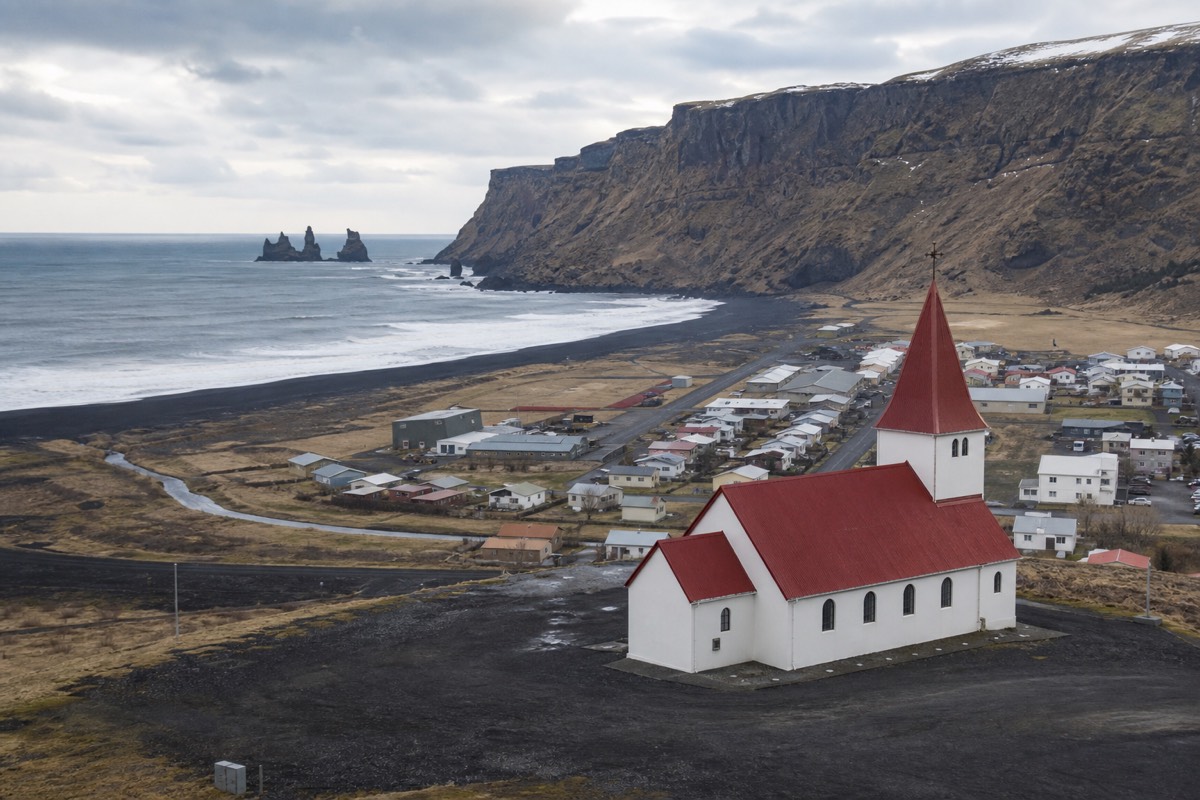
The gap between those two numbers is where most south coast days go wrong. Iceland's posted limit on paved rural road is 90 km/h, but the average you actually hold is closer to 60 to 70 once you account for the towns at 50, the bridges where you yield to oncoming traffic, and the fact that a waterfall appears on your left and you stop. Mapping software assumes optimal conditions. The south coast does not reliably provide them.
At 179 km, Vik lands right at the edge of the realistic one-day range out of Reykjavik, which our own route testing puts at about 180 to 200 km each way in summer. That is the whole reason this drive works as a day trip and the reason the glacier lagoon at 380 km does not, at least not without the day becoming a transit exercise.
| Point on the route | Distance from Reykjavik | Map estimate | Realistic drive |
|---|---|---|---|
| Seljalandsfoss waterfall | 121 km | ~1 hr 30 | 1 hr 45 to 2 hrs |
| Skogafoss waterfall | Further east on Route 1 | Add roughly half an hour | Add 30 to 40 min from Seljalandsfoss |
| Reynisfjara black sand beach | About 180 km, via Route 215 | ~2 hrs 20 | 2 hrs 30 to 3 hrs |
| Vik i Myrdal village | 179 km | ~2 hrs 20 | 2 hrs 30 to 3 hrs |
| Reynisfjara to Vik village | 10 km | 13 min | 13 to 20 min |
| Skaftafell, if you keep going | 322 km | ~4 hrs | 4 hrs 30 to 6 hrs, weather dependent |
One planning note that saves arguments in the car. The drive time is not the day. A south coast day trip that reaches Vik and returns is a ten to eleven hour commitment door to door once you give each stop the time it deserves, which is why every guided version of it runs to roughly that length.
What is on Route 1 between Reykjavik and Vik?
Four things worth stopping for and a lot of scenery between them: the waterfall you can walk behind at Seljalandsfoss, the wall of water at Skogafoss, the black sand and basalt columns at Reynisfjara, and the village of Vik itself. Everything else is bonus, and there is a lot of bonus.
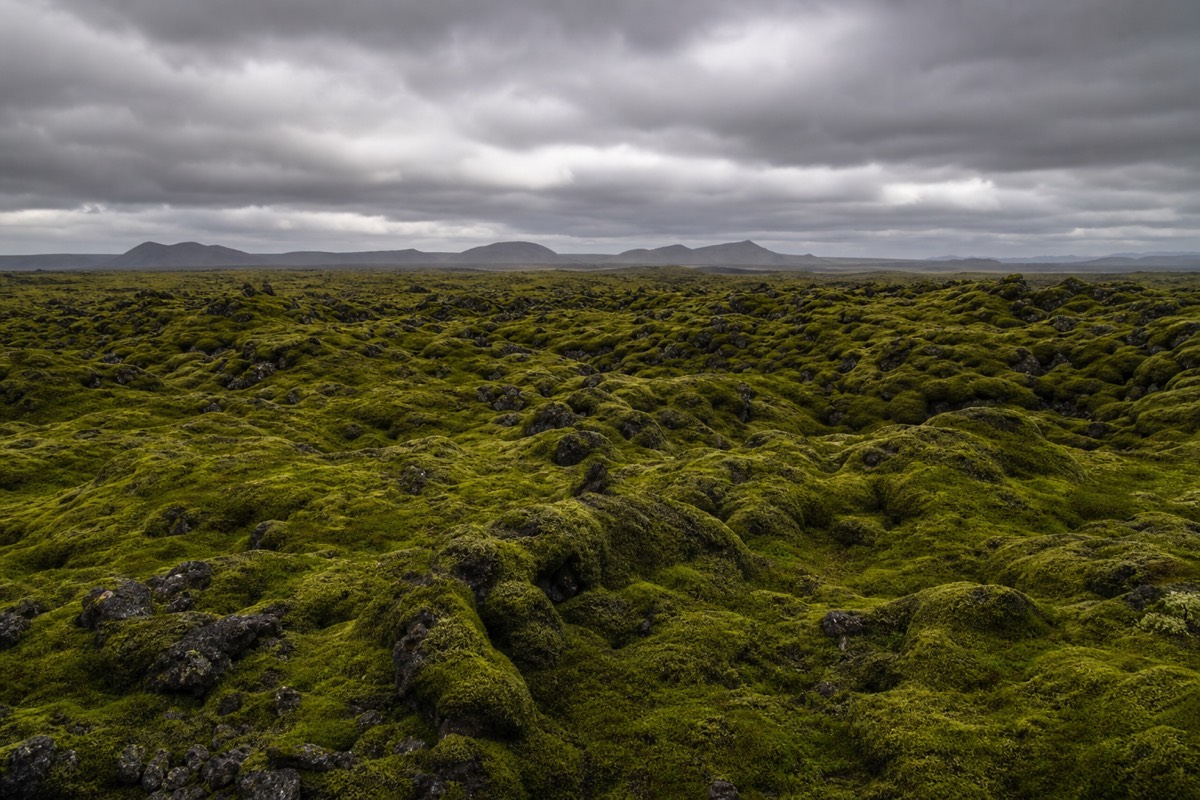
The first hour out of Reykjavik is the least interesting part of the whole road, which surprises people. You cross the Hellisheidi plateau, drop through Hveragerdi and Selfoss, and pass farmland with the mountains held at a distance. The landscape does not turn on properly until the Eyjafjoll cliffs rise on your left and the first waterfall appears against them, which is roughly the point where the car goes quiet.
| Stop | Allow | What it is | Worth it? |
|---|---|---|---|
| Seljalandsfoss | 30 to 45 min | The waterfall with a path running behind the curtain of water | Yes, and bring a rain shell |
| Gljufrabui | 15 min | Hidden falls in a slot canyon a short walk from the same car park | Yes, and most people miss it |
| Skogafoss | 30 to 45 min | A 60 metre drop you can stand under the spray of, plus a stairway up the side | Yes |
| Solheimajokull glacier tongue | 1 hr plus | Short side road to a receding glacier snout | Only if you are not doing a glacier day separately |
| Dyrholaey promontory | 30 to 45 min | Arch, lighthouse and the long view down the black coast | Yes in summer, access is seasonal in parts |
| Reynisfjara | 40 min | Black sand, basalt columns, the Reynisdrangar sea stacks | Yes, with the safety rules taken seriously |
| Vik i Myrdal | 45 min to 1 hr 30 | Village, church on the hill, food, fuel, the coastal view | Yes, and it is the natural turnaround |
If you only have time for three, take Seljalandsfoss, Skogafoss and Reynisfjara and treat Vik as a lunch stop. That is the shape the guided South Coast day trip follows, and it is the version that leaves people satisfied rather than rushed. Our fuller walkthrough of what the South Coast day is really like goes stop by stop through the same route from inside the vehicle.
Should you drive it, take the bus, or book a seat?
Drive it if there are three or more of you and your dates are in summer. Book a seat if you are one or two people, if the dates are in winter, or if you would rather look out of the window than at the road for six hours.
The cost gap is narrower than people expect. A solo traveller self-driving a full day lands around $130 to $200 once rental, full insurance, fuel and parking are added up. A guided seat runs $90 to $160 per person. Two people splitting a rental land at roughly $75 to $120 each, which is where self-driving starts to win. Three or more and it is not close.
| Way of doing it | Works for | The catch |
|---|---|---|
| Own rental car | Groups of 3 plus, summer dates, photographers who want their own timing | Somebody spends the whole day driving instead of looking |
| Guided day tour | Solo travellers, first-timers, winter dates, anyone without a licence | Fixed stop lengths, no detours on a whim |
| Scheduled coach | Point-to-point travel between towns, budget overnight plans | Built for transport, not for waterfalls; the stops are not where you want them |
| Private driver | Families, mobility needs, tight schedules | The most expensive option by a distance |
| Camper van | Multi-day south coast trips | Overkill for one day, and parking rules vary by site |
For anyone without a car at all, the south coast is one of the few Icelandic routes where a guided day genuinely substitutes for a rental rather than compromising against it, because the stops are fixed points rather than a wandering itinerary. Our Reykjavik without a car guide covers the rest of the options for a carless week, and the self-drive versus guided comparison runs the full cost maths.
What does the drive to Vik actually cost?
For two people in a mid-size car in summer, roughly $75 to $120 each all in. Fuel has been running about 185 to 230 ISK per litre in 2026, full insurance adds $20 to $50 a day, and the 2026 distance-based road usage tax scales with the kilometres.
Advertised rental rates are not the number to plan against. A small car can list at $40 a day in the off season, but the collision waiver plus gravel and sand protection sits on top, and on the south coast that gravel cover earns its keep at every unsealed car park entrance. Add fuel for the round trip, add parking at the stops that charge, and the realistic total for a mid-size car in summer is $130 to $200 for the day before you split it between passengers.
| Cost line | What to expect |
|---|---|
| Vehicle, mid-size, summer | Roughly $80 to $140 for the day |
| Full insurance, collision plus gravel and sand | $20 to $50 a day |
| Fuel, 360 km round trip | 185 to 230 ISK per litre, about $1.30 to $1.60 |
| Road usage tax, 2026, distance based | Scales with the kilometres, and this is a long day |
| Parking at the stops that charge | Small per-stop fees, Reynisfjara among them since 2023 |
| 4WD instead of 2WD in winter | Adds $30 to $70 a day |
| Guided seat, same route | $90 to $160 per person, everything above included |
Two quiet costs nobody budgets. Food on the south coast is limited and priced accordingly, so a supermarket stop in Selfoss on the way out saves real money. And a windscreen chip from a passing vehicle is common enough on Icelandic roads that gravel protection is not an upsell, it is the reason people who skipped it tell the story afterwards.
What changes on this road in winter?
Everything about the timing. Add 20 to 40 percent to every drive estimate, then fit the whole day inside about four to five hours of usable daylight in late December, with sunrise near 11:20 and sunset near 15:30. The distance does not change. The day around it shrinks by a third.
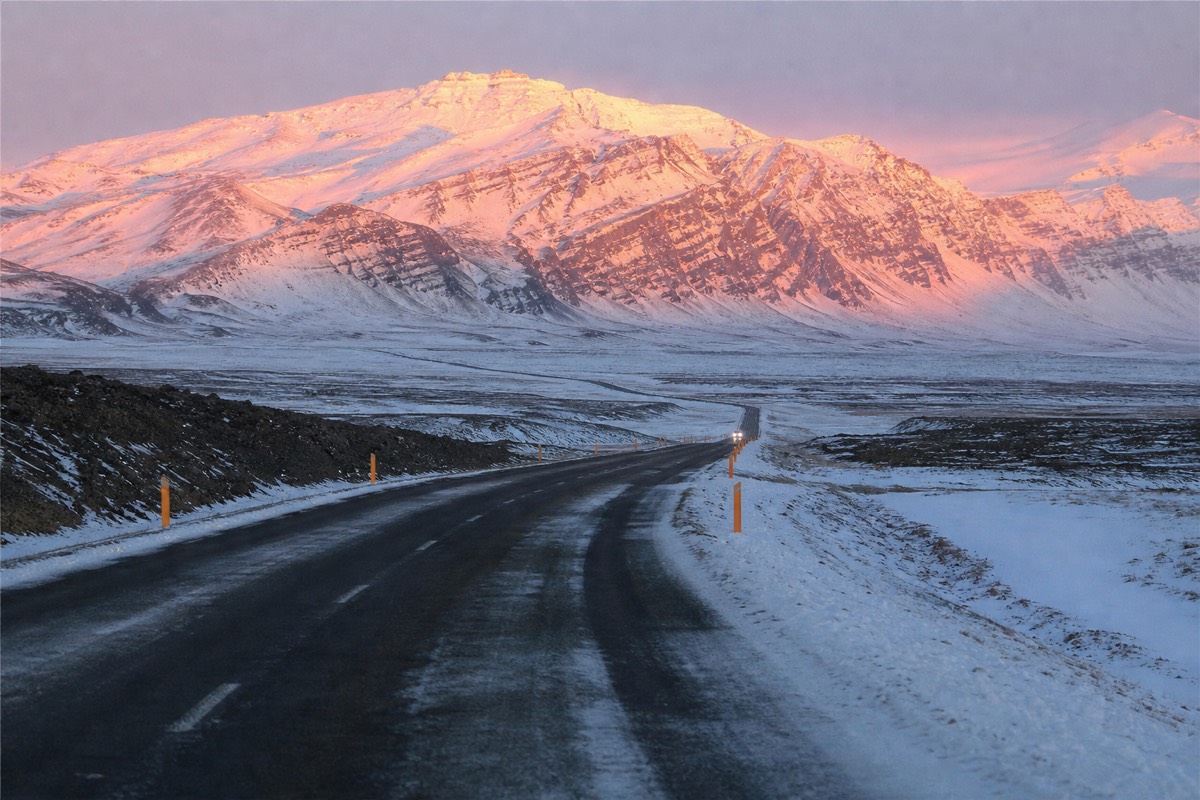
That compression is the real winter problem, more than ice. If sunrise is at 11:20 and the drive out takes three hours, leaving at eight in the morning means the first hour and a half happens in the dark, and if you want the black beach in daylight you are working with a window that closes at half past three. Guided departures solve this by leaving before dawn deliberately and arranging the stops so the daylight lands where it matters.
The road itself is maintained and usually open, but crosswinds on the exposed stretches between the cliffs and the sea are strong enough to move a small vehicle, and doors have been ripped off cars by gusts in the car parks. Check road.is before you leave and again before the last leg, and check the Icelandic Met Office for wind rather than temperature. A clear cold day with 25 metres per second of wind is worse than a grey still one.
| Season | Drive time to Vik | Daylight to work with | Verdict |
|---|---|---|---|
| June to August | 2 hrs 30 to 3 hrs | Effectively unlimited | Easiest version of the day, busiest car parks |
| September and October | 2 hrs 30 to 3 hrs 15 | Shortening fast, still workable | Good balance, aurora season restarting |
| November to January | 3 hrs to 4 hrs | About 4 to 5 hours at the solstice | Guided is the sensible call |
| February and March | 3 hrs to 3 hrs 45 | Growing week by week | Winter scenery with a usable day |
| April and May | 2 hrs 30 to 3 hrs | Long and getting longer | Waterfalls at full melt volume |
Anyone travelling in the dark months should read the winter day trips from Reykjavik guide alongside this one, because the decision stops being about the route and starts being about the light.
What is Reynisfjara like right now, and what do the warning lights mean?
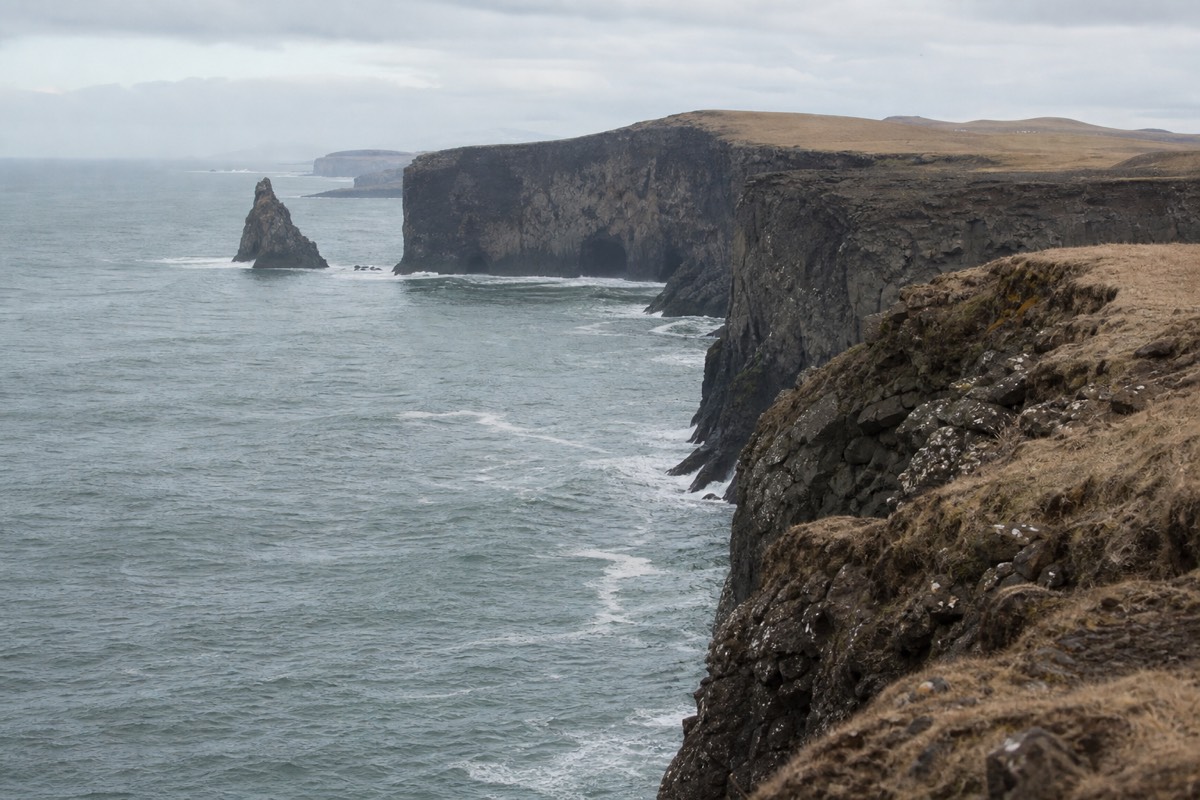
Changed, and still worth the stop. Storms in January and February 2026 stripped an unprecedented amount of sand from the beach and left the Halsanefshellir cave inaccessible, though the Reynisdrangar sea stacks are untouched and sand has been slowly returning since March 2026.
The safety system is not decorative. Reynisfjara runs a colour-coded warning light installation: green, yellow and red, with red closing the cave and column area outright. Sneaker waves here have killed six people since 2007, including a fatal incident in August 2025 involving a child swept from the cave area. The waves that do it are not the ones you can see coming. They arrive far up a beach that looked calm thirty seconds earlier.
The rules are simple and they are not negotiable: stay at least 30 metres back from the waterline, never turn your back on the sea, and do not walk into the column area when the light is red. Check the SafeTravel black beach page on the morning you go. Our full Reynisfjara black sand beach guide covers the 2026 erosion in detail, including what is still accessible and what is not.
The geology is worth knowing while you stand there. The sand is ground-down basalt from lava that cooled fast against the Atlantic. The hexagonal columns formed when thick flows cooled slowly and contracted into a honeycomb of vertical fractures. And the Reynisdrangar stacks, 66 metres at their tallest, are what is left of a cliff the ocean removed around them. Icelandic folklore says they are trolls caught by sunrise, which is a better story and, standing there in low light, not obviously worse as an explanation.
Warning-light status can change before your visit. Follow the current signs, closures and distance rules when you arrive; transport by tour does not remove wave hazards.
What is actually in Vik itself?
A village of a few hundred people with the most photographed church roofline in south Iceland, the last proper fuel and food for a long stretch east, and a black beach of its own that reads completely differently from Reynisfjara ten kilometres away.
Vik i Myrdal sits under Reynisfjall with the Myrdalsjokull ice cap behind it and the Katla volcano under that ice. The 1918 Katla eruption sent glacial floods across this coastline that pushed the shoreline several kilometres south, which is a useful thing to hold in mind while looking at the flat black plain east of town. The village has practised evacuation drills for a future eruption for decades. The church on the hill is the designated assembly point.
Practically, Vik is where a south coast day trip turns around. There is fuel, a supermarket, a handful of places to eat, and public toilets, all of which are scarcer than you expect once you leave. The beach at Vik itself gives you the same sea stacks from the other side and, on a windy day, a rather safer place to stand than the beach around the headland.
Give it 45 minutes if you are eating, longer if the weather is behaving. And if you are travelling between May and August, look up at the cliffs: the puffin colonies on this stretch of coast are one of the most reliable places in the country to see them from land, which our where to see puffins in Iceland guide maps out properly.
Should you keep going past Vik?
Not on a day trip. Skaftafell is 322 km out and the glacier lagoon 380 km, which turns a satisfying ten hour day into a fourteen or fifteen hour transit exercise with roughly 60 to 90 minutes at the far end. The right move is either to stop at Vik or to stay overnight and do it properly.
The pattern shows up in feedback with unusual consistency. People who pushed to the glacier lagoon and back in a single day describe it as incredible but rushed. People who overnighted near the lagoon and arrived in early light describe it as the best thing they did in Iceland. Same place, same weather, entirely different experience, and the only variable is how much of the day was spent moving.
| Destination | Distance | As a day from Reykjavik | Better as |
|---|---|---|---|
| Vik | 179 km | Comfortable, 10 to 11 hrs door to door | The natural turnaround |
| Fjadrargljufur canyon | Beyond Vik | Adds an hour each way, tight but possible | An overnight extension |
| Skaftafell | 322 km | Extreme, not recommended | Overnight base for glacier walks |
| Jokulsarlon glacier lagoon | 380 km | Possible at 14 to 15 hrs, 60 to 90 min at the water | Overnight, or a dedicated long guided day |
| Diamond Beach | Beside the lagoon | Same trip, same constraint | Same answer |
If the lagoon is non-negotiable and an overnight is not, a guided long day is the least bad version, because somebody else absorbs ten hours of driving while you stay awake for the part you came for. The Jokulsarlon glacier lagoon tour is built around exactly that trade, and our honest answer on whether Jokulsarlon is worth it weighs the hours against the payoff.
What does a Reykjavik to Vik day look like hour by hour?
Out of the city by eight, first waterfall before ten, black beach in early afternoon, Vik for a late lunch, back in Reykjavik between six and seven. That shape gives every stop enough time and still gets you home before the evening disappears.
The timeline below is a summer template. In winter, shift everything later to catch the daylight and cut one stop rather than compressing all of them, because a rushed Reynisfjara in poor light is worse than not going.
| Time | Where | Notes |
|---|---|---|
| 08:00 | Leave Reykjavik | Fuel and supermarket stop in Selfoss saves money later |
| 09:45 | Seljalandsfoss | 45 min including the walk behind the falls and Gljufrabui next door |
| 11:00 | Skogafoss | 30 to 45 min; climb the stairs for the view down the coast |
| 12:15 | Dyrholaey or Solheimajokull | Pick one, not both, unless you are skipping something else |
| 13:30 | Reynisfjara | 40 min, warning lights checked before you walk down |
| 14:30 | Vik | Lunch, fuel, the church on the hill, 45 min to an hour |
| 15:45 | Start back | 2 hrs 30 to 3 hrs, one coffee stop |
| 18:30 to 19:00 | Reykjavik | Evening still intact |
Who should let somebody else drive this road?
Winter visitors, solo travellers, anyone who has never driven in high crosswinds, and anyone who would rather remember the coastline than the centre line. The road is not technically difficult in summer. It is long, exposed and tiring, and the driver sees the least of it.
There is a specific kind of fatigue that comes from Icelandic driving days and it is not purely physical. The road demands attention, the landscape demands attention, and the two compete for six hours. By the time a self-driver reaches the black beach they have been absorbing waterfalls, cliffs and glacier tongues through a windscreen since breakfast, and the visual capacity that makes the beach extraordinary is running low.
The other argument is conditions. Guides run this road hundreds of times a year, watch road.is as a habit rather than a task, and adjust the order of the stops when the wind or the light says to. That judgment is what the seat buys, more than the transport. Whichever way you go, the choice between the Golden Circle and the South Coast is worth settling first if you only have one day, because these two routes are the country's two best single-day options and they are not interchangeable.
All the day trips from Reykjavik tours that run this coast leave the city early for the same reason a good self-driver does: the front half of the day carries the better light, the emptier car parks and the calmer sea. If the highlands rather than the coast are calling, the Landmannalaugar day trip is the seasonal alternative, and the ferry port for the Westman Islands day trip sits just off this same road at Landeyjahofn.