Diamond Beach and Jökulsárlón: How to Visit From Reykjavik
Two sights, one car park, 380 km from the capital. This is what the glacier lagoon day really asks of you, what the ice does and does not guarantee, and how to decide between driving it and being driven.
The decisive choice is not whether the ice is worth seeing, but whether you want the longest Reykjavik day trip, a boat-inclusive version, or a shorter South Coast route. Explore Glacier Lagoon Day Trip
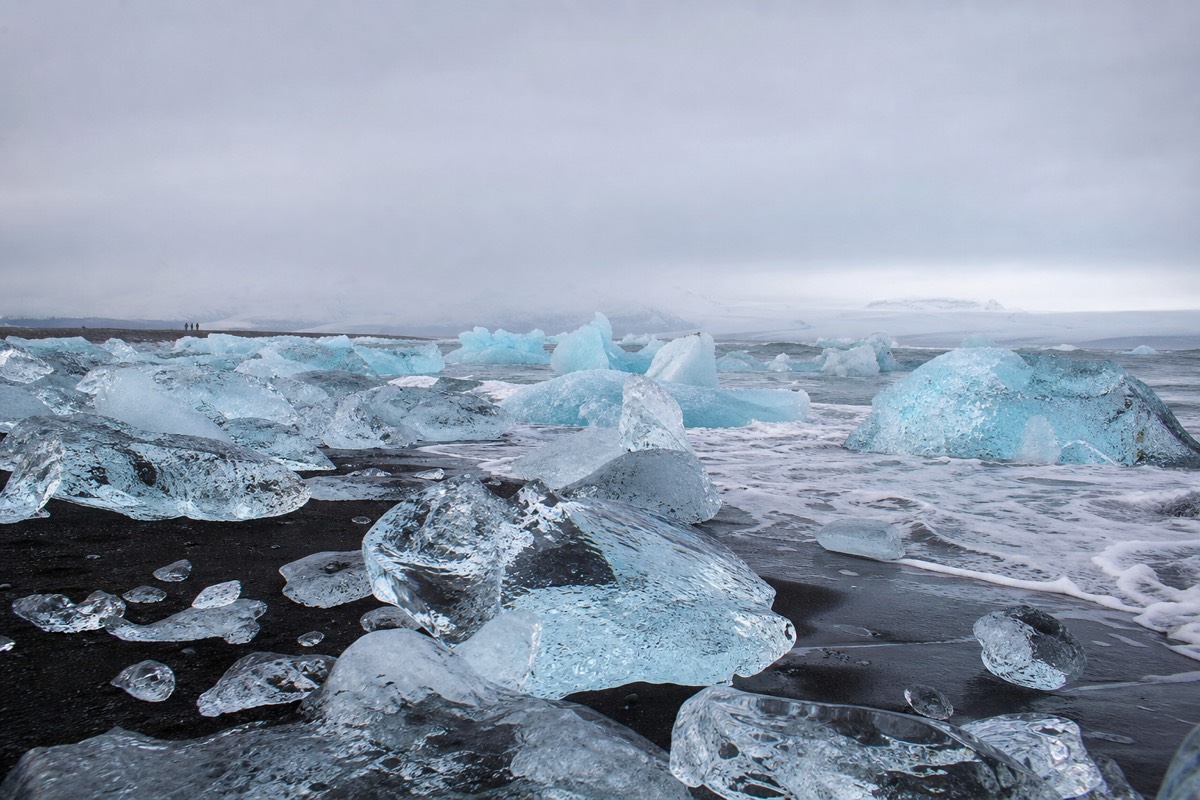
Booking Choice: Jökulsárlón and Diamond Beach fit one long guided day from Reykjavik. Choose the standard lagoon itinerary, a version with an included boat ride, or a shorter route that turns around at Vík. View Glacier Lagoon Day Trip
The glacier lagoon day in one picture
Everything east of Vík is a long, thin drive with almost no services for 200 km.
What is Diamond Beach, and how is it different from Jökulsárlón?
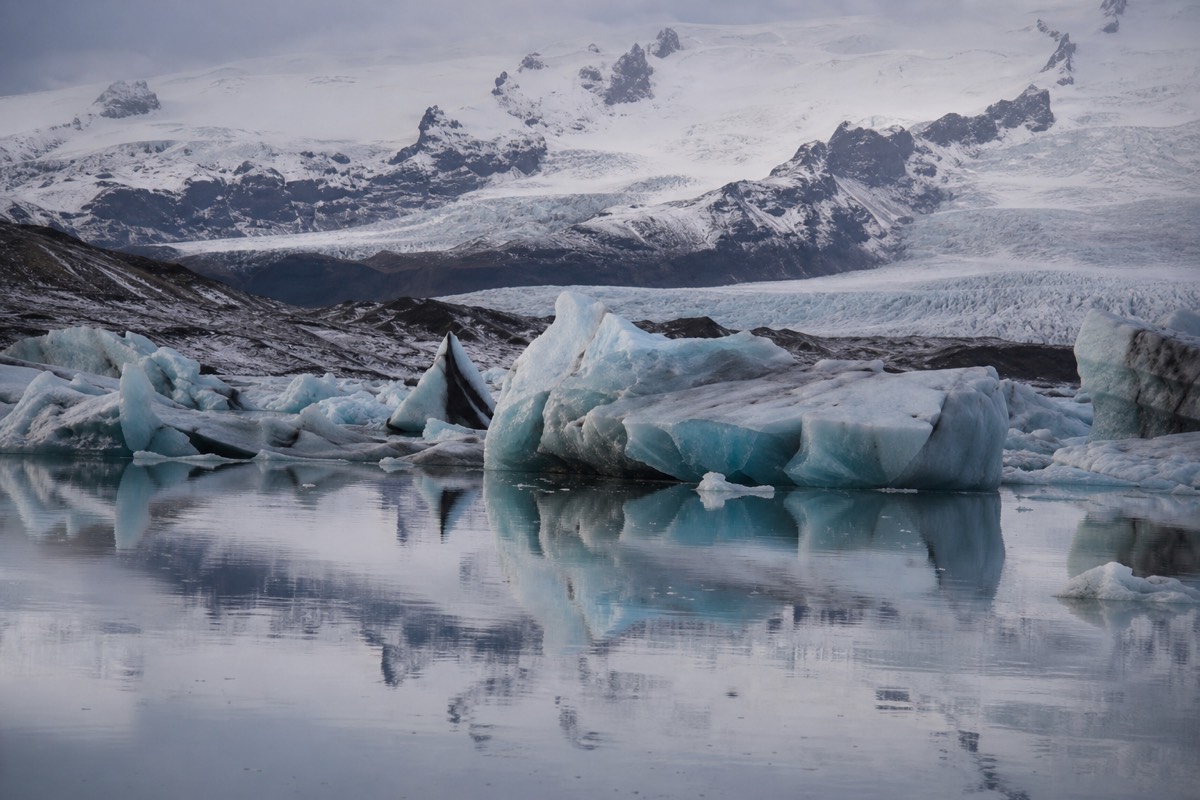
Jökulsárlón is a glacial lake where icebergs calve off the Breiðamerkurjökull glacier and drift across roughly 25 square kilometres of water. Diamond Beach is the black sand strip on the ocean side of the road, where blocks that made it through the outlet channel wash back ashore and sit in the surf.
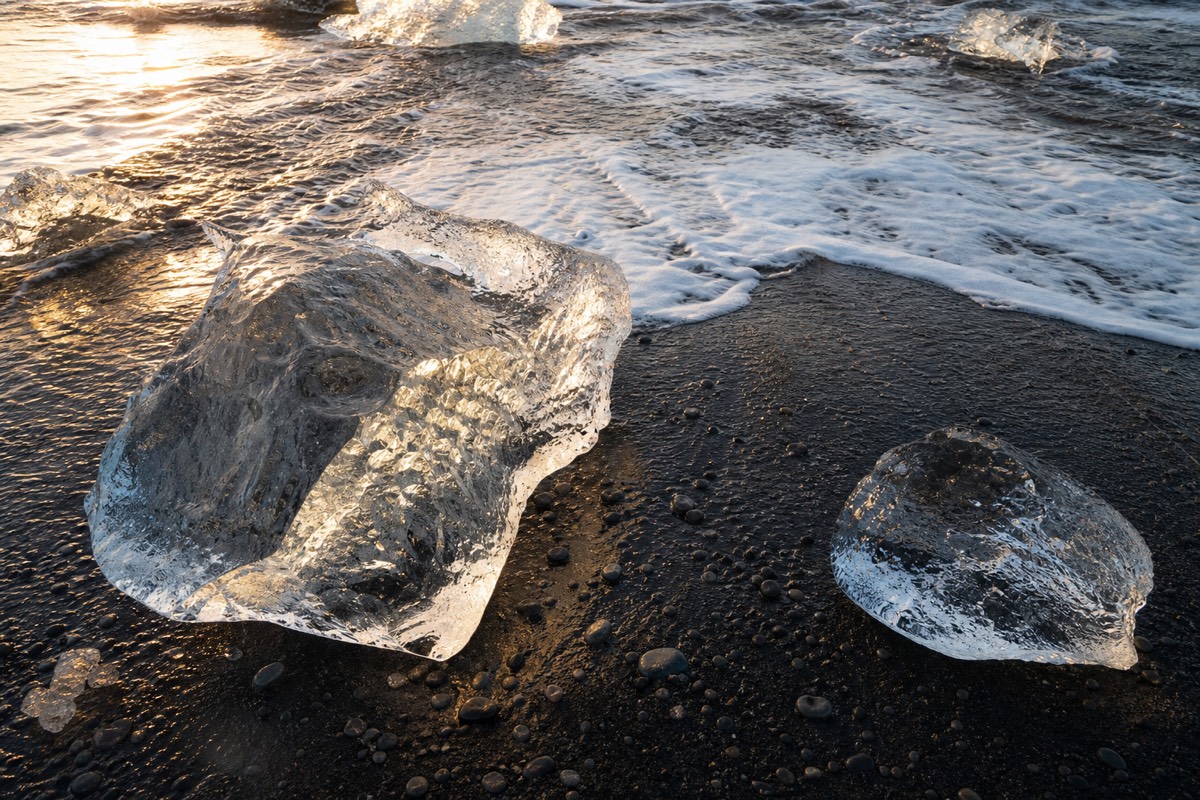
They are two halves of the same story, separated by a bridge and about four minutes of walking. Ice breaks off the glacier at the far end of the lagoon, then drifts. The blocks in the lagoon on any given morning have been floating for years: the average crossing takes something like five years before a berg reaches the narrow channel that empties into the Atlantic. Once through, the tide either carries them out to sea or throws them back onto the sand.
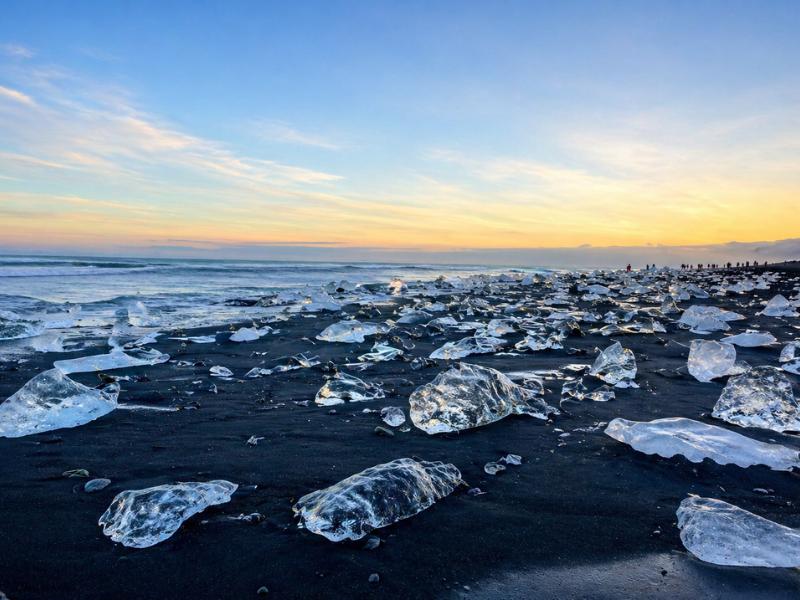
That is why the two places feel so different in person. The lagoon is silent, wide and slow, with seals cruising between the bergs and the glacier tongue at the back of the view. The beach is loud. Waves hit blocks of clear ice, ice grinds on black sand, and pieces the size of a car sit half-buried while pieces the size of a fist tumble in the wash. Photographers usually plan the lagoon for calm light and the beach for anything with surf in it.
The name is recent and commercial, not Icelandic. Locals call the strip Breiðamerkursandur, part of the great outwash plain south of Vatnajökull. Diamond Beach is what the ice looks like when a low sun goes through it, and the phrase stuck because it describes the effect exactly.
How far is Jökulsárlón from Reykjavik, and is a day trip realistic?
The lagoon is 380 km east of Reykjavik, about four and a half hours of pure driving and five to five and a half in real conditions. A day trip is genuinely possible and thousands of people do it every week, but it means 760 km of road and 10 to 11 hours in a seat for roughly 90 minutes at the ice.
| Destination | Distance one way | Realistic drive | Where it sits in the day |
|---|---|---|---|
| Seljalandsfoss | 121 km | 1 hr 45 to 2 hrs | First stretch break on the way east |
| Skógafoss | About 150 km | 2 hrs 15 | Usual first photo stop on guided days |
| Vík and Reynisfjara | 179 km | 2 hrs 30 to 3 hrs | Last full service town before the long empty run |
| Kirkjubæjarklaustur | About 250 km | 3 hrs 30 | The one reliable fuel and food stop east of Vík |
| Skaftafell, Vatnajökull edge | 322 km | 4 hrs 30 and up | Glacier viewpoints and the Freysnes lunch break |
| Jökulsárlón and Diamond Beach | 380 km | 5 to 5 hrs 30 | The turnaround point of the whole day |
Two numbers decide whether this works for you. The first is daylight, which runs 20 hours in June and four to five hours around the winter solstice. The second is your tolerance for a fixed schedule: at this distance there is no slack, so a long lunch or a missed turn eats the time you were going to spend at the lagoon. Our page on how far you can travel in one day lays out the same maths for every route east of the city.
Guided is the sensible default here, and not for the usual comfort reasons. Somebody else drives 760 km while you sleep through the dull sections, and a professional who runs this road weekly makes better calls about wind, ice and closures than a visitor on their third day in the country. The glacier lagoon day we list sits around $210 per seat on the live listing, which is close to what a rental car plus fuel costs for the same distance once you split it two ways.
What does the guided glacier lagoon day actually look like, hour by hour?
Expect a 7:30 AM departure from Reykjavik, waterfall stops on the South Coast during the morning, a lunch break around Freysnes near Skaftafell, 90 minutes at the lagoon and beach in the early afternoon, dinner in Vík on the way home, and a return between 8 and 10 PM depending on season and stops.
| Time | What happens | What to do with it |
|---|---|---|
| 7:30 AM | Departure from the city bus stops | Be there 20 minutes early; departures do not wait |
| 8:45 to 9:15 AM | Seljalandsfoss or Skógafoss stop | Waterproof shell on before you leave the bus |
| 10:00 AM to 12:30 PM | The long run east past Vík and Kirkjubæjarklaustur | Sleep. This is the stretch to bank rest for later |
| 12:30 to 1:15 PM | Lunch break near Freysnes and Skaftafell | Around 40 minutes; the last hot food before the ice |
| 2:00 to 3:30 PM | Jökulsárlón, then Diamond Beach | Split it: an hour at the lagoon, half an hour on the sand |
| 4:00 PM | Departure west | Take the toilet stop; the next one is a while |
| 6:30 to 7:15 PM | Dinner stop in Vík | Sit-down time, not a snack grab |
| 8:00 to 10:00 PM | Return to Reykjavik, with an aurora watch in season | September to April the guide will stop if the sky opens |
The aurora element is real but secondary. Between September and April the return leg happens in darkness through some of the least light-polluted country in Europe, and a driver who sees a clear northern sky will pull over. Nobody should book this day for the lights alone. If the aurora is the point of the trip, a dedicated evening hunt does the job properly, and our guide to the best time for Northern Lights explains why the two are different products.
Should you self-drive or take a guided day to the lagoon?
Self-drive wins on flexibility and on sunrise and sunset timing, which is the difference between a good photograph and a great one. Guided wins on fatigue, winter safety and cost per person for solo travellers or couples. At 760 km round trip, driver tiredness is the risk that quietly outranks everything else.
| Factor | Self-drive | Guided day |
|---|---|---|
| Time at the lagoon | As long as you want, if you started early | Typically 90 minutes across both sites |
| Driving load | 10 to 11 hours behind the wheel for one person | None |
| Winter viability | Poor: much of the drive is in darkness and wind | Good: professionals who read the road daily |
| Cost for two people | Rental, fuel and insurance, roughly comparable | Around $210 each on the live listing |
| Photography timing | Full control of golden hour at the beach | Whatever the schedule gives you |
| Extras on the day | You can add an ice cave or a boat if you booked it | Boat rides are add-ons; ice caves need a separate trip |
| What goes wrong | Fatigue, wind damage to doors, closed sections | A fixed clock you cannot argue with |
The wind deserves a specific warning. This coast produces gusts strong enough to rip a car door off its hinges, and rental insurance in Iceland usually excludes exactly that. Check the Icelandic Met Office forecast and the road conditions map before committing to the drive, and if a red or orange warning covers the south-east, take the day as a passenger or move it. We compare the wider decision in self-drive vs guided for people weighing this across a whole trip.
Is there always ice on Diamond Beach?
No. The ice on the beach is delivered by the lagoon outlet and arranged by tide, wind and swell, so the strip can be strewn with blocks one morning and almost bare the next. There is nearly always some ice somewhere on the sand, but the postcard scene of dozens of clear boulders is a matter of luck.
The mechanism is simple once you watch it. Bergs drift down the lagoon, thin as they go, and eventually pass through the short channel under the bridge. On an outgoing tide they head to sea. On an incoming tide, especially with an onshore wind, they come back and ground on the black sand. Calving activity at the glacier matters too: a quiet spell at the ice front means fewer bergs in the system a few years later.
Practical consequences for your day. Walk both sides of the channel, because the ice concentrates unevenly and one side is often noticeably richer than the other. Get low for photographs; ice at ankle height against wet black sand reads far better than the same block shot from standing. And treat the water with the same respect you would give Reynisfjara black sand beach, because this is the same Atlantic with the same habit of sending a wave much further up the sand than the previous twenty. Do not climb on grounded bergs. They roll without warning, and they weigh tonnes.
Can you go out on the lagoon by boat?
Yes, in season. Boat trips onto Jökulsárlón are an optional extra, not part of a standard day tour, and they run through the warmer months rather than year-round. Amphibian craft typically start operating in late spring. Book ahead if you want one, because capacity is limited and guided-day schedules leave little slack.
| Option | What it gives you | Season | Fit with a guided day |
|---|---|---|---|
| Amphibian boat | Slow, stable, wide deck; good for mixed-ability groups | Warmer months, typically from late spring | Tight; you need a departure inside your 90-minute window |
| Zodiac inflatable | Faster, gets closer to the glacier front | Summer weighted, weather-dependent | Usually needs more time than a group stop allows |
| Shore walking only | Free, unlimited, plenty of angles on the bergs | Year-round | The default on almost every guided day |
| Winter ice cave trip | Inside the glacier that feeds the lagoon | Winter only, separate 3 to 4 hour tour | Does not fit a day trip from the capital |
Costs and departure times for the boats move with the season, so read the operator's own page on the day rather than trusting a figure from a blog. The ice cave point is worth dwelling on: the Crystal Cave forms in Breiðamerkurjökull, the same glacier calving into the lagoon, and it departs from the Jökulsárlón car park. Fitting that into a day from Reykjavik is not realistic, which is why our ice cave tours guide pushes people toward an overnight on the south-east coast.
Which month should you go?
June and July give the light and the time to do the drive comfortably. February and March give blue ice, low sun and a real chance of aurora on the return leg. October and November are the awkward months: short days and unsettled weather without full winter compensation.
| Month | Daylight in Reykjavik | Conditions on the route | Verdict for this day |
|---|---|---|---|
| June and July | 20 to 21 hours | Warmest ground, seals active, longest day to work with | The easiest version of the trip; book early |
| August and September | 14 to 18 hours | Light softening, first aurora chances late in the window | Excellent balance of light and quiet |
| October | About 10 hours | Wind picking up, some driving in the dark | Workable guided, marginal self-drive |
| November to January | 4 to 7 hours | Both drives in darkness, ice on the road, strong aurora odds | Guided only; do not self-drive this one |
| February and March | 8 to 12 hours | Blue ice at its best, cold clear spells, aurora season peak | The connoisseur's month if the weather holds |
| April and May | 14 to 18 hours | Melt underway, boats starting, fewer visitors than summer | Strong value; May is the quiet sweet spot |
Winter needs one caveat spelled out. Around the solstice Reykjavik sees sunrise near 11:20 and sunset near 15:30, so a guided departure at 7:30 AM leaves in the dark and comes home in the dark, with daylight arriving roughly as you reach the lagoon. That is not a failure of the tour. It is the trade you make for winter blue ice, and knowing it in advance is the difference between disappointment and a good day. Our guide to day trips from Reykjavik in winter covers the same maths across the other routes.
What do you pay for on the day?
Both sites are free to enter. Your day money goes on food, the optional boat ride, and parking if you are driving. There is no ticket booth at the lagoon or the beach, which surprises visitors who assume Iceland's most photographed ice comes with a gate.
| Cost | Guided day | Self-drive |
|---|---|---|
| Lagoon and beach entry | Free | Free |
| Transport | Around $210 per seat on the live listing | Rental, fuel for 760 km, insurance |
| Lunch | Own cost at the Freysnes stop | Own cost; Kirkjubæjarklaustur or Freysnes |
| Dinner | Own cost in Vík on the way home | Own cost, same options |
| Boat on the lagoon | Extra, seasonal, book separately | Extra, seasonal, book separately |
| Parking | Included in the seat | Paid parking at the main car park |
| Snacks and water | Bring them; the gap east of Vík is 200 km | Same, and more so |
That 200 km gap between Vík and the lagoon is the practical planning fact of the whole route. Food options there are close to nonexistent beyond the petrol station at Kirkjubæjarklaustur, so anyone with dietary constraints or travelling with children should shop before leaving town. The same goes for fuel on a self-drive: fill up in Vík, not in hope.
What should you wear and carry for a 14-hour day?
Waterproof outer layers, a warm mid-layer, a hat and gloves in any season, and footwear with grip. The lagoon car park is on an open plain beside a glacier, the beach is on the open Atlantic, and the wind there is colder than the same wind in the capital by a wide margin.
| Item | Why it matters on this route | Season |
|---|---|---|
| Waterproof shell and trousers | Spray at Seljalandsfoss soaks anything else for the rest of the day | Year-round |
| Warm mid-layer | Katabatic wind off Vatnajökull drops the felt temperature hard | Year-round |
| Hat and gloves | Photographing ice with bare hands lasts about four minutes | Year-round |
| Boots with real tread | Wet black sand and iced-over car parks | Year-round; add spikes in winter |
| Snacks and a full water bottle | The service gap east of Vík is genuine | Year-round |
| Power bank | Cold flattens phone batteries, and the day is long | Year-round |
| Sunglasses | Low sun off ice and water is fierce | Spring and summer |
Nothing on that list is specific to the glacier lagoon, which is the point: the kit that works here works on every long route east. Our page on what to wear on an Iceland day trip goes deeper into layering, and the SafeTravel service publishes the warnings that should override any packing decision.
What else does the road east give you along the way?
The drive is not filler. Between Reykjavik and the lagoon the route passes Seljalandsfoss and Skógafoss, the black sand at Reynisfjara, the village of Vík, the Sólheimajökull glacier tongue, the moss-covered Eldhraun lava field and the peaks above Skaftafell, with Iceland's highest summit visible on a clear afternoon.
Guided days stop at two or three of those and drive past the rest with commentary. That sounds like a compromise until you realise the alternative is a self-driver deciding, at 11 AM with 200 km still to run, whether a canyon detour is worth arriving at the ice in fading light. The honest answer on a single day is that the lagoon is the point and everything else is scenery through a window.
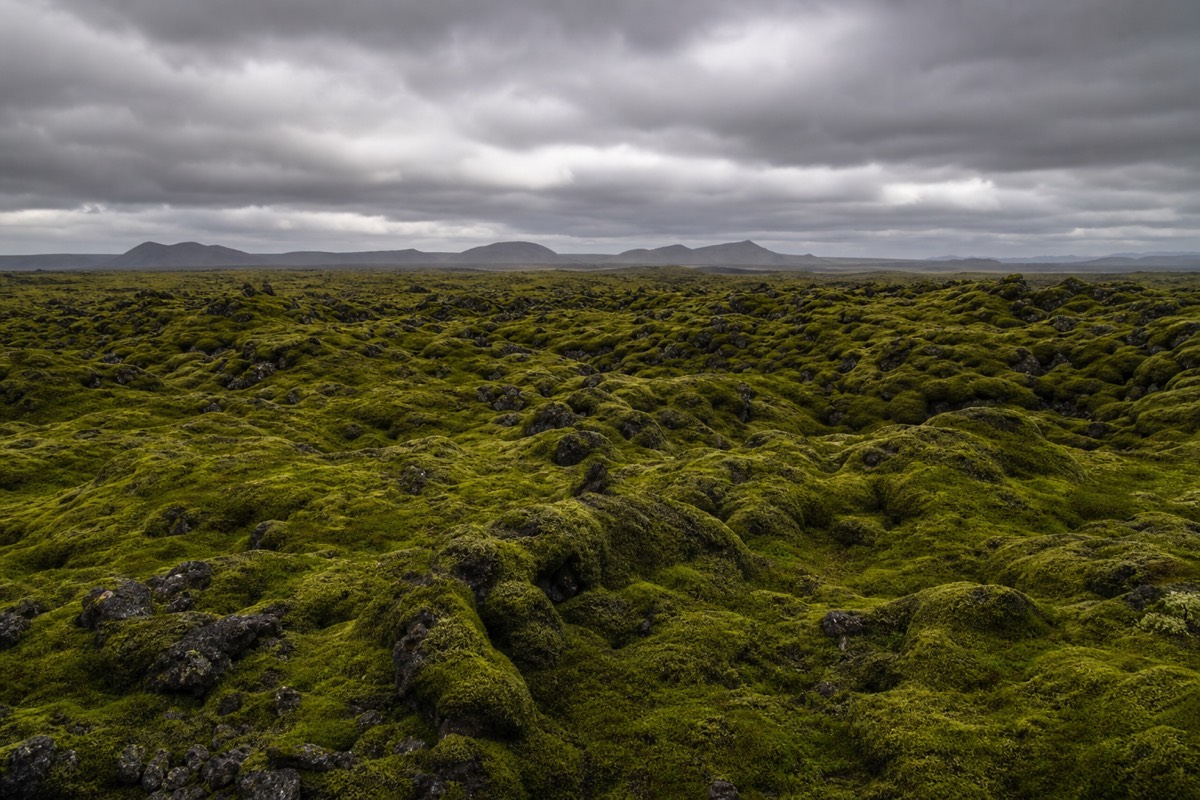
A few of those roadside features are worth knowing by name so you understand what you are looking at. Eldhraun is the vast green moss field east of Kirkjubæjarklaustur, left by the Laki eruption of 1783 and still one of the strangest surfaces in the country. Sólheimasandur is the black outwash plain where the wrecked aircraft sits, a 45-minute walk each way from the road that no day tour to the lagoon has time for. Skaftafell, once a national park in its own right and now part of Vatnajökull National Park, is where the Freysnes lunch break puts you within sight of glacier tongues spilling off the ice cap.
At the lagoon itself, look for seals. They follow fish in from the sea through the outlet channel and haul out on ice or patrol the water near the bridge, and they are easiest to spot from the higher ground on the west side of the car park. Bring or borrow binoculars if wildlife is part of what you came for. On the beach, the interest is smaller in scale: the ice reads as sculpture up close, full of trapped air bubbles and the compression bands that formed while it was still buried in the glacier.
Who should skip the day trip and stay overnight instead?
Skip the single day if you are a photographer chasing sunrise or sunset on the ice, if you are travelling with young children, or if you want the winter ice caves. Those all argue for a night near Höfn or Kirkjubæjarklaustur, which turns a 14-hour endurance run into two unhurried half-days.
The pattern in traveller feedback is consistent. People who drive out and back in one day usually describe the lagoon as incredible but rushed. People who overnight and reach the ice at first light describe it as the best thing they did in Iceland. Same place, different clock. If you have the nights to spare, spend one.
For everybody else the day trip stands up perfectly well, and the honest reason is that the alternative is not seeing it at all. Most visitors have four or five nights, a list that already includes the Golden Circle and the South Coast, and no appetite for repacking a suitcase. In that situation a long guided day is the right answer, which is exactly why we run day trips from Reykjavik tours that cover this distance with somebody else at the wheel. If you are still weighing it up, the short version lives in our blog answer to whether Jökulsárlón is worth it.
One alternative worth naming: if the drive sounds like too much but you want the South Coast headline sights, turn around at Vík. The route to Reykjavik to Vík covers Seljalandsfoss, Skógafoss, the black sand and the glacier tongue at Sólheimajökull in a 10-hour day rather than a 14-hour one, and nobody comes home from it feeling short-changed.