Westman Islands Day Trip From Reykjavik: Ferry, Timings and What to See
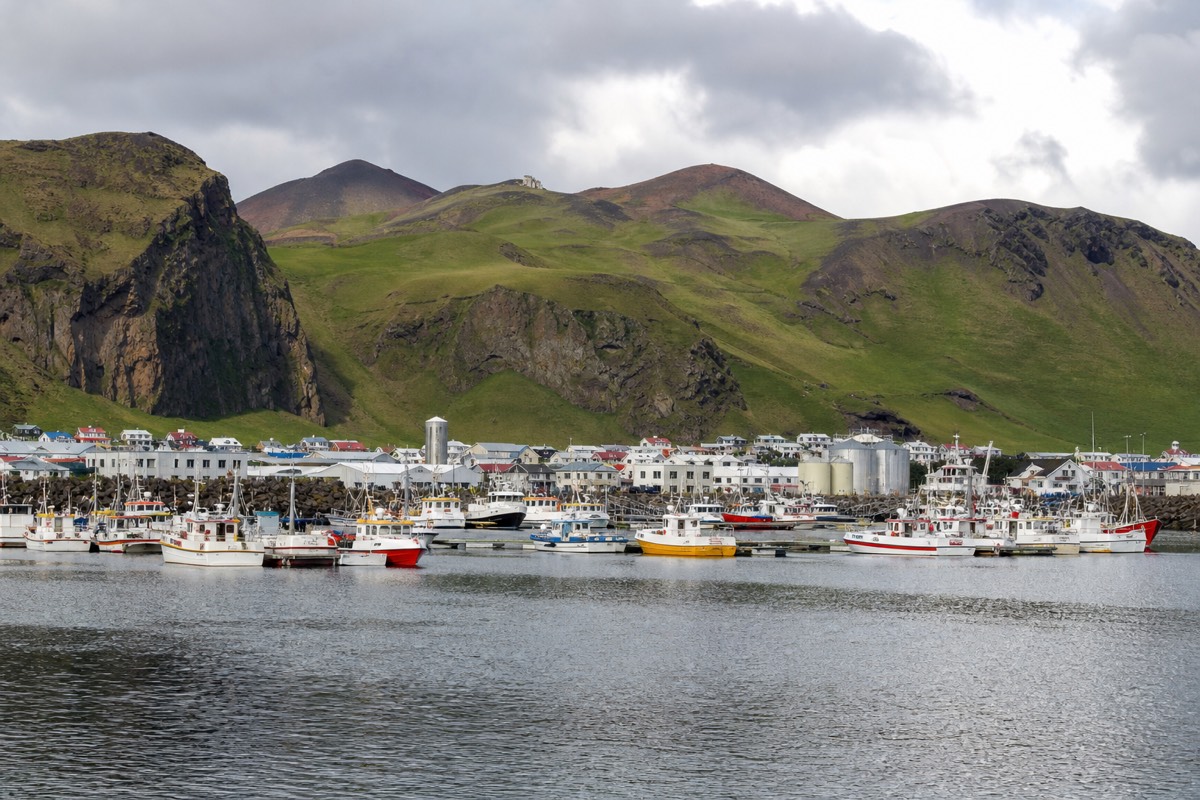
Heimaey is the one Icelandic island you can reach, walk, climb and leave inside a single day from the capital. The catch is the ferry, and the ferry answers to the weather.
The independent day is achievable, but travellers who prefer one booking can choose a private Reykjavik departure with road transport, ferry passage and guided island sightseeing included. Explore Private Westman Islands Day
Booking Choice: Self-plan for flexibility, choose the private Westman Islands tour when you want transport and ferry logistics handled, or keep a guided South Coast day as the ferry-independent alternative. View Private Westman Islands Day
The Westman Islands day, hour by hour
Five hours on the island is what a standard day buys. Everything else is road and sea.
Can you visit the Westman Islands as a day trip from Reykjavik?
Yes. Drive about 125 km to Landeyjahöfn, cross to Heimaey in around 35 minutes, spend five or six hours on the island and sail back the same evening. The whole thing runs to roughly 10 hours door to door, and the only real variable is whether the sea and the harbour cooperate.
What makes it work is the short crossing. Most island trips in the North Atlantic cost you half a day in transit before anything begins. Here the ferry is a bus ride with better views, and the archipelago sits close enough to the mainland that you can see it from Route 1 on a clear morning, a cluster of green humps standing out of the water off the south coast.
What makes it fail is the same geography. Landeyjahöfn is a young harbour cut into a sand coast with no natural shelter, and it silts up. In rough conditions, or when the channel is choked, sailings move to Þorlákshöfn much further west and the crossing stretches from 35 minutes to a couple of hours. That switch is announced by the operator, sometimes at short notice, and it changes your day completely.
So the honest framing is this: the Westman Islands are an excellent day trip with a weather clause attached. Build the day around an early departure, check the sailing harbour the night before and again in the morning, and have a plan for what you do on the South Coast instead if the crossing is cancelled. Travellers who treat that clause as a nuisance have a bad time. Travellers who plan for it usually come home saying it was the most surprising day of their trip.
How does the Herjólfur ferry work?
The Herjólfur ferry links Landeyjahöfn on the South Coast with Vestmannaeyjar harbour on Heimaey in roughly 35 minutes. An adult foot passenger fare is around ISK 2,700 one way. Cars need booking well ahead in summer, and in poor conditions sailings are moved to the longer route from Þorlákshöfn.
| Detail | What to expect |
|---|---|
| Standard route | Landeyjahöfn to Vestmannaeyjar, around 35 minutes |
| Bad-weather route | Þorlákshöfn to Vestmannaeyjar, a substantially longer crossing |
| Adult fare | Around ISK 2,700 one way; check the operator's booking page for current rates |
| Vehicles | Bookable, and summer sailings sell out; reserve well in advance |
| Foot passengers | Far easier to place at short notice than a car |
| Frequency | Several sailings a day, more in summer than in winter |
| Check-in | Arrive with time in hand; the boat leaves on the clock |
The car question decides the shape of your day. Heimaey's town is small and walkable, and the main sights sit within a couple of kilometres of the harbour, so foot passengers manage perfectly well. Taking a car buys you the road up to Stórhöfði at the southern tip and the loop around the eastern side, which matters if you have limited mobility or short daylight. It also doubles the booking difficulty in July and August.
One scheduling detail people miss: the last useful return sailing is what fixes your day, not the first departure. Work backwards from it. Being stuck on an island because you misread a timetable is an expensive mistake in a place where hotel rooms are scarce and often full.
How do you get from Reykjavik to the ferry harbour?
Landeyjahöfn is about 125 km from Reykjavik, roughly an hour and 45 minutes on Route 1 then Route 254. There is no dedicated tour-bus network built around it the way there is for the Golden Circle, so most day-trippers drive. A short scheduled flight from the city airport is the alternative for anyone skipping the road entirely.
| Option | Time to the harbour | Works when | Watch out for |
|---|---|---|---|
| Self-drive | About 1 hr 45 | You want full control of the early start | Winter wind and ice on the exposed final stretch |
| Rental plus foot passage | About 1 hr 45 | Car park at the harbour, cross on foot | Cheapest sensible version; no ferry vehicle booking needed |
| Car on the ferry | About 1 hr 45 plus loading | You need wheels on Heimaey | Books out early in summer |
| Flight from Reykjavik city airport | Well under an hour in the air | You want to skip the drive completely | Small aircraft, weather-sensitive, limited seats |
| Þorlákshöfn diversion | About 50 km from Reykjavik | The harbour switch has been announced | Shorter drive, much longer sailing |
The drive itself is the first hour of the standard South Coast run, so it will feel familiar to anyone who has done that route. You pass Hveragerði, Selfoss and Hvolsvöllur, and the turn south comes before the country opens up toward the glaciers. If you are weighing this against other routes east, our page on how far you can travel in one day puts the distances side by side.
Anyone without a car should think carefully. Public transport to Landeyjahöfn exists in a limited form and is not designed around day-tripping visitors, and the harbour has no town attached to it. Our guide to day trips from Reykjavik without a car covers the routes that are genuinely car-free, and this one is not on the easy list.
What does a realistic Westman Islands day look like?
Leave the city by 7 AM, reach Landeyjahöfn around 8:45, cross on a mid-morning sailing, and you land on Heimaey with five to six clear hours before a late-afternoon or early-evening return. Back in Reykjavik between 7 and 9 PM depending on which sailing you take.
| Time | Where you are | Notes |
|---|---|---|
| 6:45 to 7:00 AM | Leaving Reykjavik | Fuel and coffee before you go; the harbour has neither in quantity |
| 8:45 AM | Landeyjahöfn car park | Check in early, leave the car, walk on |
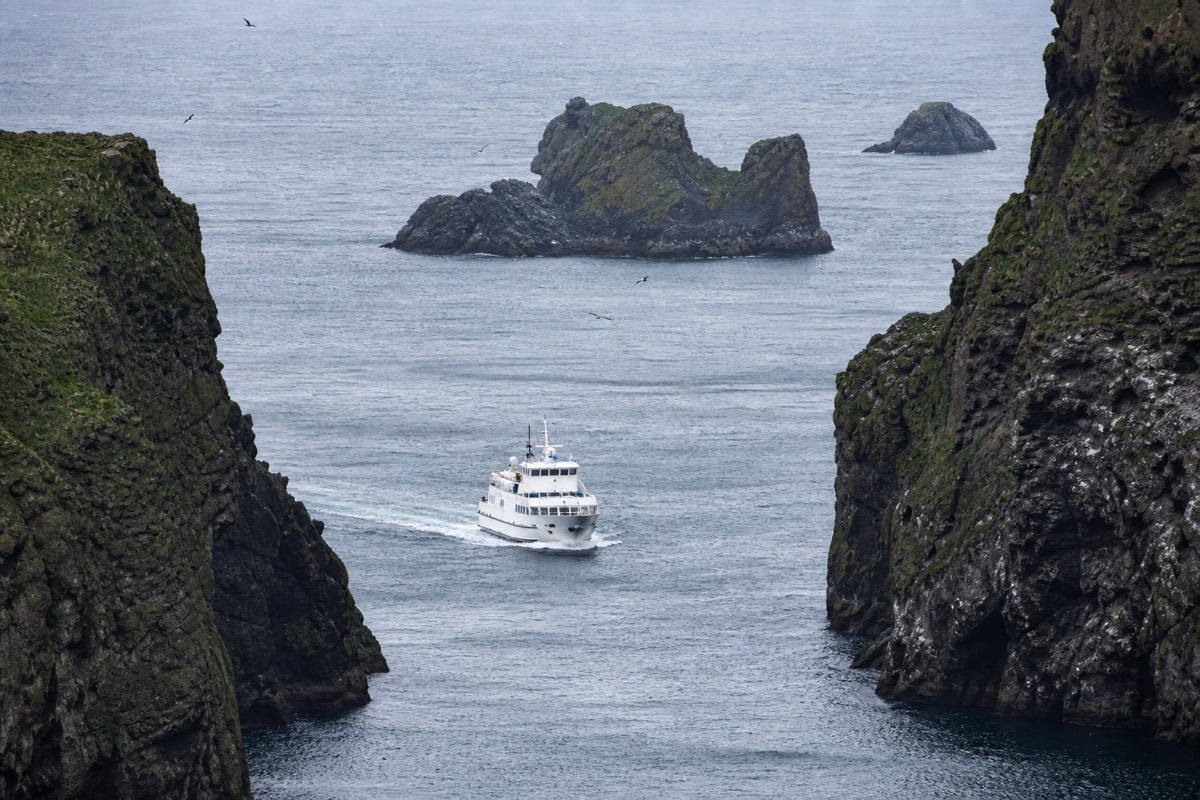
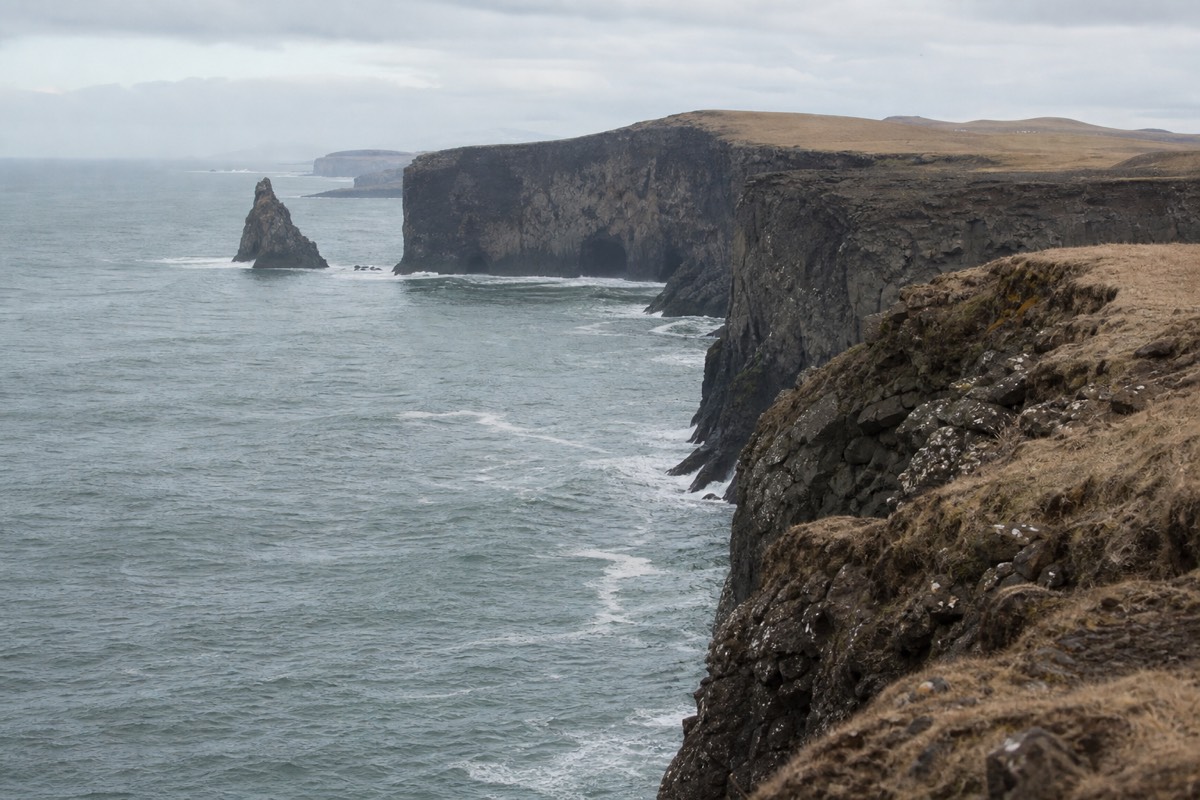
| 9:30 to 10:05 AM | The crossing | Stand outside if the sea allows; the approach past the cliffs is the best part |
| 10:15 AM to 12:00 PM | Town, Eldheimar, harbour | The museum takes an hour and is the anchor of the day |
| 12:00 to 1:00 PM | Lunch in town | Small selection; the harbourfront places fill quickly in summer |
| 1:00 to 3:30 PM | Eldfell climb or the Stórhöfði road | Pick one. Both in half a day means rushing both |
| 3:30 to 4:15 PM | Back to the ferry terminal | Coffee, a browse, and buffer for the walk from town |
| Late afternoon | Crossing back | Confirm the last sailing before you plan anything else |
| 7:00 to 9:00 PM | Reykjavik | Longer if you stop on the South Coast on the way home |
That itinerary has one deliberate compromise in it: you choose between the volcano and the southern headland rather than doing both. People who try to fit everything spend the day looking at a watch. If you want both, and the boat tour around the island as well, this is an overnight rather than a day trip, and Heimaey has enough small guesthouses to make that work outside festival week.
What is there to do on Heimaey in five hours?
Four things carry the island: the Eldheimar museum built around a house buried in the 1973 eruption, the climb up the Eldfell cone, the puffin cliffs and the Stórhöfði headland in season, and a boat trip along the sea caves. Add the harbour itself, which is a working fishing port rather than a tourist set piece.
| Sight | Time needed | Effort | Best season |
|---|---|---|---|
| Eldheimar eruption museum | 60 to 90 minutes | None; indoors | Year-round, and the wet-weather answer |
| Eldfell cone climb | 60 to 90 minutes return | Moderate; loose red scoria underfoot | May to September; icy and wind-blasted in winter |
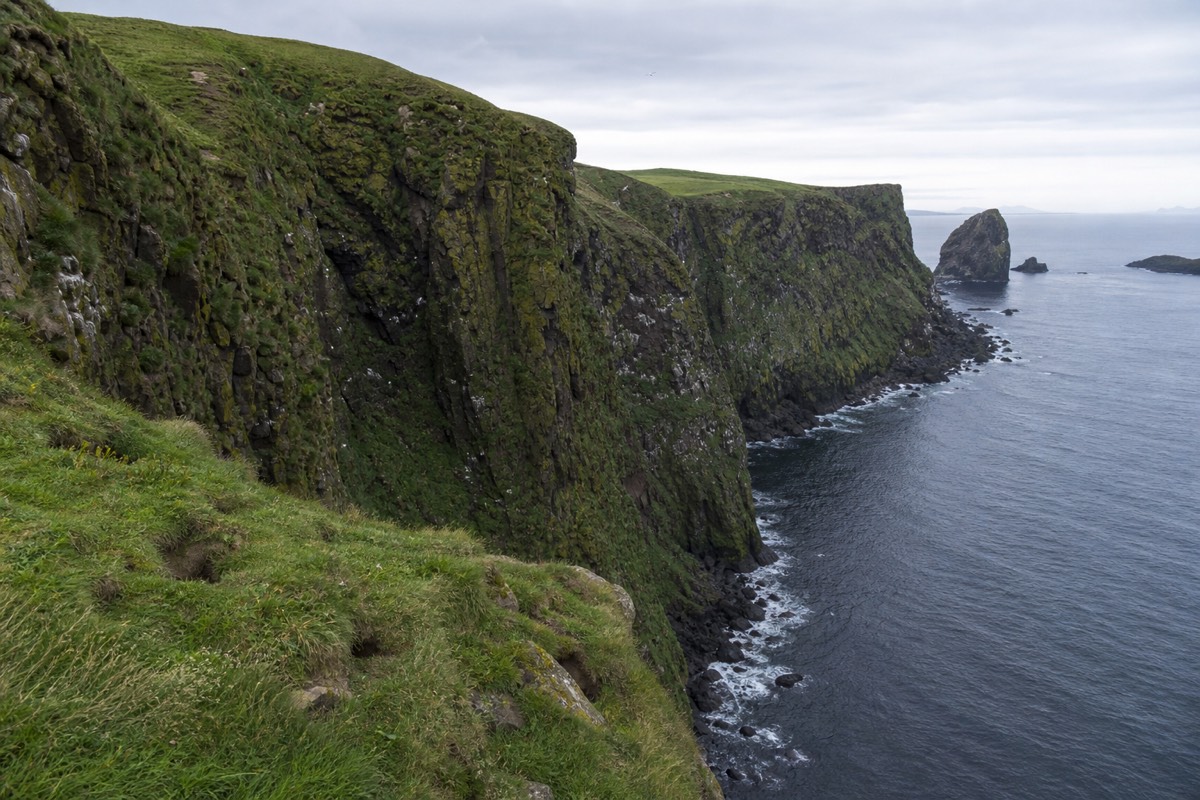
| Stórhöfði headland and hide | 45 to 60 minutes plus travel | Easy, but the wind there is extraordinary | Mid-April to mid-August for puffins |
| Boat tour of the sea caves | 60 to 90 minutes | Easy; swell-dependent | Summer weighted |
| Skansinn, the stave church and the old harbour wall | 30 to 45 minutes | Easy walking from town | Year-round |
| Sæheimar aquarium and rescued puffins | 30 to 45 minutes | None; indoors | Year-round, excellent with children |
| Herjólfsdalur valley | 45 minutes | Easy | Summer; avoid festival week unless you came for it |
Pick three of those and the day feels full rather than frantic. The pairing most first-timers should take is Eldheimar plus Eldfell: the museum explains what happened, then you walk up the thing that did it. In puffin season, swap the climb for Stórhöfði and you get the wildlife day instead.
What happened in the 1973 eruption, and can you still see it?
A fissure opened on the eastern edge of the town in January 1973 with no meaningful warning. The whole population was evacuated overnight by the fishing fleet, lava buried hundreds of houses, and the eruption ran until that summer. It left the Eldfell cone, a larger island, and a harbour that ended up better sheltered than before.
The detail that sticks with visitors is the seawater operation. As the lava advanced toward the harbour entrance, crews pumped seawater onto the flow front for weeks to chill and stall it, an improvised piece of engineering that worked well enough to save the port the town's economy depended on. Iceland's fishing industry and the island's entire future ran through that decision.
Eldheimar is built around one excavated house, dug out of the tephra decades later and left as it was found. The effect is not subtle and it is not meant to be. Around it the museum runs the documentary footage, the evacuation timeline and the personal accounts, and by the end you understand why the streets on the eastern side of town simply stop.
Outside, the evidence is under your feet. Eldfell is a red and black cone rising directly behind the houses, walkable in an hour on a marked path, with steam still escaping in places where the ground has not fully cooled. From the top you can see the new lava field, the town, the harbour and the mainland coast with the glaciers behind it. Anyone interested in Iceland's volcanic sites will find the comparison useful next to the accessible craters covered in our Kerið crater guide, which is a far older and gentler piece of the same story.
When can you see puffins in the Westman Islands?
Puffins are ashore from roughly mid-April to mid-August, and the Westman Islands hold the largest concentration in Iceland. Stórhöfði at the southern tip has a purpose-built hide, and the cliffs around the island fill with birds through the nesting season. By late August the colonies empty and the birds return to the open ocean.
The islands are also the home of one of Iceland's most charming pieces of civic tradition. When young puffins leave the burrows at the end of summer they navigate by moonlight, and town lights confuse them, so they land in the streets. Local children go out at night to collect the stranded birds and release them at the cliffs the following day. It is not a tourist show. It happens because it has always happened.
For visitors, the practical rules are simple. Keep back from cliff edges, which undercut and give way without warning. Do not approach burrows, because the ground above them is fragile and a collapsed burrow can end a breeding attempt. Bring binoculars, and expect the birds to be busiest at the start and end of the day when they come in from fishing. Our full guide to where to see puffins covers the other accessible colonies, and the short answer to when puffins leave Iceland is on the blog.
What happens when the ferry does not sail?
Sailings are cancelled or rerouted in strong wind and heavy swell, and Landeyjahöfn also closes when sand blocks the channel. The operator publishes changes on its own site, and the fallback is the longer crossing from Þorlákshöfn. In winter this happens often enough that you should treat the trip as provisional until the morning of.
| Situation | What usually happens | Your move |
|---|---|---|
| Strong wind warning on the south coast | Sailings cancelled or reduced | Check the forecast the night before and rebook |
| Sand in the Landeyjahöfn channel | Route switches to Þorlákshöfn | Shorter drive from the city, much longer sailing; start earlier |
| Heavy swell but sailings running | Crossing goes ahead, uncomfortably | Take motion sickness tablets before boarding, not after |
| Cancelled while you are on the island | You stay the night | Never book this day the evening before a flight home |
| Snow or ice on Route 1 | The drive becomes the problem, not the sea | Check road conditions; consider postponing |
Three sources answer the whole question between them. The Icelandic Met Office gives you wind and swell, road conditions tells you whether Route 1 is behaving, and SafeTravel carries the official warnings that should override any plan. The ferry operator's own page is the final word on which harbour is in use.
The rule about flights is not negotiable. Do not schedule this trip for the day before you leave Iceland. The archipelago has stranded plenty of visitors over the years, and being on the wrong side of a cancelled sailing with a morning departure from Keflavík is a genuinely bad evening.
A tour booking cannot make a cancelled ferry sail. Follow current operator notices for the operating harbour and use the contingency plan above.
Which month is best for the islands?
June and July give long light, the fullest puffin colonies and the highest chance of a smooth crossing. May and August are quieter with most of the same advantages. Winter is for people who want the island as a working town rather than a wildlife destination, and who accept that a fair share of sailings will not run.
| Month | Crossing reliability | What the island offers | Verdict |
|---|---|---|---|
| January to March | Lowest; frequent cancellations and reroutes | Museum, harbour, dramatic seas, empty streets | Only with a flexible schedule |
| April | Improving | First puffins ashore from mid-month; 14 hours of light by month end | Good early-season value |
| May | Good | Colonies filling, cliffs green, few visitors | The quiet sweet spot |
| June and July | Best | Peak puffins, boat tours running, nearly endless daylight | The strongest all-round window |
| Early August | Good | Puffins still ashore; festival week fills the island completely | Excellent, but check the festival dates first |
| September and October | Variable | Birds gone, weather turning, low golden light on the cliffs | Good for photographers, poor for wildlife |
| November and December | Low | Short days, big seas | Treat as a bonus rather than a plan |
Festival week deserves the warning it gets. The islands host a large national festival in Herjólfsdalur valley in early August, and during it the ferry, the accommodation and the town itself are effectively booked out. If your dates land on it, either go for the festival deliberately or go a week either side.
Westman Islands or the South Coast: which is the better single day?
Take the South Coast if this is your only free day and you want guaranteed sights: waterfalls, black sand and a glacier tongue, none of which depend on a boat. Take the Westman Islands if you already have the South Coast covered and want something Iceland's day-trip circuit almost never gives you, which is an island with a town on it.
| Factor | Westman Islands | South Coast day |
|---|---|---|
| Weather risk | High; the crossing can be cancelled outright | Low; the route runs in almost all conditions |
| What you see | Volcano, town, cliffs, harbour, puffins in season | Seljalandsfoss, Skógafoss, Reynisfjara, Sólheimajökull |
| Time in transit | Around 4 hours 30 including both crossings | Around 5 hours of driving, spread across stops |
| Guided options | Limited; mostly a self-organised day | Plenty; small-group minibuses run daily |
| Effort to arrange | Ferry booking, timings, weather watching | Book a seat and be at the stop |
| Best for | Repeat visitors, wildlife interest, volcanic history | First-timers and anyone on a tight schedule |
There is no contradiction in doing both, and they overlap by design: the drive to the ferry is the first hour of the coastal route. The South Coast waterfalls and black sand day we list turns the same road into a guided 10-hour outing with no ferry clause attached, which is why it is the sensible fallback if your sailing is cancelled. Our full set of day trips from Reykjavik tours keeps the same principle: the days that depend on weather say so.
Who should skip the Westman Islands, and what to book in advance
Skip it if you have one day, changeable weather and no appetite for risk, if you get badly seasick, or if you are flying home the next morning. Everyone else should book the ferry as soon as dates are fixed and treat everything else on the island as walk-up.
The booking list is refreshingly short. Reserve the ferry, and reserve it as a foot passenger unless you have a specific reason to bring wheels, because vehicle space is the first thing to disappear in summer and a car booking is far harder to move when the weather turns. A few days ahead is usually enough in June and July for foot passage; vehicle space wants weeks. If you want the boat tour along the sea caves, that is worth a call a day or two out, since the boats are small and the departures are swell-dependent.
Everything else on Heimaey is walk-up. The museums, the aquarium, the climbs and the headland all take you as you arrive, and none of them sells out in the way mainland sites do. If you decide to stay the night, that is the one exception: the island has limited rooms, and in July and August, particularly around festival week, they go early.
Bring the same kit you would take anywhere on this coast: waterproof shell, warm mid-layer, hat, gloves, boots with grip. Stórhöfði is regularly cited among the windiest inhabited spots in Europe, and standing there in an unlined jacket is a memorable form of regret. Pack motion sickness tablets even if you rarely need them, because the stretch between the harbour and the shelter of the islands can be lively.
If the sailing is cancelled and you are already halfway down the coast, keep going. Seljalandsfoss and Skógafoss are within half an hour of the ferry turn, and Reynisfjara black sand beach is an hour beyond that. The route east through Reykjavik to Vík gives you a full day without a single timetable to obey, which on a windy morning in Iceland counts for a great deal.