Puffins in Iceland: Season, Where to See Them and How Close You Get
Puffins are ashore in Iceland for about four months of the year and invisible for the other eight. Here is the window, the colonies you can reach from Reykjavik in a day, and how to actually see birds rather than distant specks.
First check whether puffins are ashore. Then choose a focused harbour hour, one restricted RIB sailing for puffins and whales, or a private full-day Heimaey itinerary. Explore RIB Whale Watching
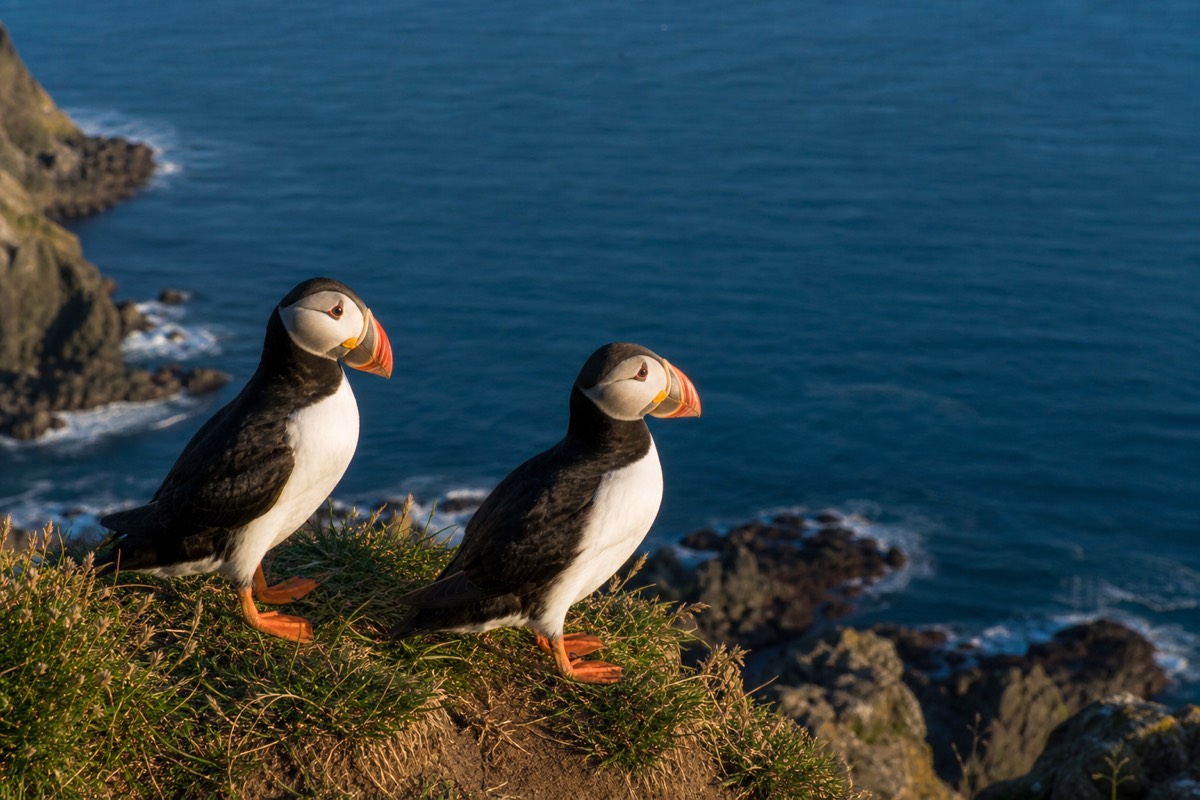
Booking Choice: Puffins are a summer-only decision. A dedicated cruise suits limited time, the RIB combines a brief island visit with whale watching, and the private Westman Islands day handles transport while offering only possible seasonal puffin sightings. View RIB Whale Watching
Puffin season in Iceland, at a glance
Four months ashore, eight at sea. Nothing on land will find you a puffin in October.
When is puffin season in Iceland?
Atlantic puffins come ashore from roughly mid-April and leave for the open ocean by mid-August. Colonies near Reykjavik fill from about the first of May. Outside that window the birds are at sea, hundreds of kilometres out, and no tour, hide or cliff path will produce one.
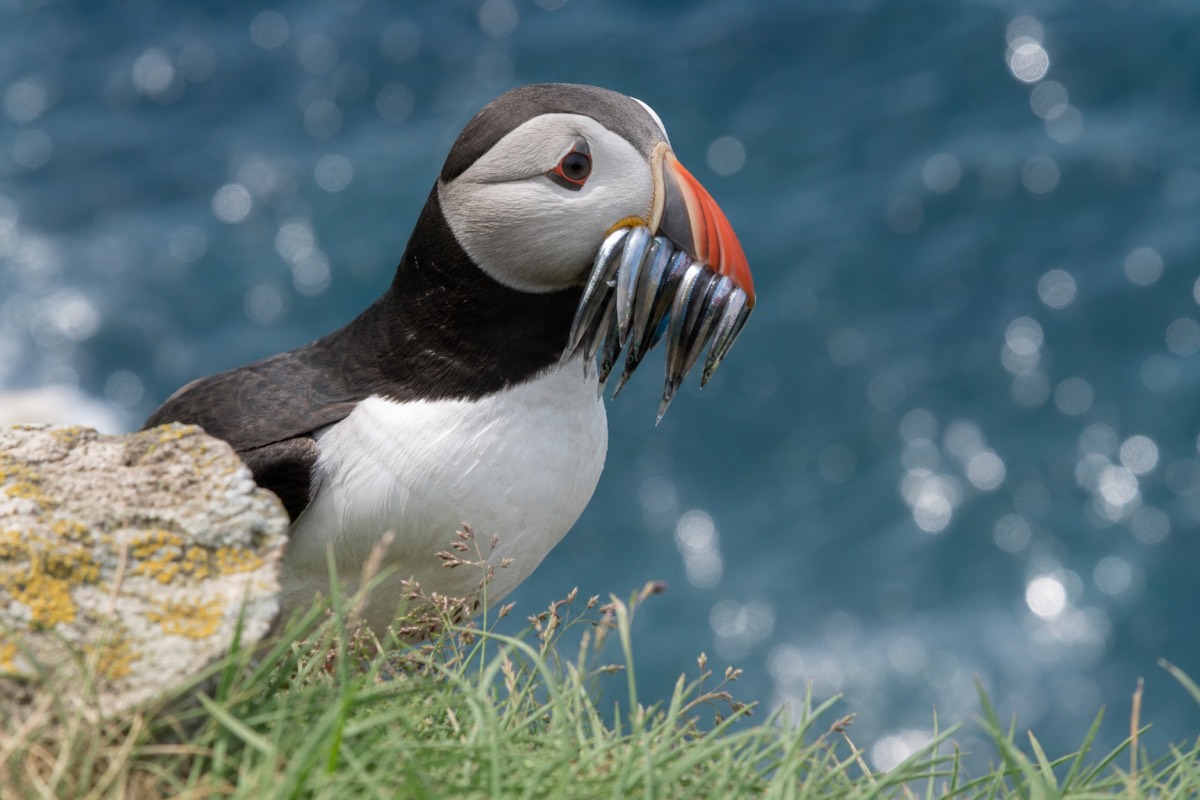
That single fact decides more Iceland itineraries than most travellers expect. Puffins are pelagic birds. They spend the winter on the open Atlantic, bobbing on water in weather that would sink a small boat, and they only come to land to breed. Once the chick has fledged, the entire colony empties within days and the cliffs that held thousands of birds in July are silent by the end of August.
| Period | What the birds are doing | Your odds |
|---|---|---|
| September to March | At sea across the North Atlantic | None. There is nothing to see on land |
| Mid-April | First arrivals at the colonies, pairs reforming | Building; numbers thin and weather-dependent |
| May | Burrows occupied, eggs laid, colonies at full strength | Excellent, and quieter than midsummer |
| June | Incubation and early chicks; heavy traffic to and from the sea | Peak. The best month overall |
| July | Adults ferrying fish; the classic beak-full-of-sand-eels shot | Peak, with the best photography |
| Early August | Chicks close to fledging, adults still commuting | Very good, tailing off through the month |
| Mid to late August | Fledging, then departure | Fading fast. Assume the season is over |
Iceland matters to this species more than any other country. It holds the largest share of the world's Atlantic puffins, and the colonies range from a few hundred birds on a coastal stack to hillsides riddled with burrows. That abundance is why a visitor with four days and no wildlife plan still stands a good chance of seeing them, provided the calendar cooperates. The short version of the departure question lives on our blog answer to when puffins leave Iceland.
Where can you see puffins within a day of Reykjavik?
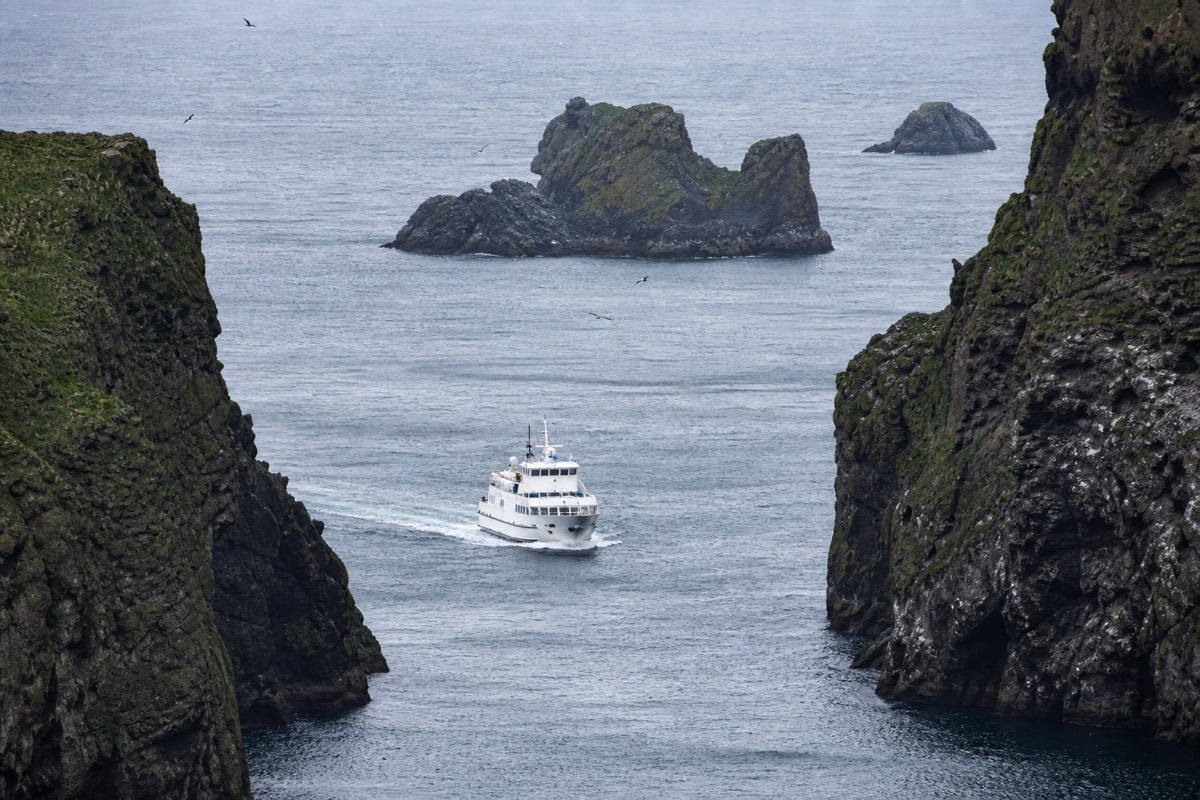
Four options are realistic from the capital: the islands of Lundey and Akurey in Faxaflói Bay, reached by boat from the old harbour; the Reynisfjall cliffs above Reynisfjara on the South Coast; the cliffs at Arnarstapi and Lóndrangar on Snæfellsnes; and Heimaey in the Westman Islands, which holds the largest concentration in the country.
| Site | How you reach it | Travel from Reykjavik | Viewing quality |
|---|---|---|---|
| Lundey and Akurey | Boat from the old harbour | Minutes from downtown; 1 to 3 hour sailing | Thousands of birds on and around the water; from the deck |
| Reynisfjall, above Reynisfjara | South Coast road, then look up | About 2 hrs 30 by road | Cliff-top burrows; visible from the beach and the clifftop path |
| Dyrhólaey headland | Short detour off the South Coast route | About 2 hrs 30 by road | Very good, but the area carries seasonal access restrictions in nesting season |
| Arnarstapi and Lóndrangar | Snæfellsnes Peninsula loop | About 2 to 2 hrs 30 by road | Birds on sea stacks and cliff faces, with a coastal walk attached |
| Heimaey, Westman Islands | Drive plus a 35 minute ferry | Around 2 hrs 30 to the island | The largest concentration in Iceland; a hide at Stórhöfði |
| Látrabjarg, Westfjords | Long drive north-west | Far beyond day-trip range | Legendary, but this is a multi-day trip |
The two workhorses are the harbour boats and the South Coast cliffs, because both slot into days people were going to have anyway. If your itinerary already includes the coastal route, the birds are a bonus at Reynisfjara black sand beach rather than a separate expedition. If you are doing the western loop, our Snæfellsnes Peninsula day trip guide covers the same cliffs from the land side.
Heimaey is the specialist choice and the strongest one for anybody who genuinely cares about seabirds. It takes a full day and a ferry, which our Westman Islands day trip guide sets out in detail, and it rewards that effort with numbers no mainland site matches.
Boat or cliff: which way should you see them?
Boats put you level with the water where puffins take off, land and raft in groups, which is where the behaviour is. Cliffs put you above the burrows, where the birds stand around looking exactly like the photographs. For a first encounter the boat wins; for photography, a clifftop with patience wins.
| Approach | What you get | Limits | Best for |
|---|---|---|---|
| Dedicated puffin boat from the old harbour | Close passes at the island colonies, birds on the water | Around an hour; no landing on the islands | Short on time, staying in the city |
| Whale watching sailing | Whales plus a pass by Lundey and Akurey | Puffins are secondary to the whale route | Anyone wanting two wildlife species in one trip |
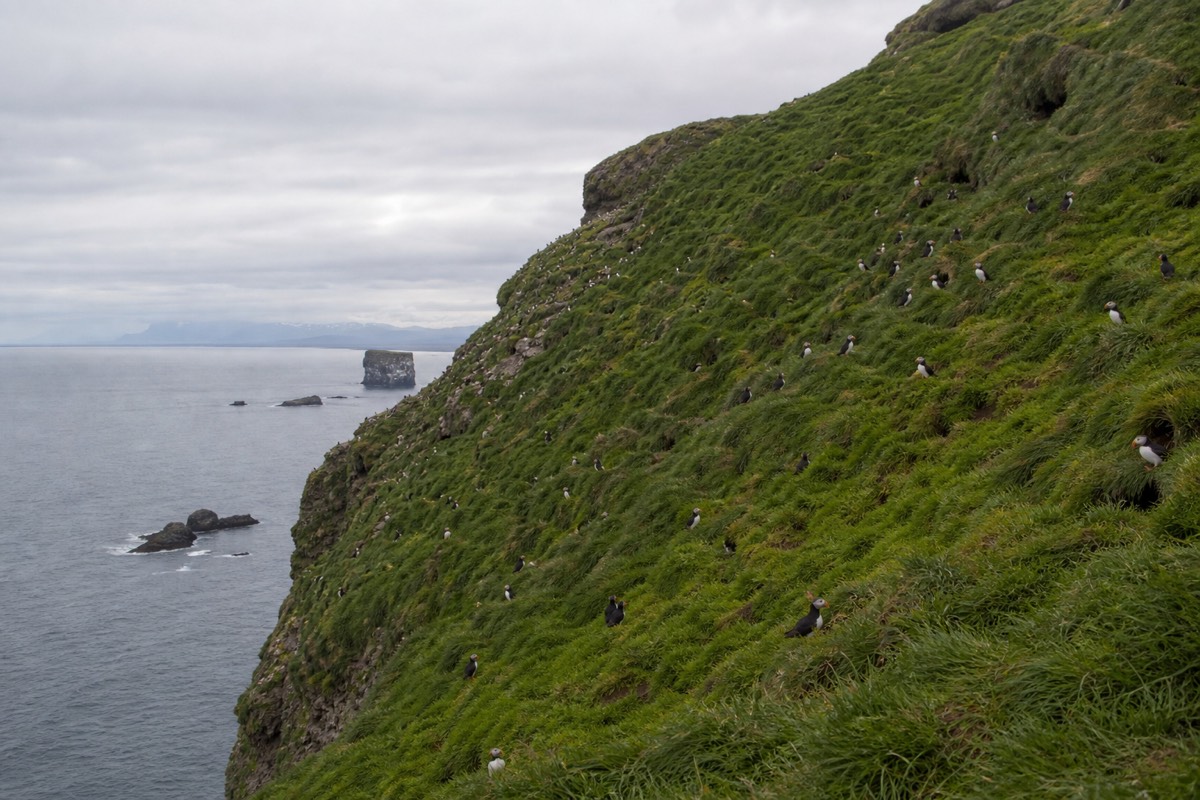
| South Coast clifftop | Birds at eye level on the burrow slopes | Wind, and edges that undercut without warning | Photographers and self-drivers |
| Stórhöfði hide, Heimaey | Shelter, and birds a few metres away | Requires the ferry day | Serious wildlife interest |
| Snæfellsnes coastal path | Puffins on stacks with the coastal walk as context | Numbers lower than the big colonies | Combining scenery with wildlife |
The behavioural argument for boats is worth spelling out. Puffins are comic in the air and businesslike on the water, and both are best seen from a deck a few metres above the surface. They take off badly, land worse, and paddle in rafts of dozens that scatter when the boat comes near. A clifftop shows you a bird standing still. The water shows you what it does all day.
What does a puffin trip from Reykjavik cost?
A typical one-hour puffin sailing from the old harbour runs around ISK 8,300 to 12,450, roughly $60 to $90. Whale watching sailings that pass the same islands sit around $105 for a three-hour trip. Seeing puffins from a cliff on the South Coast costs nothing beyond the drive.
| Option | Typical price | Duration | What you actually get |
|---|---|---|---|
| Dedicated puffin sailing | Around ISK 8,300 to 12,450 | About 1 hour | Direct run to the colonies and back |
| Whale watching from the old harbour | Around $105 on the live listing | 3 hours | Whales, dolphins and a pass by the puffin islands in season |
| South Coast day with cliff viewing | Around $137 on the live listing | 10 hours | Waterfalls, black sand, glacier tongue, puffins as a bonus |
| Self-drive to the South Coast cliffs | Fuel and parking only | Your own clock | Free viewing, at the cost of doing the driving |
| Westman Islands ferry day | Around ISK 2,700 each way plus the drive | Around 10 hours | The biggest colonies and a purpose-built hide |
Prices move with season and operator, so read the live listing before you commit. The pattern worth noticing is that puffins are rarely worth buying on their own from Reykjavik unless your time is very short. Bolt them onto something else and the value changes completely, which is why the whale watching sailing from the old harbour is the booking most summer visitors should make: the route passes the island colonies on the way to the whale grounds, so one ticket covers both. All our day trips from Reykjavik tours follow the same logic of stacking sights into a single outing rather than selling each one separately.
What time of day are puffins actually on the cliffs?
Early morning and evening are the reliable windows. Adults spend much of the middle of the day fishing out at sea, so a cliff that looks busy at 7 AM can look abandoned at 1 PM. In midsummer, when the light lasts almost all night, the late evening return is the best viewing of the day.
This is the single most useful thing to know before you go, and it is the reason so many visitors come home saying they saw four puffins in the distance. They arrived on a coach at midday, which is the worst hour of the day for it, looked at an empty slope and moved on.
The rhythm follows food. Birds leave the colony to fish, sometimes travelling a long way to find sand eels, and come back with a beak load for the chick. Traffic peaks around the ends of the day. Wind matters too: puffins land better into a breeze, so a still, warm evening can be quieter on the cliff than a fresh one.
Summer light makes this easy to plan around. Between late May and late July there is no true darkness in Reykjavik, so a 9 PM drive to a cliff is a perfectly normal thing to do, and the low sun is far better for photography than midday glare. Our guide to the midnight sun in Iceland covers what that light does to a summer itinerary in general.
Clifftop activity changes through the day. Use the timing guidance above for an independent cliff visit; harbour cruise times do not establish when birds will be at their burrows.
What are the birds doing up there?
Each pair digs or reoccupies a burrow in the turf on a clifftop or slope, lays a single egg, and shares the incubation. Both parents feed the chick, called a puffling, for around six weeks. When it is ready it leaves the burrow at night and heads out to sea alone, and the adults follow soon after.
That single egg explains why colonies are so sensitive to disturbance. There is no second attempt in a season. A burrow collapsed by someone standing on the wrong patch of turf is one chick lost, and a slope walked over repeatedly is a colony in slow decline. The soil on those clifftops is thin and honeycombed, and it gives way under a boot far more easily than it looks.
The bill people photograph is seasonal dress. Puffins grow the bright orange plates and the eye ornaments for the breeding season and shed them afterwards, so the winter bird at sea is a duller, greyer thing that most people would not recognise. What you are looking at in July is a bird in its wedding clothes.
The fledging is the strangest part of the cycle and, in the Westman Islands, the most famous. Pufflings leave at night and navigate by natural light on the water. Town lighting confuses them, so they land in the streets, and for generations local children have gone out after dark in late August and September to collect them and release them at the cliffs the next day. It is a working piece of community life, not an attraction, and it happens with or without visitors watching.
Observe burrow activity from the permitted paths without approaching, feeding or handling the birds. A boat outing does not provide access to nesting burrows or a puffling rescue.
How close can you get, and what are the rules?
Closer than you expect, and that is the problem. Puffins show little fear and will sit a few metres away while you photograph them. The rules that matter are about the ground, not the birds: stay on marked paths, never walk on burrow slopes, and keep well back from cliff edges that undercut invisibly.
Icelandic sea cliffs are grass over crumbling rock, and the turf overhangs the drop in places. Every year somebody steps onto a photogenic edge that turns out to be a metre of vegetation with nothing underneath. Wind gusts here arrive without a build-up and can be strong enough to move a standing adult, which is a different order of hazard on a clifftop than in a car park. SafeTravel publishes warnings for coastal areas and is the right check before any clifftop plan.
Two site-specific notes. Dyrhólaey carries access restrictions during the nesting season, so check the current status before driving out there rather than assuming the road is open. And at Reynisfjara the danger is not the cliff at all: it is the sneaker waves on the beach below, which have killed people, and looking up at the birds while walking backwards toward the sea is exactly how that goes wrong.
The etiquette is simple otherwise. No drones over colonies. No playback of calls. Do not chase a bird for a better frame, because a bird that flushes wastes energy it needed for a fishing trip. Sit still for ten minutes and they will come back and land near you anyway.
What should you bring?
Binoculars and a long lens if you have one, wind protection, and something waterproof to sit on. Puffin viewing is a stationary activity in exposed places, and the difference between an excellent hour and a miserable one is almost entirely about staying warm while not moving.
| Item | Why it matters | Boat or cliff |
|---|---|---|
| Binoculars | Turns distant specks into birds; useful for whales on the same trip | Both |
| Long lens, 300 mm or more | Cliff birds are further than they look; phone photos disappoint | Cliff especially |
| Windproof shell and warm layer | Exposed headlands run several degrees colder than the car park | Both |
| Hat and gloves | Even in July, on the water, with wind | Boat especially |
| Waterproof sit mat | The good viewing spots are wet turf | Cliff |
| Motion sickness tablets | Faxaflói Bay can be lively; take them before boarding | Boat |
| Patience, an hour of it | Colonies come and go in waves; the first ten minutes prove nothing | Both |
Boat operators from the old harbour generally lend thermal overalls, which changes the experience on a cold sailing more than any layer you brought. Take them even if you feel warm at the dock. Our page on what to wear on an Iceland day trip covers the layering logic for the rest of the day.
How do puffins fit around whales and the Northern Lights?
Puffins and the aurora never overlap. Birds are ashore mid-April to mid-August; the aurora needs dark skies from roughly September to April. Whales bridge the two, with the strongest months from May through August and year-round sailings from the old harbour. Summer visitors get wildlife, winter visitors get sky.
| Season | Puffins | Whales | Northern Lights |
|---|---|---|---|
| January to March | None | Year-round sailings; orca possible as they follow herring | Strong, given clear skies |
| April | First arrivals from mid-month | Activity building | Fading with the returning light |
| May | Colonies full | Humpbacks feeding, minkes common | Effectively over |
| June and July | Peak | Peak; breaching and tail slapping frequent | Impossible; no true darkness |
| August | Strong until mid-month, then gone | Still excellent | Returns very late in the month |
| September and October | None | Migratory species still present, quieter boats | Season reopens |
| November and December | None | Winter sailings, cold and dramatic | Peak darkness |
The planning takeaway is that a single summer sailing does a lot of work. From May to mid-August one trip out of the old harbour can deliver whales, dolphins and puffins together, which is the best value in Reykjavik wildlife by a wide margin. Our guide to the best time for whale watching tours goes month by month on the marine side.
Why does puffin appear on Reykjavik menus?
Because seabird hunting is an old part of Icelandic coastal life, and smoked puffin still turns up on tourist-facing menus in the capital. It sits uncomfortably beside the fact that the Atlantic puffin is on conservation watch lists, with breeding success in Icelandic colonies varying a great deal from year to year.
Both things are true at once, which is why the question comes up on almost every trip. In the Westman Islands and other seabird communities, catching puffins with a long-handled net was a food tradition long before it was a talking point, and the practice is regulated rather than free. What visitors meet in a downtown restaurant is a different animal, commercially: a novelty plate aimed squarely at people who want to say they tried it.
The conservation picture is genuinely mixed. Iceland holds the largest share of the world's Atlantic puffins, and the species is listed as vulnerable by international assessments, largely because the fish it depends on have shifted with warming seas. Sand eel availability drives everything. In poor years chicks starve in the burrow no matter how many adults are ashore, which is why researchers watch fledging success rather than headcounts at the cliff.
None of that tells you what to order. It does mean that the birds you photograph in July are part of a population under pressure, and that the ordinary courtesies matter more than they might elsewhere: stay off the burrow slopes, keep dogs away from colonies, and do not push a bird off its perch for a better angle. Watching is the one interaction with no cost attached.
Travellers who want the fuller wildlife picture usually end up on the water rather than the cliffs, because a summer sailing across Faxaflói Bay puts whales, dolphins and seabirds in the same two hours. That combination, rather than any single species, is what makes the Reykjavik wildlife day work.
Who should skip a dedicated puffin trip?
Skip the standalone boat if you are already booked on a whale watching sailing or a South Coast day in season, because both pass colonies anyway. Skip puffins entirely outside mid-April to mid-August, and be sceptical of anything sold as a puffin experience in October.
| Common mistake | What actually happens | Fix |
|---|---|---|
| Booking a puffin trip in September | The colonies have emptied; you see empty burrows | Move the trip inside the mid-April to mid-August window |
| Visiting a cliff at midday | Most adults are out fishing | Go early morning or in the evening |
| Relying on a phone camera | Birds become dots | Binoculars, or a boat that gets you close |
| Walking on the burrow slopes | Collapsed burrows, lost chicks, and a real chance of falling | Stay on marked paths and back from edges |
| Buying puffins and whales separately | Two tickets for one bay | One summer sailing covers both |
| Expecting a guarantee | Wild birds; weather closes cliffs and cancels boats | Give yourself two chances in different places |
Where a dedicated trip does earn its place is when you have a single free afternoon in the city, no car and no plan to leave the capital. An hour out of the old harbour in June puts you beside a colony and back in time for dinner, which nothing else on the wildlife list can claim.
If you have longer, put the birds inside a bigger day instead. The coastal route east through Reykjavik to Vík passes cliffs that hold puffins all summer, and the South Coast waterfalls and black sand day covers that ground with a guide who knows which slope the birds are using this week. Wildlife you meet on the way to something else tends to be the wildlife people remember.