Midnight Sun in Iceland: The Dates and What They Change
For two months of the year Reykjavik does not get dark. The sun goes down and the sky stays lit, which changes what a day trip is, what an evening is for, and whether you sleep. It also closes the aurora season completely, which is the part people find out too late.
The extra light is most valuable when an activity uses the evening itself or turns a long Reykjavik day trip into a practical itinerary. Explore Midnight-Sun Whale Watching
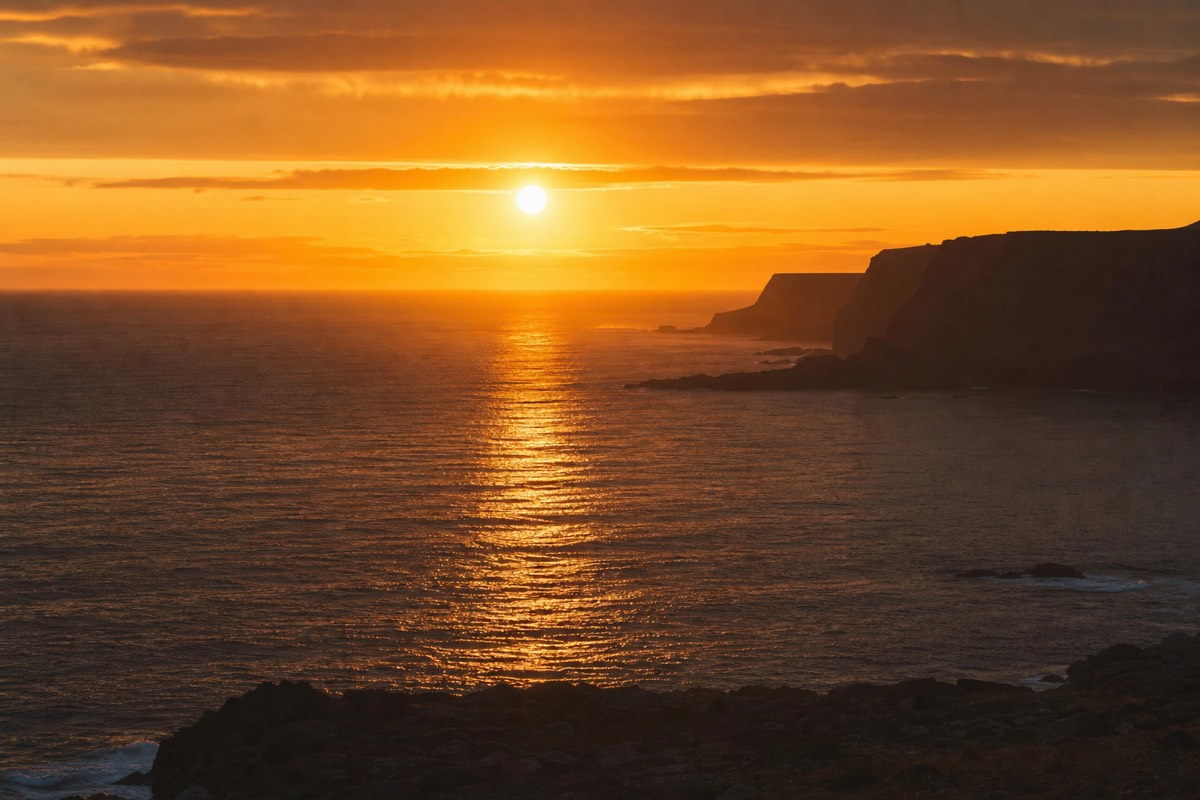
Booking Choice: Reykjavik stays in continuous twilight from late May through late July. Choose summer for bright-night wildlife, long road days and highland access; choose the dark season for aurora. Confirm dates, duration and departure point before arranging the rest of the trip. View Midnight-Sun Whale Watching
Iceland's two light seasons, and why they never overlap
The bright window and the aurora window are two halves of the same calendar. Booking a trip that wants both is the single most common Iceland planning mistake.
When is the midnight sun in Iceland?
Late May through late July. Inside that window Reykjavik gets no true darkness at any point in the twenty-four hours, and the weeks either side of it still deliver long, bright evenings. The peak sits around the solstice in the third week of June, when the light barely changes tone all night.
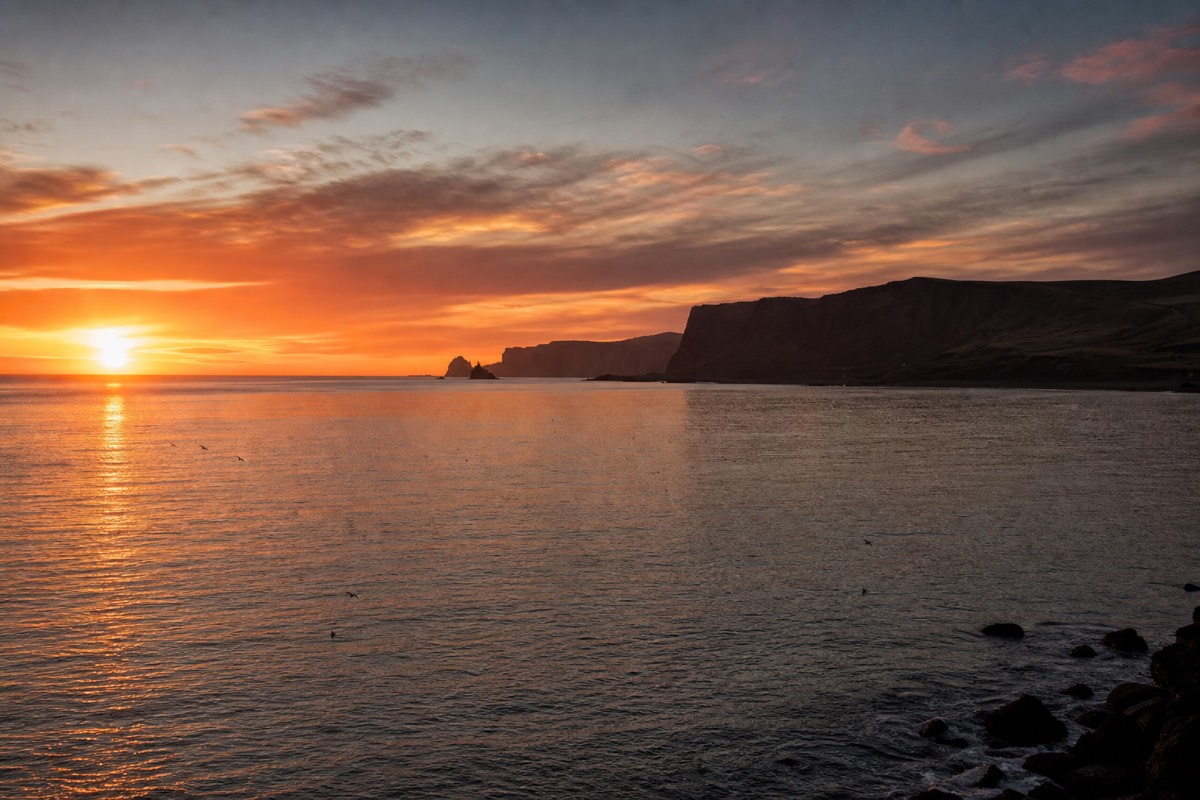
The edges are soft rather than sharp. Nobody flips a switch on a particular date. Light builds from April, the true no-darkness stretch arrives in the last week of May, holds through June, and fades away in the last week of July. By mid-August there is real night again for a couple of hours, which is why the aurora season restarts at the end of that month rather than in September.
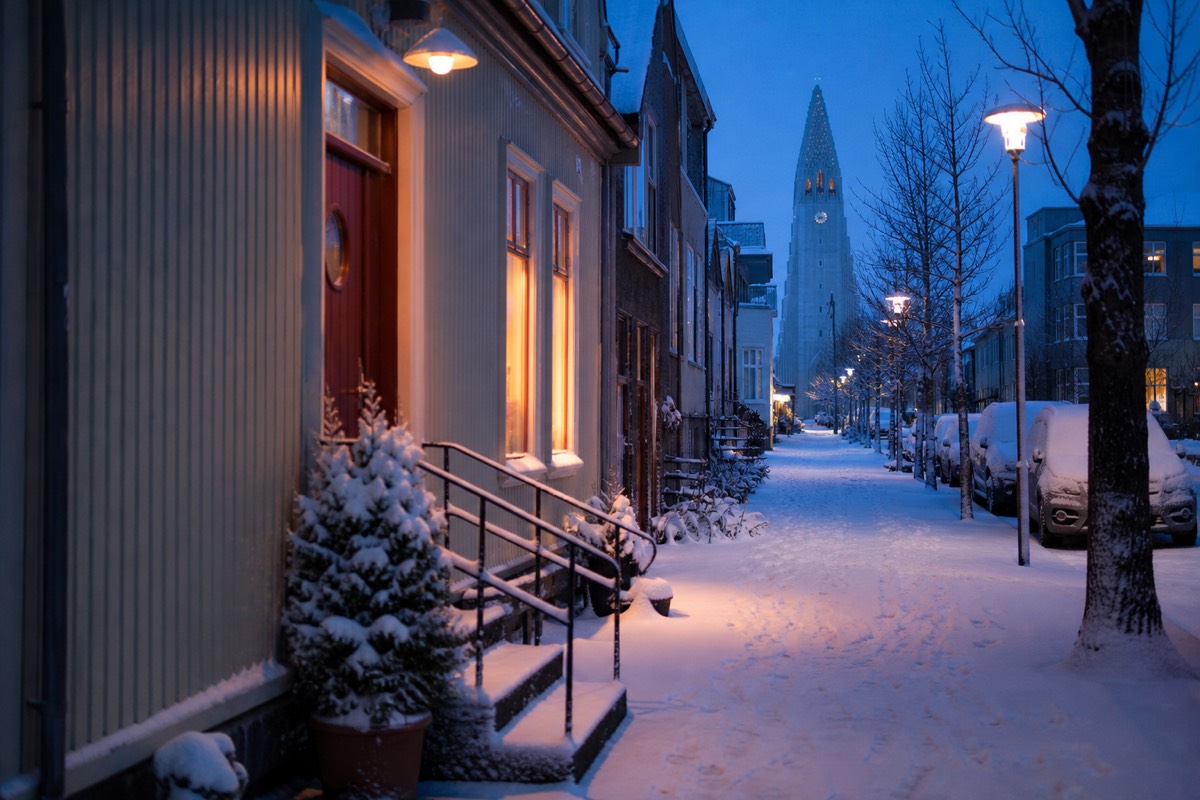
What this means for a trip is simple and enormous. In June, the constraint on your day is your own stamina, not the clock. You can take a full day out of the city, come back, eat, and still have five hours of bright evening in front of you. In December the same day would have finished in darkness before you got home. Reykjavik in late December runs about four to five hours of daylight, sunrise near 11:20 and sunset near 15:30, and the two seasons are not variations on each other. They are different countries.
One practical consequence lands before you even arrive: the bright weeks are the busiest and most expensive weeks of the Icelandic year. Booking a car, a room or a seat in June is a different exercise from booking one in November. Our answer on the best month to visit Iceland weighs light against crowds and price across the whole calendar.
Is the sun actually above the horizon at midnight in Reykjavik?
Usually not the whole disc. Reykjavik sits near 64 degrees north, a little short of the Arctic Circle, so around midnight the sun slips just under the horizon and stays there briefly. The sky never darkens, which is what people mean by midnight sun in practice, but the visible disc at 1 AM belongs further north.
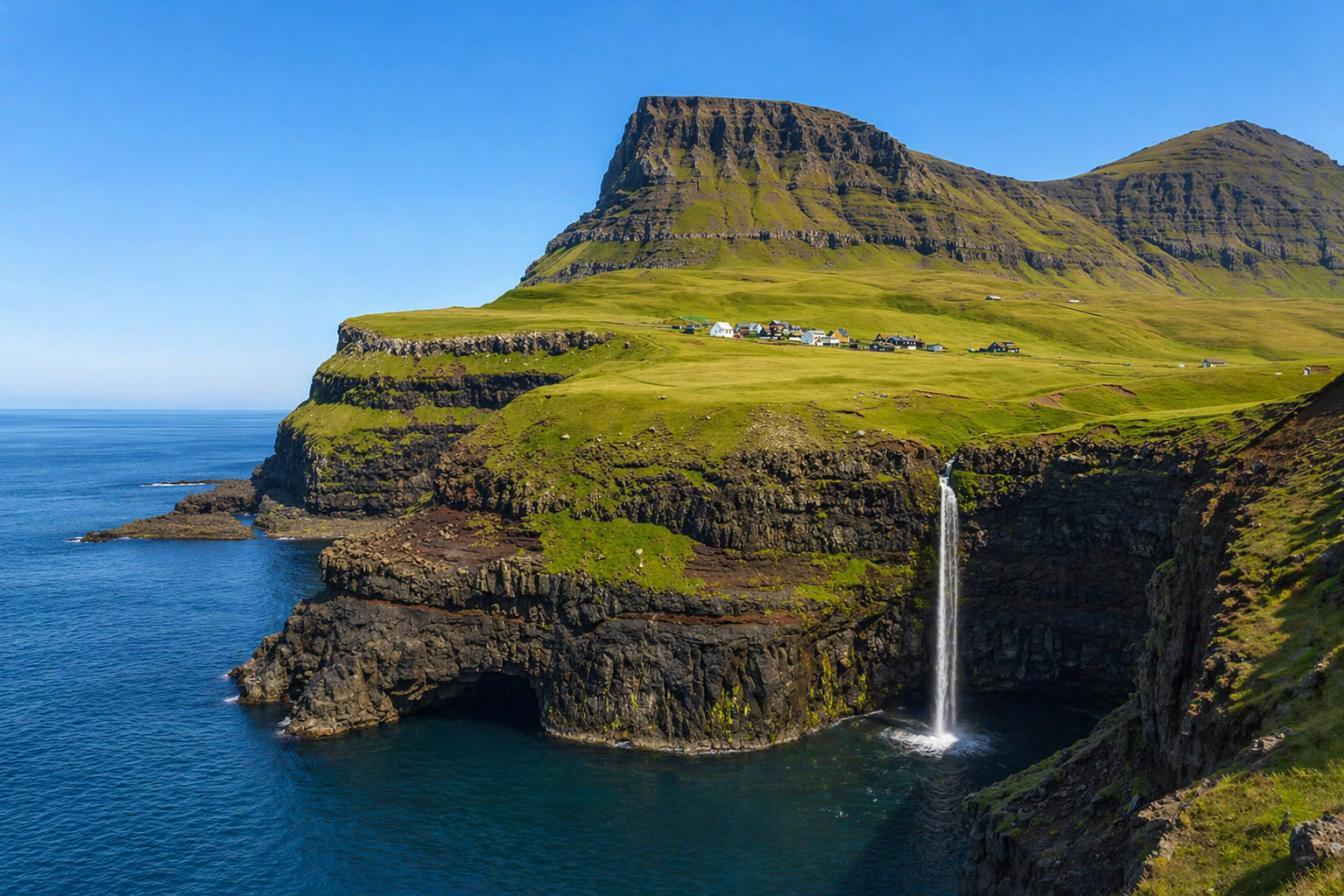
The distinction matters because photographs mislead. A picture of a glowing orange sun sitting on the sea at midnight is usually taken north of the Arctic Circle, or a little before or after midnight further south, or on a date and at a headland where the geometry cooperates. In Reykjavik what you get instead is a horizon that stays lit, a sky that runs through peach and gold and back again, and no point in the night when you need a torch.
For most visitors that is better rather than worse. Continuous twilight lasts for hours, while the true midnight sun is a moment you either catch or miss. The long low light of an Icelandic June night is the reason photographers come, and it is available every clear night for weeks rather than at one instant.
| Term | What it means | Where in Iceland |
|---|---|---|
| True midnight sun | The solar disc stays above the horizon through midnight | Only at or north of the Arctic Circle, which in Iceland means the far north |
| White nights | The sun dips below the horizon but the sky never gets dark | Reykjavik and almost all of the country, late May to late July |
| Civil twilight | Enough natural light to read and to drive without headlights | What replaces night through the bright weeks |
| Astronomical darkness | Dark enough for faint stars and for the aurora | Absent entirely from May into mid-August |
| Polar night | The sun does not rise at all | Does not happen in Iceland; even late December gets 4 to 5 hours |
Reykjavik has a bright northern horizon rather than the full midnight solar disc. Seeing the sun remain above the horizon requires a different, farther-north itinerary.
What does eleven at night in June actually feel like?
Like a long, cool, golden late afternoon that refuses to end. The light is low and sideways for hours rather than minutes, colours saturate, shadows stretch, and the places that were full at two in the afternoon are empty. The strangeness is not visual, it is that your sense of time stops working.
People underestimate the psychological part. Without darkness there is no cue to stop, so visitors routinely end up at a waterfall at half past eleven, get back to the room at one, and are surprised to be exhausted the next morning. Icelanders in summer are famously awake at odd hours, and it is not a cultural quirk so much as a consequence.
The practical upside is enormous for anyone who dislikes crowds. The famous stops within an hour or two of Reykjavik have a rhythm: coaches arrive from mid-morning, peak in the early afternoon, and are gone by early evening. From about eight at night the light is at its best and the car parks are at their emptiest, and that overlap does not exist anywhere else in the Icelandic calendar.
The downside is real too. Bright nights make sleep harder, and a badly slept traveller enjoys Iceland less than a well slept one. That is a solvable problem and the solution costs about the price of a coffee, which we get to further down.
How does endless light change a day trip?
It removes the light budget. In winter every itinerary is built backwards from about four to five hours of daylight. In June the departure time is a convenience rather than a constraint, long routes stop being risky, and a full day out still leaves an evening you can use.
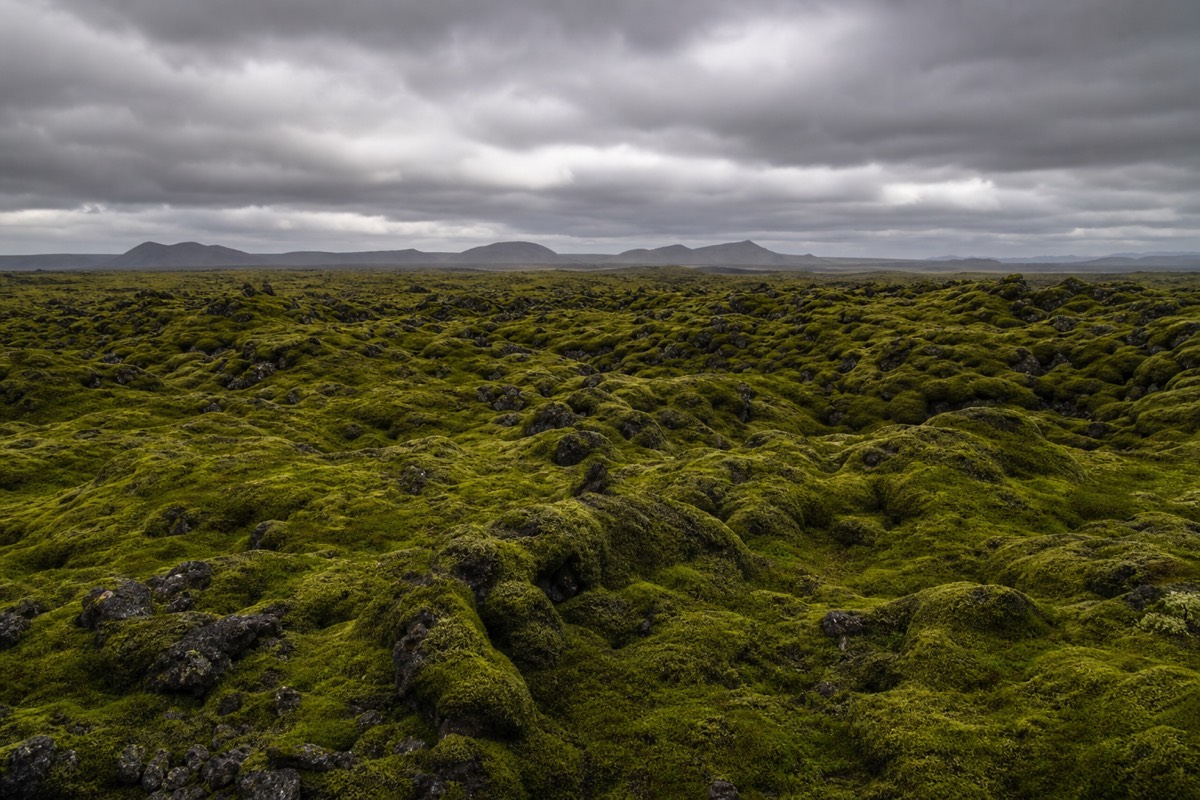
The routes that gain the most are the long ones. An eleven hour day to the far side of a peninsula or east along the coast is comfortable when there is no chance of finishing in the dark, and the highland roads that are shut for most of the year are open in exactly this window. Our Landmannalaugar day trip guide exists because of it: a highland day is only possible when the roads and the light cooperate at the same time.
| Day trip | Runs | What the bright season changes |
|---|---|---|
| Whale watching from the old harbour | About 3 hours | Peak season for sightings and calm evening sailings; from about $105, check the live listing |
| Snaefellsnes peninsula | About 11 hours | The full loop with no race against sunset; from about $143 |
| South Coast waterfalls and black sand | About 10 hours | Waterfalls at melt volume, beach in usable light all evening; from about $137 |
| Golden Circle with the Blue Lagoon | About 11 hours | Late soak with the sky still bright; from about $253 |
| Jokulsarlon glacier lagoon | Long day east | The one route where the extra light genuinely rescues the schedule |
| Northern Lights hunt | September to April only | Does not run at all in the bright months, and nobody should sell you one |
That last row is the honest centre of this page. The whale watching trip from the old harbour and the Snaefellsnes day tour are the two that summer suits best, and the aurora hunt simply does not exist as a product between May and late August. Anyone offering one is offering a minibus and a hope.
What can you do at midnight that you cannot do at noon?
Stand at a famous place on your own. The bright hours between about nine at night and one in the morning have full usable light and almost no other people, which is the single best use of the midnight sun and the one most visitors sleep through.
Build one late evening into the trip deliberately rather than hoping it happens. Sleep in, take the middle of the day slowly, then go out at eight when everyone else is heading for dinner. The nearer stops work best for this because you are not committing to a long drive at the end of a day.
| Hour | What it is good for | Why |
|---|---|---|
| 20:00 to 21:00 | Leaving the city for a nearby stop | Coaches are back, roads are quiet, light is turning golden |
| 21:00 to 23:00 | Waterfalls and coastal viewpoints | Low sideways light, empty car parks, best photography of the day |
| 23:00 to 01:00 | The northern or western horizon anywhere with a sea view | The long colour hour, and the closest thing to a midnight sun in Reykjavik |
| 01:00 to 03:00 | Driving back, or a geothermal soak | Empty roads; some pools and lagoons run late in summer, check their hours |
| 03:00 to 05:00 | Sleep, honestly | The light will still be there tomorrow and you have a day trip booked |
One caution that gets forgotten in the excitement. Bright does not mean safe. The sea at a black beach is exactly as dangerous at 11 PM as at noon, and the fact that you can see it clearly does not change the physics. Every rule in our Reynisfjara black sand beach guide applies at midnight, and there are fewer people around to help if something goes wrong.
A late independent drive offers control over those quieter viewpoint hours. Keep the route nearby and follow the same coastal safety rules as in daylight.
What does the light do to sleep, and how do you fix it?
It suppresses the melatonin that tells your body it is night, so a lot of visitors sleep badly for the first two or three nights. The fix is mechanical rather than medical: a proper contoured eye mask, curtains actually closed rather than nearly closed, and a hard rule about when the day ends.
Icelandic accommodation is well aware of the problem and blackout curtains are close to standard, but the light finds gaps at the edges and around the top rail. A mask costs almost nothing, packs into a pocket, and is the difference between a trip where you are alert on your day trips and one where you are not. Earplugs earn their place too, because bright nights make everyone outdoors louder for longer.
| Item or habit | What it solves | Worth it? |
|---|---|---|
| Contoured eye mask | Light leaking round curtain edges | The single highest-value thing in the bag |
| Earplugs | Bright nights make streets and campsites noisier | Yes |
| A fixed cut-off time | The missing cue that normally ends a day | Yes, and set it before you arrive |
| Screens off an hour before bed | Adds to the same problem the sky is causing | Yes |
| Clipping curtains shut | The vertical gap in the middle | A clothes peg does it |
| Sleeping pills | Nothing you want on a driving holiday | No |
The other half of the fix is scheduling. Do not put a 7 AM departure the morning after your planned late night. Alternate them: one long day trip, one slow day with a bright evening, and the rhythm holds for a week without anyone falling apart.
Protect sleep with an eye mask, closed curtains and a fixed cutoff. Avoid placing an early departure immediately after your planned late night.
Can you see the Northern Lights during the midnight sun?
No. Not unlikely, not difficult, not a matter of luck. The sky between May and mid-August never reaches astronomical darkness, so even a strong geomagnetic storm produces nothing visible from Iceland. The season closes in April and reopens in late August.
This is the most expensive misunderstanding in Icelandic tourism, and it usually starts with a booking made in January for a trip in June. The aurora itself does not stop, the physics continue overhead, but you cannot see a faint glow against a lit sky any more than you can see stars at noon. No forecast app, no tour, no location and no camera changes that.
If aurora is the reason for the trip, the dates decide everything else. Late August through mid-April is the window, and the shoulder months at either end pair darkness with survivable weather. Our best time for the Northern Lights guide breaks the season down month by month, and our answer on whether you can see the Northern Lights from Reykjavik itself covers the city-versus-countryside question for anyone who cannot get out of town.
Anyone travelling in the dark half of the year should read the winter day trips from Reykjavik guide alongside this one. It is the same country running on the opposite clock, with about four to five hours of December daylight to spend and an aurora hunt available almost every clear evening.
Aurora viewing requires darkness. Choose a dark-season trip if the Northern Lights are your priority; a summer tour cannot create a dark sky.
Does the bright season mean good weather?
No. It means light, not warmth and not calm. Iceland in June still delivers wind that makes standing difficult, rain that arrives sideways, and a sea cold enough to end a swim in minutes. The midnight sun removes the darkness problem and leaves every other one exactly where it was.
This is the most common summer misreading of the country. Visitors see twenty-two hours of usable light on a forecast and pack for a European summer, then spend a day on the south coast in a hooded fleece that is wet through by lunchtime. The layering system that works in February works in June with one layer removed, and the wind shell stays in the bag all year.
Wind is the variable that decides whether a summer day is pleasant or grim, and it is the one people never check. Temperature in Iceland is a narrow band. Wind is not. A still, grey, ten degree day is comfortable walking weather, and the same temperature with twenty metres per second across an exposed headland is a different experience entirely. The Icelandic Met Office publishes wind alongside precipitation, and it is the first line to read rather than the last.
| What the long days do not change | Why it still matters in June |
|---|---|
| Wind | Exposed coasts and headlands can be unstandable on a bright, clear day |
| Rain and low cloud | Light does not stop a front; a valley can lose its view in twenty minutes |
| Sea temperature and sneaker waves | The ocean at a black beach is exactly as dangerous at midnight as at noon |
| Highland roads and river fords | They open on the road authority's schedule and the fords rise with melt |
| Geothermal and glacier ground | Thin crust and crevasses are indifferent to the time of year |
| Fog on high ground | Bright fog is still fog, and it takes the landmarks with it |
| How tired you are | Bright evenings quietly turn a ten hour day into a sixteen hour one |
Two habits cover almost all of it. Check road.is before any day that leaves the paved main routes, because summer is exactly when the mountain roads are opening and the status changes week to week. And register a travel plan with SafeTravel for anything remote, which takes two minutes and matters more in a season when people are out at hours nobody expects them to be.
The reward for taking the weather seriously is that summer really is the easiest version of Iceland. Roads are open, the schedule is full, and the light gives you room to wait out a bad hour rather than losing the day to it. That last part is underrated: in December a two hour squall costs you half the daylight, and in June it costs you nothing at all.
Midnight sun or winter darkness: which trip should you book?
Book the bright season for driving, hiking, puffins, whales and the highlands. Book the dark season for aurora, ice caves and half the price. There is no month that gives you both, and the visitors who are disappointed are almost always the ones who expected one to.
The trade is clean once it is written down. Summer buys you access: roads open, long days, everything running, wildlife present. Winter buys you spectacle at the cost of daylight and flexibility. Neither is the better trip in the abstract, and the right answer follows from what you actually want to stand in front of.
| What you want | Bright season, late May to late July | Dark season, late August to mid-April |
|---|---|---|
| Northern Lights | Impossible | The whole point of the season |
| Highland roads | Open in the summer window | Closed |
| Puffins | On the cliffs to mid-August | Gone |
| Whale watching | Peak season, calmest sailings | Reduced schedule, rougher water |
| Ice caves | Not the season | The season |
| Driving conditions | Easiest of the year | Ice, wind and short daylight |
| Crowds and prices | Highest of the year | Lower, especially outside the holidays |
| Usable hours per day | Effectively unlimited | About 4 to 5 at the solstice |
Distance behaves differently between the two as well, which is worth knowing before you build an itinerary. Our guide to how far you can travel in one day shows the same routes shrinking by roughly a third once winter takes the daylight away.
Which weeks of the bright season are actually best?
Mid-June for maximum light and a full schedule, late May and mid-July for nearly the same light with fewer people. Early August still gives bright evenings and catches the last of the puffins, and by late August real night has returned and the aurora season is starting again.
The differences inside the window are smaller than the differences between seasons, but they are not nothing. The solstice fortnight is the busiest and priciest stretch of the Icelandic year. Shifting a week either side keeps almost all of the light and takes noticeable pressure off accommodation and car hire.
| Window | Light | Wildlife and access | Verdict |
|---|---|---|---|
| Late May | No true darkness arrives | Puffins already in, highland roads still opening | Excellent value, check road status before planning inland |
| Early to mid June | Peak, the sky barely changes | Everything running, birds everywhere | The classic choice, and the busiest |
| Late June to mid July | Still no darkness | Highland season generally open | Best for long routes and inland days |
| Late July | Bright window closing | Warmest water, puffins thinning | Long evenings without the solstice crowds |
| Early August | Long twilight, a little real dusk | Last of the puffins to about mid-month | Underrated fortnight |
| Late August | Night returns | Aurora season restarts | The handover, and a good compromise week |
If seabirds are part of the reason you are coming, note the calendar carefully: the birds are on the cliffs from mid-April to mid-August, which means late August gives you aurora but no puffins. Our where to see puffins in Iceland guide maps the colonies and the dates properly.
Who should not come for the midnight sun?
Anyone whose trip is really an aurora trip, anyone who sleeps badly in light and will not carry a mask, and anyone travelling on a tight budget, because these are the most expensive weeks Iceland sells. Everyone else is choosing the easiest version of the country there is.
The budget point deserves honesty. Flights, rooms and rental cars all peak in June and July, and the gap against November or February is large enough to change the length of a trip. If cost is the binding constraint, the same routes run all year and the shoulder months hold most of the scenery. Our answer on the cheapest month to visit Iceland puts numbers around that decision.
For everyone else, the bright season is the version of Iceland where nothing is working against you. Roads are open, the weather is as reasonable as it gets, the wildlife is present, and the day is as long as your legs. The day trips from Reykjavik tours on this site run their fullest schedule through exactly these weeks, and the long evenings mean an eleven hour day still leaves you a golden hour or four at the end of it.
One last suggestion, and it is the one people write to us about afterwards. Pick a clear night in the middle of your trip, drive twenty minutes out of the city toward the water, and stay out until one in the morning. No tour, no plan, no itinerary. It costs nothing and it is the thing most visitors remember longest.
Choose the season around your budget, sleep needs and main travel goal. The free clear-night outing described above remains a worthwhile way to use summer light.