Can You See the Northern Lights from Reykjavik?
Yes, on the right night. Here is what the city sky actually delivers, the two places inside Reykjavik worth standing in, and the point where driving out beats staying put.
Reykjavik can deliver an aurora on a strong, clear night, but a mobile hunt becomes more useful when city glow or shifting cloud limits a fixed viewpoint. Explore Small-Group Northern Lights
Booking Choice: Try Grótta or Öskjuhlíð on clear, active nights. For modest activity or cloud over Reykjavik, a four-hour mobile hunt can seek darker, clearer locations. Aurora season is late August to mid-April; no tour can overcome the bright summer sky. View Small-Group Northern Lights
Can you actually see the Northern Lights from inside Reykjavik?
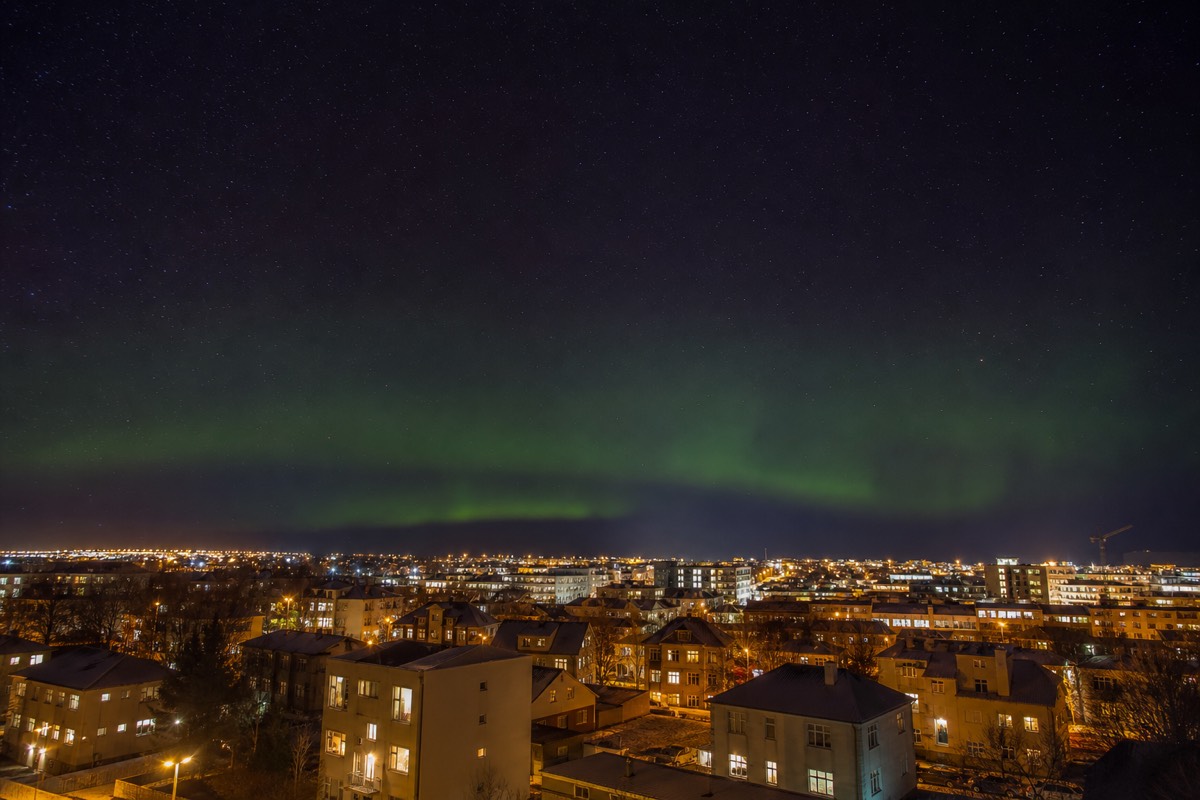
Yes, on the strong nights. When the KP index reaches roughly 4 and the sky overhead is clear, the aurora is bright enough to cut through the city's street glow and has been watched from the centre of Reykjavik. On quieter KP 2 to 3 nights, urban light washes the display out.
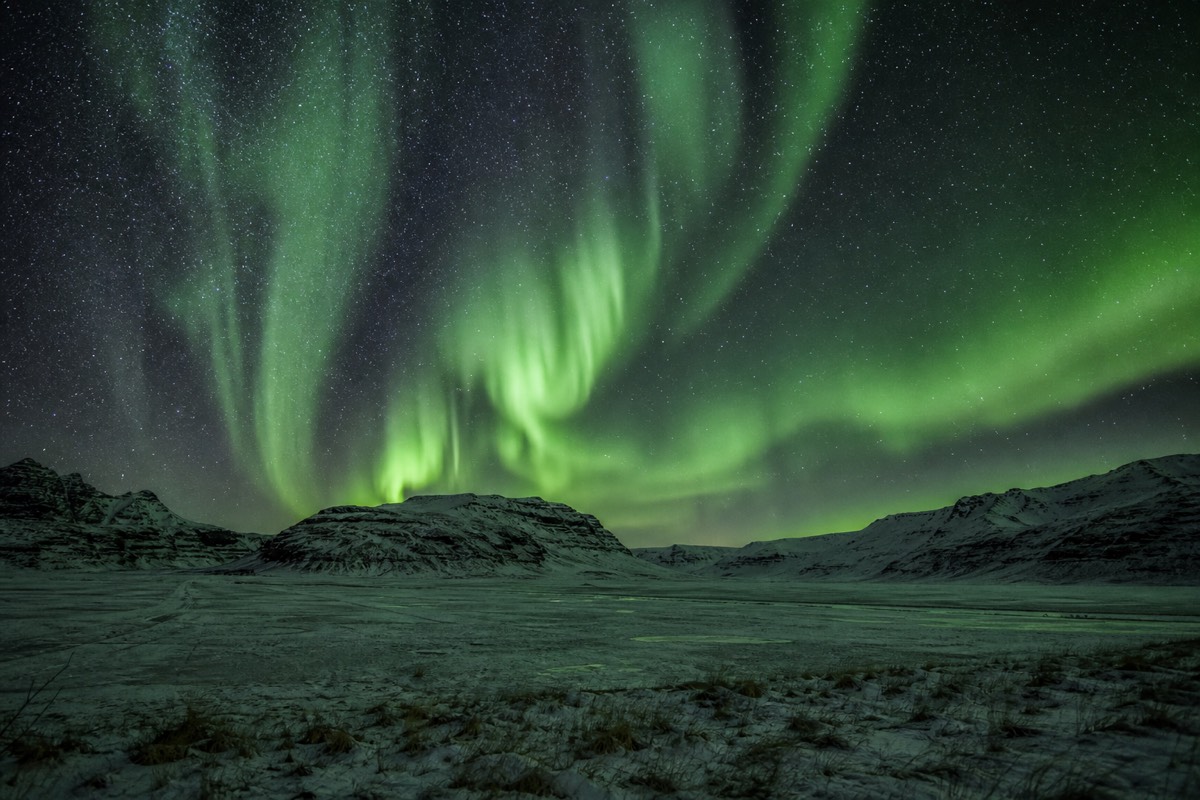
Iceland sits at about 64 degrees north, directly under the auroral oval, which is the band of atmosphere where charged solar particles collide with the magnetic field most often. That position is why the lights here appear overhead rather than as a faint smudge on the northern horizon the way they do further south. Being under the oval also means the bar for a visible display is lower than most visitors assume: KP 2 to 3 is enough on a clear night in open country.
The complication is that Reykjavik is a city, and cities produce glow. That glow extends several kilometres in every direction and it eats the faint end of the aurora scale first. A display that reads as a clear grey-green arc from a dark valley can be invisible from a lit street forty minutes away. Nothing about the sky changed. The ground under you did.
The season sets the outer limit. Aurora is visible from Iceland between late August and mid-April, and it is simply impossible from May through most of August because the sky never darkens. If your dates fall inside the midnight sun in Iceland window of late May to late July, no forecast, location or tour changes that.
Where do you stand in Reykjavik to give yourself a real chance?
Grótta Lighthouse on the Seltjarnarnes peninsula, roughly ten minutes from downtown, is the standard city vantage point. Öskjuhlíð Hill behind Perlan is the other. Both put a dark sea or wooded slope to your north and the streetlights behind your back, which is most of the fight inside a city.
What you are doing at either spot is not escaping light pollution, it is arranging it. Aurora viewing is a contrast problem before it is a brightness problem. Your eyes need several minutes in the dark to reach full sensitivity, and one phone screen resets that. At Grótta the sea fills the northern half of your view with nothing in it, which is exactly what you want. At Öskjuhlíð the trees and the hill block the worst of the downtown glare.
Two practical notes for Grótta. The causeway out to the lighthouse floods at high tide, so check before you walk across, and the shoreline is exposed to wind straight off the bay. Standing still there at midnight in January is colder than the thermometer suggests, and our guides see more nights ruined by cold than by cloud. Thermal layers, a windproof shell, a hat and real gloves are the difference between an hour outside and fifteen minutes.
| Night conditions | From a lit street downtown | From Grótta or Öskjuhlíð | From 40 minutes out of town |
|---|---|---|---|
| KP 1 to 2, clear | Nothing | Possible faint grey band low to the north | Faint grey-green arc, green on camera |
| KP 3, clear | Rarely anything convincing | Grey-white arc, movement visible | Clear arc, colour to the naked eye for some |
| KP 4 to 5, clear | Visible green, washed at the edges | Strong, moving, photographs well | Bright and active across the sky |
| KP 6 and above, clear | Sky fills with colour anyway | Full display | The rare night people fly back for |
| Overcast, any KP | Nothing | Nothing | Depends entirely on whether anyone drives to a gap |
What decides whether tonight is worth going outside for?
Cloud cover, not solar activity. Even a strong geomagnetic storm is invisible through an overcast sky, and Iceland's cloud moves fast enough that a hopeless 8 PM can turn into a clear 11 PM. Check the cloud map late, not at lunchtime.
The aurora forecast published by the Icelandic Met Office is the tool locals actually use, and the useful half of it is the cloud layer rather than the KP number. Dark areas on that map mean clear sky; white and grey mean you are wasting your evening standing under it. Checking at 9 PM tells you something real. Checking at noon tells you almost nothing, because the fronts that decide the night have not arrived yet.
Timing inside the night matters too. Activity concentrates roughly between 10 PM and 1 AM, with the densest window around magnetic midnight, near 11 PM to midnight in Iceland. Committing to a full hour outside beats three ten minute checks from a doorway, because displays build and fade rather than switching on. Moon phase is the quiet variable: a bright full moon near the horizon lifts the whole sky and erases the faint end of the scale, exactly the part the city already took from you.
One more thing about 2026 specifically. Solar Cycle 25 peaked in 2024 and 2025, and elevated activity has carried into 2026, which keeps display frequency above the long-run baseline. Activity then declines gradually toward the next solar minimum around 2031. Anyone reading this while planning a trip is inside the tail of the strongest aurora period in more than a decade, not at the front of it. Our best time for the Northern Lights guide breaks the season down month by month if you are still choosing dates.
Why do the lights look different from the photographs?
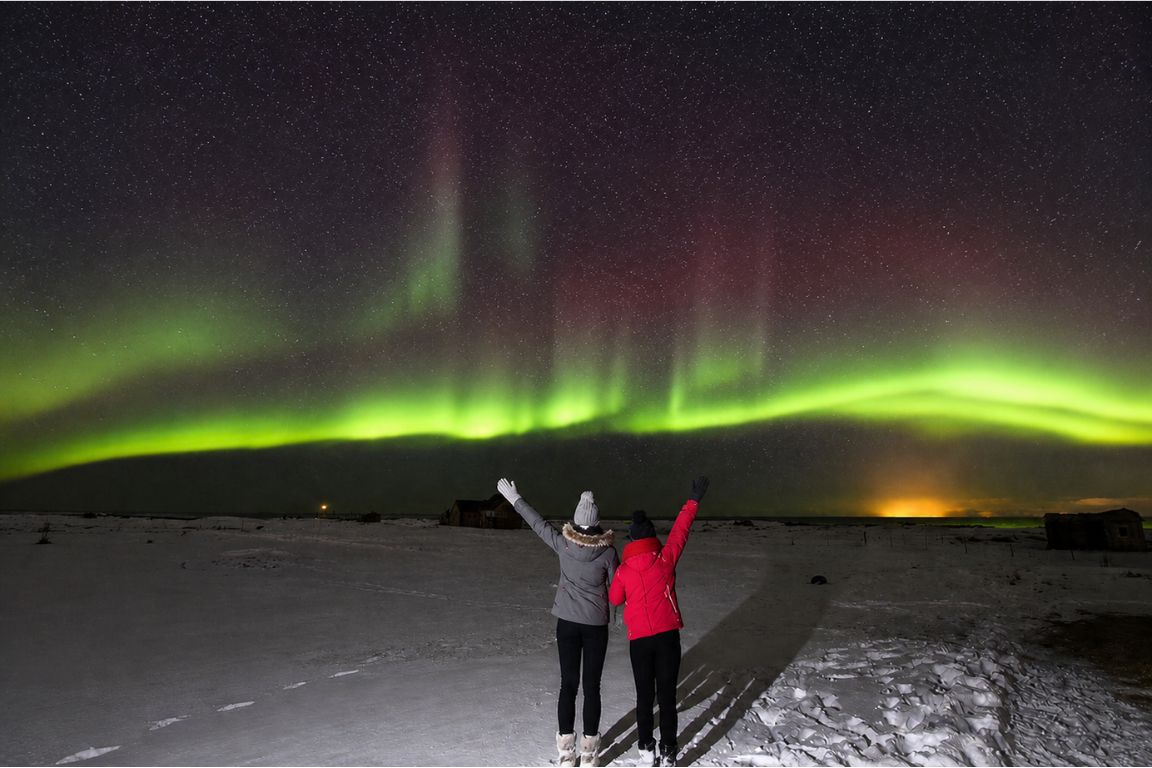
Cameras collect light for fifteen to thirty seconds in a single frame. Your eyes cannot. A weak display that a phone renders as vivid green reads to the naked eye as a pale grey-white band that is clearly moving and clearly not cloud. Strong displays close that gap completely.
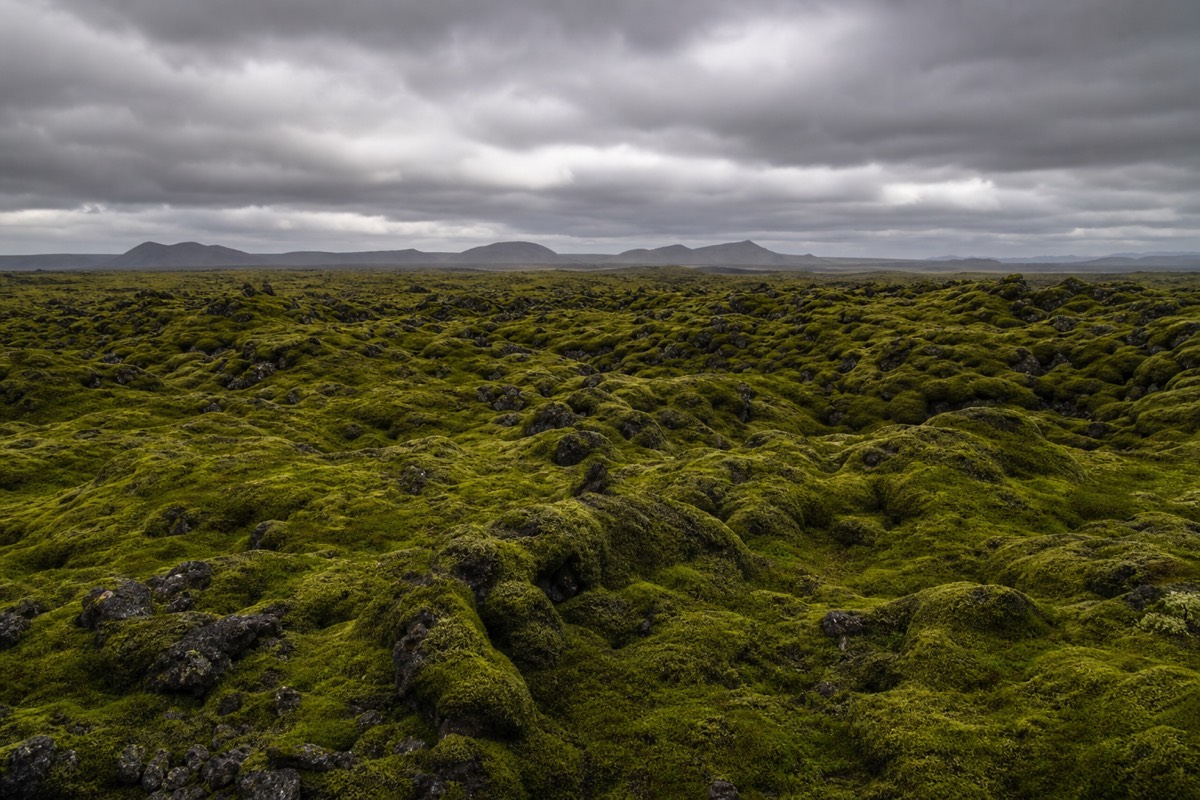
The physiology is specific. Rod cells in your retina work in low light but carry no colour information, while cone cells see colour and need more light to fire. A faint aurora only reaches the rods, so everyone standing there sees grey movement. As the display brightens, the cones switch on and the green arrives. The threshold is personal, which is why two people side by side at Grótta can honestly disagree about whether the sky is green. Both are describing what they see.
None of that is marketing dishonesty, it is optics, and knowing it in advance improves the night. The other half nobody photographs is motion. Even a modest display undulates and pulses. Guides who have run hundreds of evenings describe the same moment over and over: a group talking, then a band erupts overhead and everyone stops at once.
When should you stop trying from the city and book a hunt?
When the forecast sits at KP 2 to 3, or when cloud is parked over the capital. A guided evening has one advantage a lighthouse car park cannot match: it moves. Guides watch the cloud map through the evening and drive toward whatever hole in it exists that night.
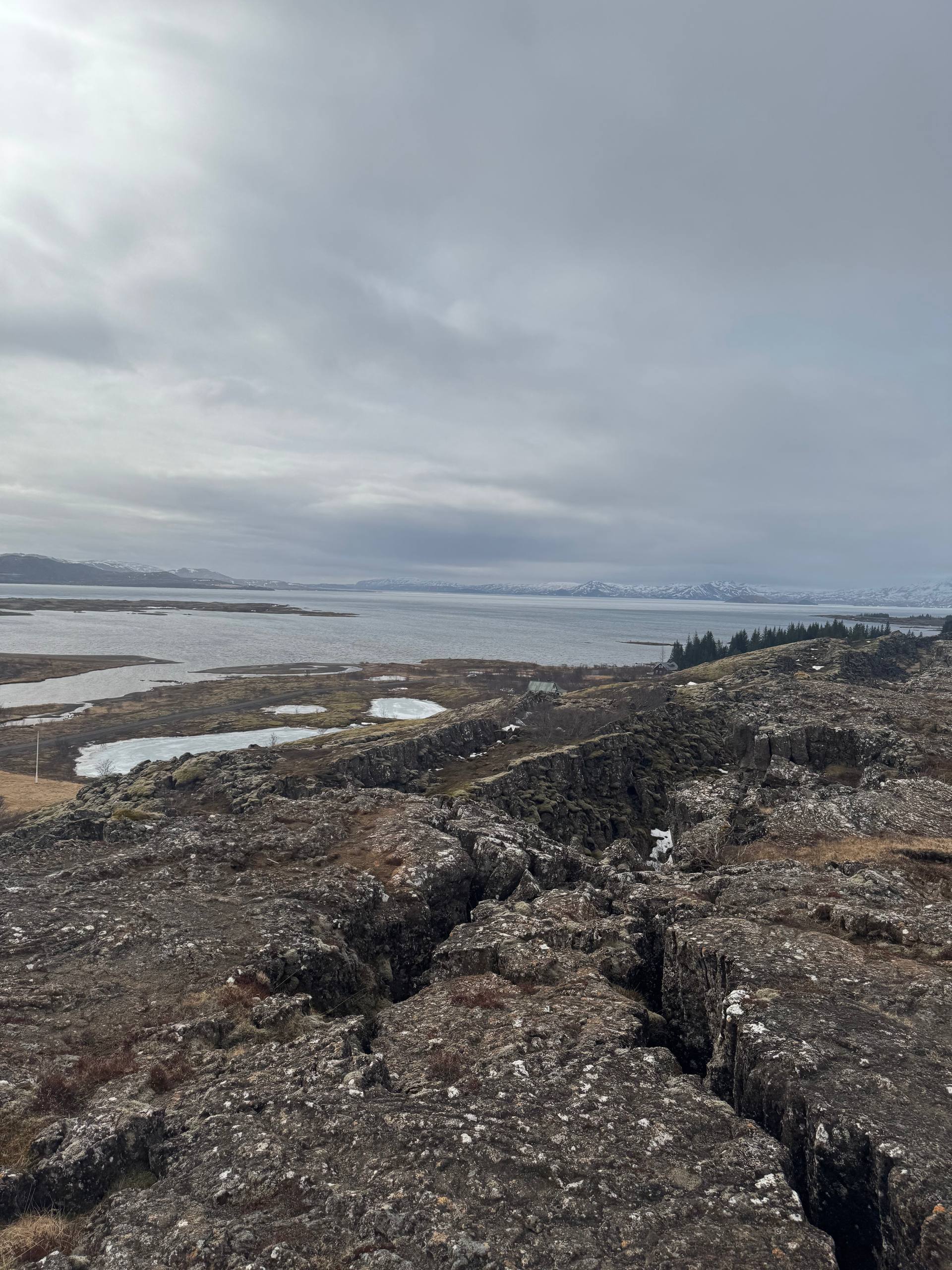
That routing is the whole product. On a thin-cloud night, thirty minutes east toward Þingvellir National Park is enough to leave the glow behind. On a night when the southwest is socketed in, the same guide might run an hour north or east instead. Fixed viewing spots and independent travellers without a car cannot make that call at 10 PM. Day trips from Reykjavik tours cover the daylight hours; the Northern Lights hunt from Reykjavik is the one that departs after dark, running about four hours and listed around $74 at the time of writing. Check the live listing for tonight's price and departure time.
Two booking details are worth more than the price difference between operators. First, rebooking terms: an operator who lets you retry free for the length of your stay is worth noticeably more than a cheaper fixed-night ticket, because Icelandic weather makes any single night a coin flip. Second, book early in your trip rather than late, so a failed first attempt still leaves nights on the board. We cover the retry mechanics in detail in what happens if the tour doesn't see the lights.
And keep looking up regardless. Plenty of people catch their best display walking back from dinner, simply because they were outside after 9 PM in season. The city does not make it impossible. It raises the bar.