Landmannalaugar Day Trip From Reykjavik: What It Really Takes
Landmannalaugar sits in the southern highlands behind a stretch of unpaved mountain road that spends most of the year closed. Reaching it and getting back inside one day from Reykjavik is possible in the right season, but the day belongs mostly to the drive, and the rules about who is allowed to attempt it are stricter than most rental brochures admit.
If the highlands are the reason for your trip, compare a guided Landmannalaugar day with the driving, timing and seasonal constraints before committing your itinerary. Explore Landmannalaugar Hike
Booking Choice: Landmannalaugar is possible as a long summer day from Reykjavik. One verified guided option combines a highland hike, optional bathing and optional Reykjavik transport; shorter hot-river and South Coast alternatives better suit limited time or a different itinerary. View Landmannalaugar Hike
What a highland self-drive day actually charges you
Cost bands are the site's own 2026 figures for a full day of driving out of Reykjavik. Highland days sit at the top of every band, because the vehicle, the insurance and the fuel all move up together.
What is Landmannalaugar, and why is it not a normal day trip?
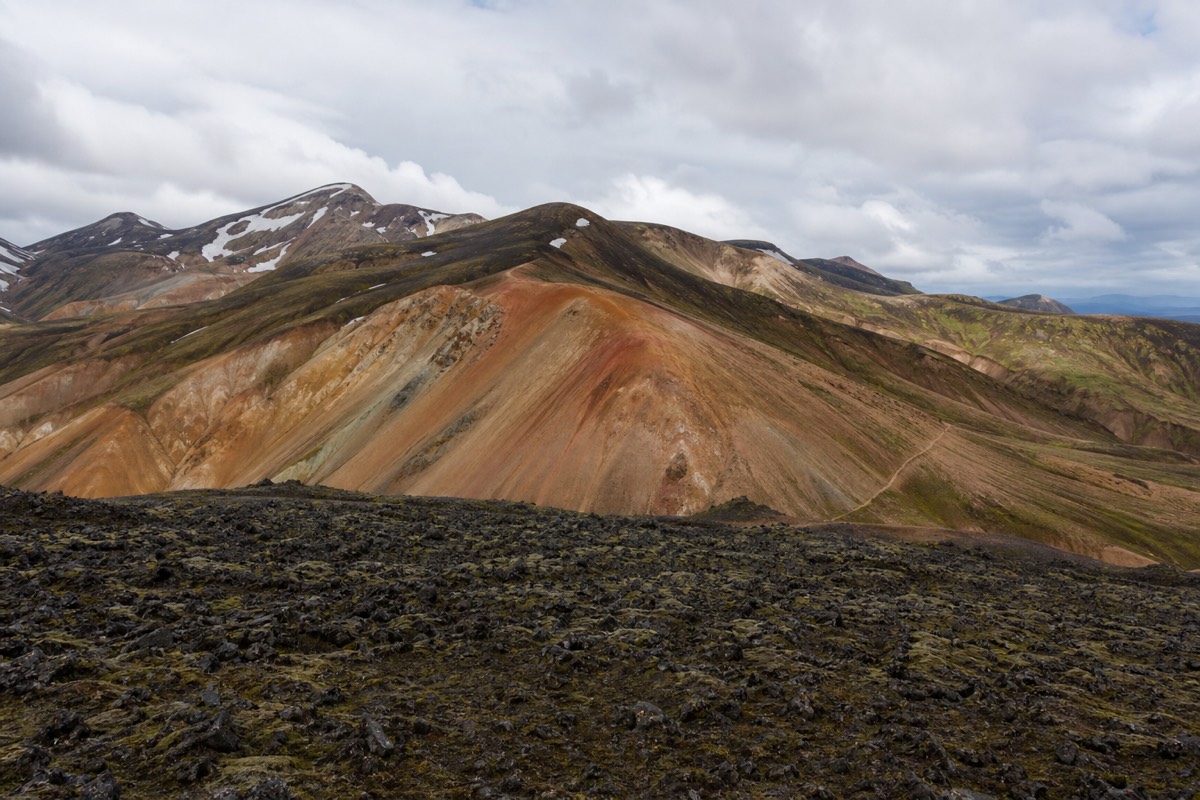
Landmannalaugar is a geothermal valley in the Fjallabak Nature Reserve, deep in Iceland's southern highlands. It sits behind unpaved mountain roads that stay shut for most of the year, which turns what looks like a two hour drive on a map into a seasonal, vehicle-restricted, weather-dependent commitment.
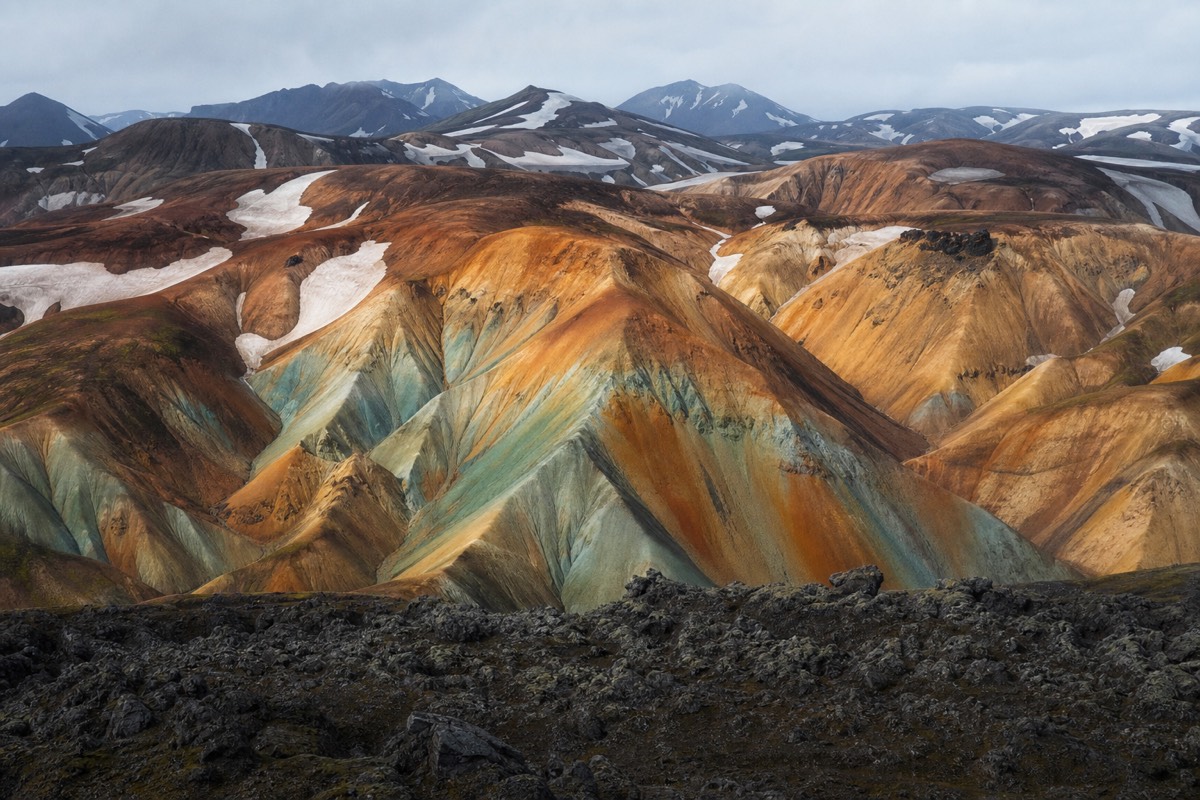
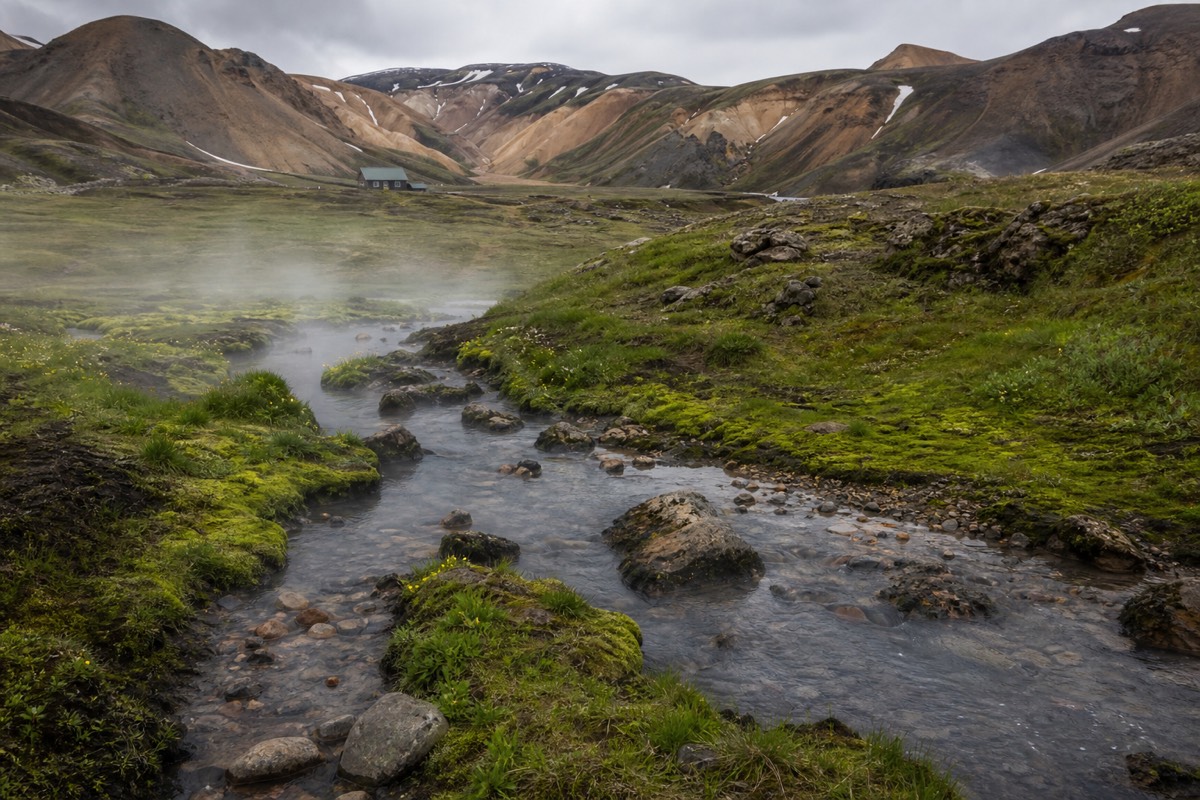
The valley is famous for colour. The mountains around it are rhyolite rather than the basalt that makes up most of Iceland, and rhyolite weathers into streaks of ochre, rust, pink and pale green that look wrong in photographs and still look wrong when you are standing in front of them. A black lava field called Laugahraun spills into the valley floor from one side, and where a warm stream meets a cold one near the campsite, there is a shallow natural bathing pool that people have been using for centuries.
That combination is why the place carries weight out of proportion to its size. It is also the southern trailhead of the Laugavegur, the multi-day walking route down to Thorsmork, so on any summer afternoon the campsite holds a mix of day visitors in trainers and hikers who have not seen a shower in four days. The Icelandic Touring Association runs the hut and the campsite, and the facilities are deliberately basic.
None of that is the hard part. The hard part is the road. Everything on this page exists because the last stretch into the reserve is gravel, seasonal, and legally closed to most rental cars, and because that single fact reorganises the whole day around it.
Can you really do Landmannalaugar as a day trip from Reykjavik?
Yes, in the open season, if you accept that the day is mostly driving. The reserve sits roughly 190 km from the city by the shortest route, only marginally further than Vik at 179 km, but the final stretch is unpaved and slow enough that three and a half to four hours each way is the honest allowance.
Distance is the wrong measure in the highlands. On the coast, Route 1 lets you hold 80 to 90 km/h for long stretches, which is why the corpus of Icelandic day trips puts the realistic one-day limit at about 180 to 200 km each way. On a mountain road, 40 km/h is a good average and 30 km/h is common, because the surface is washboarded gravel with loose edges and blind crests. Forty kilometres of that costs an hour, sometimes more.
So the arithmetic goes like this. Paved approach: roughly two to two and a half hours. Gravel section: another hour to ninety minutes depending on the surface and how many oncoming vehicles you meet on single-lane sections. Add a fuel stop and a stretch of legs, and you are looking at four hours from your hotel door to the campsite car park. Double it for the return and you have used eight hours before you have walked anywhere.
That is why the honest verdict is different from the technical one. Technically it is a day trip. Practically it is a long, committed, driving-heavy day, and it is worth doing only if you want the highlands specifically. Our guide to how far you can travel in one day lays out the same trade-off for the eastern routes, where the distances are bigger but the roads are better.
When are the mountain roads to Landmannalaugar open?
There is no calendar date, and anyone who gives you one is guessing. The Icelandic Road Administration opens each mountain road when the melt, the surface and the river levels allow it, and that point moves by weeks from year to year. The only source that is right on the day is road.is.
This matters more than it sounds. Visitors book flights in February, read a blog post that says the roads open in a particular week, and build an itinerary around it. Then a cold spring pushes the opening back, or a wet one keeps a ford too high to cross, and the plan collapses on the morning of. The roads are a summer proposition, they close again as autumn arrives, and the exact edges belong to the road authority rather than to the calendar.
Build the trip so the highlands are a bonus rather than a hinge. If the road is open on your dates, take the day. If it is not, the coast is open all year and the guided South Coast day trip covers ground that never depends on a seasonal gate. That is also the right instinct in reverse: never book a non-refundable highland arrangement on an assumption about a road that has not opened yet.
Four different websites answer four different questions, and people routinely check the wrong one.
| Question you actually have | Where the answer lives | When to check it |
|---|---|---|
| Is the mountain road open, and what is the surface like? | road.is, the Icelandic Road Administration | The morning you drive, then again before you turn off the pavement |
| Will the wind and rain make the day miserable or dangerous? | Icelandic Met Office | The night before and again at breakfast |
| Is there an active alert, and who knows where I am? | SafeTravel, including the travel plan feature | Before leaving the city |
| Am I allowed to take this specific car up there? | Your rental agreement, in writing | Before you book the car, not at the junction |
Where do the hours actually go on a Landmannalaugar day?
Roughly eight hours in the car and three to four in the valley, on a day that starts before seven and finishes after seven. The single biggest planning error is treating the gravel section as if it drives like the pavement, which quietly steals ninety minutes from the middle of the day.
The table below is an allowance rather than a timetable. Weather, roadworks, the number of camper vans ahead of you and how often you stop for photographs all move it. Treat it as the shape of the day and add slack rather than removing it, because the failure mode in the highlands is arriving too late to walk anywhere and driving home in a rush.
| Leg | Allow | What is happening |
|---|---|---|
| Reykjavik to the south-coast junction towns | 1 hr 15 to 1 hr 30 | Route 1, easy paved driving, last full-service fuel and food |
| Junction up the paved highland approach | 45 min to 1 hr | Still sealed, traffic thins fast, scenery changes completely |
| The gravel section into the reserve | 1 hr to 1 hr 30 | Washboard surface, single-lane sections, fords depending on route |
| Time in the valley | 3 to 4 hrs | One walk, the warm river, food you brought with you |
| Return by the same road | 3 hr 30 to 4 hrs | Slower if you are tired, and you will be |
| Door-to-door total | 11 to 13 hrs | Longer than any of the standard coastal day trips |
One detail that changes the day disproportionately: leave before the tour vehicles do. The gravel road is far more pleasant with nothing in front of you throwing stones at your windscreen, and the valley car park is calmest in the first hour after it opens up. Getting out of Reykjavik by half past six rather than half past eight is worth more than any other decision on this list.
What vehicle do you need, and what happens at the fords?
A four-wheel-drive vehicle, legally and practically, with enough ground clearance for the surface. Mountain roads carrying the F prefix are restricted to 4WD under Icelandic law, and the fords on the Fjallabak approaches change depth with melt and rainfall, which is exactly the risk every rental insurance product in the country excludes.
The legality is the easy half. The insurance is where people get hurt financially. Icelandic rental contracts routinely carve out water damage from every level of cover sold, including the expensive ones, so a stalled engine in a river is not a deductible situation, it is an invoice for the vehicle. Gravel damage is a separate exclusion unless you bought gravel protection specifically. Read your own agreement, in writing, before you book. Do not rely on what the counter staff said.
The practical half is judgment. Fords look shallower than they are, they run deeper in the afternoon after a warm day of melt, and the correct line is rarely the shortest one. If you cannot see the bottom, or if you have not driven a ford before, turning around is a completely reasonable outcome and a much cheaper one than the alternative. Watching another vehicle cross first tells you more than any guidebook paragraph.
| Vehicle | Allowed on mountain roads? | Realistic verdict |
|---|---|---|
| Compact 2WD hatchback | No | Illegal on F roads and uninsured the moment it leaves pavement |
| Small crossover badged 4x4, low clearance | Technically yes | Legal, but underbody damage on washboard is common and fords are a gamble |
| Proper 4WD SUV with real clearance | Yes | The sensible minimum, with gravel and sand protection bought separately |
| Camper van on a 2WD base | No | Popular mistake; the fine and the damage bill both land on you |
| Guided highland vehicle | Yes | Built for the surface, driver has done the fords, no insurance argument at the end |
What does a Landmannalaugar day cost against a guided seat?
A self-driven highland day sits at the top of every cost band in Iceland: $130 to $200 for a solo traveller, or $75 to $120 each for two sharing, before the highland surcharges. A guided seat on a standard coastal day runs $90 to $160 per person, and highland departures price above that.
The reason the highland version lands at the top of the band is that every input moves at once. You are in a bigger vehicle, so the daily rate and the fuel burn both rise. You want gravel and sand protection, which is the $20 to $50 layer. Fuel has been running about 185 to 230 ISK per litre in 2026, roughly $1.30 to $1.60, and a 380 km round trip with a lot of low-gear gravel work does not sip it. The 2026 kilometre-based road usage tax adds a further line that scales with exactly the kind of distance this trip covers.
| Line item | Self-drive, highland day | Guided seat |
|---|---|---|
| Vehicle | 4WD daily rate, above the standard car band | Included |
| Insurance | Collision waiver plus gravel and sand, $20 to $50 a day | Included |
| Fuel | 185 to 230 ISK per litre, a long round trip | Included |
| Road usage tax (2026, distance based) | Scales with the kilometres, and this trip has plenty | Included |
| Risk you carry | Gravel chips, underbody damage, water exclusion at the fords | Operator's |
| Who watches the road all day | You | Someone else |
Groups change the answer. Four people splitting a 4WD make self-driving comfortably the cheaper route, exactly as they do everywhere else in the country. One or two people rarely save money, and they trade a day of scenery for a day of concentration. Our self-drive versus guided breakdown works through the same maths on the easier coastal routes, where the gap is narrower.
Which walks actually fit inside a day trip?
One proper walk plus the warm river, and that is the honest limit. With three to four hours on the ground you can climb the cone above the campsite or loop the lava field and the coloured gorge, then soak. Trying to stack two summits into a day trip is how people end up driving home in the dark.
The valley floor sits high, so the air is thinner and colder than on the coast and the weather turns faster. Cloud can drop onto the peaks in twenty minutes and take the view with it, which is a good argument for choosing your walk when you arrive rather than the night before. Marked routes leave from the campsite area and are signed, though signage in the highlands assumes more self-reliance than a national park in most other countries.
| Route | Allow on foot | What it gives you | Fits a day trip? |
|---|---|---|---|
| Laugahraun lava field loop | 45 min to 1 hr | Black jagged lava right beside the campsite, minimal climbing | Yes, easily |
| Graenagil, the green gorge | 1 hr 30 to 2 hrs | The colour that the photographs are actually of, gentle gradient | Yes |
| Blahnukur, the cone above the valley | 2 to 3 hrs | Steep, loose in places, the whole valley laid out beneath you | Yes, if you arrive by early afternoon |
| Brennisteinsalda, the sulphur peak | 2 to 3 hrs | Steaming ground, the strongest colour on the massif | Yes, as the day's single objective |
| Two peaks in one visit | 5 hrs plus | More than a day trip has room for | No, stay overnight instead |
| Laugavegur trail, first section | Multi-day route | A different trip entirely | No |
The warm river is the reward and it deserves scheduling rather than squeezing. Bring a swimsuit and a towel, because there is nowhere to buy either, and expect the water to be pleasantly warm in the middle and cold at the edges where the cold stream mixes in. Walking up the streambed finds hotter water. Walking down finds colder. If the mechanics of a warm river appeal more than the drive to reach one, the Reykjadalur hot spring river hike delivers the same idea forty minutes from the city.
What do you carry for a highland day?
Everything you will need, because the valley sells almost nothing. Food, water, a swimsuit, a towel, layers for weather that swings twenty degrees of comfort in an hour, real boots rather than trainers, and a full tank of fuel taken on the coast before you turn inland.
Fuel is the one that catches people. There is no filling station in the reserve, the round trip from the last coastal town and back is long, and running low in the highlands is a genuinely serious situation rather than an inconvenience. Fill up completely at the last full-service town on Route 1, even if the gauge says you are fine, and carry a card that works at unattended pumps.
Clothing follows the same principle as every other Icelandic day out, only more so, because the valley is higher and more exposed than the coast. Wind is the variable that decides comfort, not temperature, and cotton is the single worst choice once it gets damp. Our what to wear on an Iceland day trip guide covers the layering system that guides actually use, and it applies with an extra layer on top up here.
Two things nobody packs and everybody wants: a proper sit mat for eating lunch on wet ground, and a dry bag or plastic sack for the swimsuit afterwards. A wet swimsuit loose in a rucksack for a four hour drive home ruins whatever it is touching.
How does the highland season line up with the rest of your trip?
The highlands and the daylight run on the same clock. The mountain roads are a summer proposition, and summer is also when Reykjavik has light to spare. In late December the city gets about four to five hours of daylight, sunrise near 11:20 and sunset near 15:30, and there is no version of a highland day inside that window.
That symmetry is useful for planning. If your dates fall in the bright months, the highlands are on the table and so is a very long day, because you are not racing the light. If your dates fall outside them, the correct move is to stop trying and use the season for what it is good at, which is aurora and ice. The winter day trips from Reykjavik guide sets out which routes stay reliable when the highland roads are shut.
| Part of the year | Mountain road status | What to do instead or as well |
|---|---|---|
| Deep winter | Closed | Coastal routes, ice, aurora; highlands are off the table by car |
| Spring | Still closed, melt in progress | Waterfalls at full volume on the south coast |
| Opening window in early summer | Opens when road.is says so, date moves yearly | Keep the plan flexible; have a coastal day ready as the backup |
| High summer | Open, busiest, long light | The window most day trips use; start very early to beat the vehicles |
| Late summer | Usually still open, quieter, weather turning | Arguably the best trade of crowds against conditions |
| Autumn | Closing window, then shut | Switch to the coast; the aurora season is restarting anyway |
Anyone travelling in the bright half of the year gets a second advantage worth naming. The midnight sun in Iceland stretches usable light far past normal hours, which means a highland day that runs late is not a highland day that finishes in the dark. That single fact is why summer visitors can attempt this at all.
Who should skip Landmannalaugar, and what should they do instead?
Skip it on a first visit of three days or fewer, skip it with young children, and skip it if a full day in a vehicle sounds like a cost rather than part of the experience. The coast delivers more distinct sights per hour, and the highlands will still be there on a second trip.
The clearest case for skipping is arithmetic. A south coast day gives you two large waterfalls, a black beach and a village inside the same eleven hours that the highlands spend almost entirely on the road. For a first-time visitor with limited days, that density matters more than rarity. The Reykjavik to Vik drive covers exactly what that route hands you, stop by stop.
The clearest case for going is the opposite instinct. Some people want the part of Iceland that is hardest to reach, do not mind earning it, and would rather see one extraordinary valley than four famous stops. If that is you, the highlands are the correct answer and nothing on the coast substitutes.
| If this is you | Highland day | Better fit |
|---|---|---|
| Three days in Iceland, first visit | Too much of the trip in a car | South coast, then the Golden Circle |
| Travelling with small children | Long, rough, no facilities | Shorter coastal day with real stops |
| Second or third visit, summer dates | Exactly what it is for | Go, and start before dawn is even a concept |
| Keen walkers, one free day | Strong yes if the road is open | Pick one peak and commit to it |
| No 4WD and no highland experience | Not on your own | Guided vehicle, or a different day entirely |
| Dates outside the open season | Impossible by rental car | Coastal routes and the aurora season |
Whatever you decide, decide it early enough to book the vehicle or the seat. Highland capacity is small, the season is short, and the good departures fill before the ordinary ones do. The day trips from Reykjavik tours on this site run the coastal and Golden Circle routes all year, which makes them the natural fallback on the morning a mountain road turns out to still be closed, and a good use of the days either side of a highland attempt. If you would rather start from the classic loop, the classic Golden Circle tour is the shortest route to a full first day out of the city.