Reykjadalur Hot Spring River: The Hike, the Fees and Where to Sit
A river you can sit in, up a valley of steaming ground behind Hveragerdi, forty minutes from Reykjavik. There is no ticket office and no towel service. There is a walk of 3 to 3.5 kilometres each way, about 150 metres of climbing, and a parking meter at the bottom.
The river itself needs no booking. If transport, winter conditions or the unguided walk are sticking points, compare the independent morning with a guided Reykjadalur hike or a facility-based lagoon. Explore Private Reykjadalur Hot River Hike
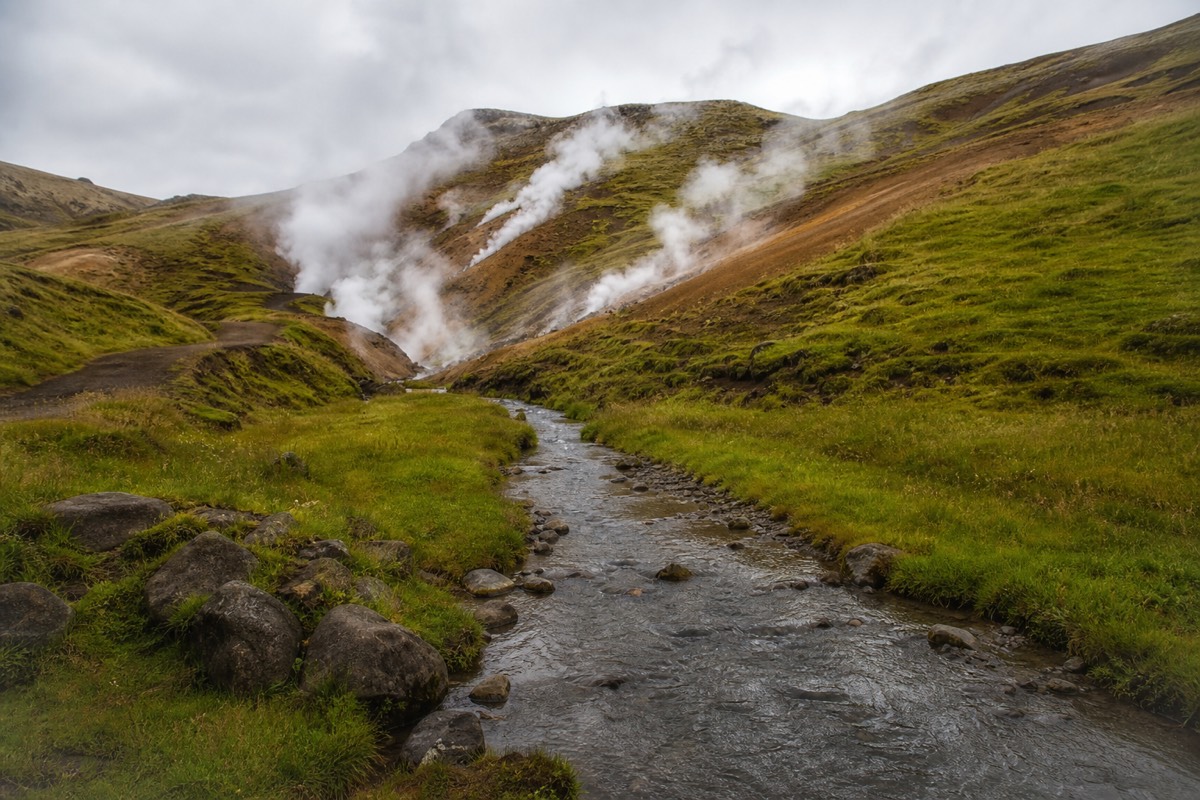
Booking Choice: Reykjadalur is a free 6–7 km return walk with basic changing screens and no rentals. Go independently if prepared; choose the guided river hike for transport and trail support, or a lagoon when facilities matter more. View Private Reykjadalur Hot River Hike
The walk, and what a soak costs elsewhere
Reykjadalur charges nothing to get in the water. The only money involved is the car park. Lagoon prices are 2026 adult entry from the operators' own listings.
What is Reykjadalur, and why is the river warm?
Reykjadalur is a geothermal valley above the town of Hveragerdi, about 45 km east of Reykjavik. Hot springs feed a stream at the top of the valley, cold water joins it further down, and somewhere in between the mix lands at bathing temperature. You walk up until the river is warm enough to sit in.
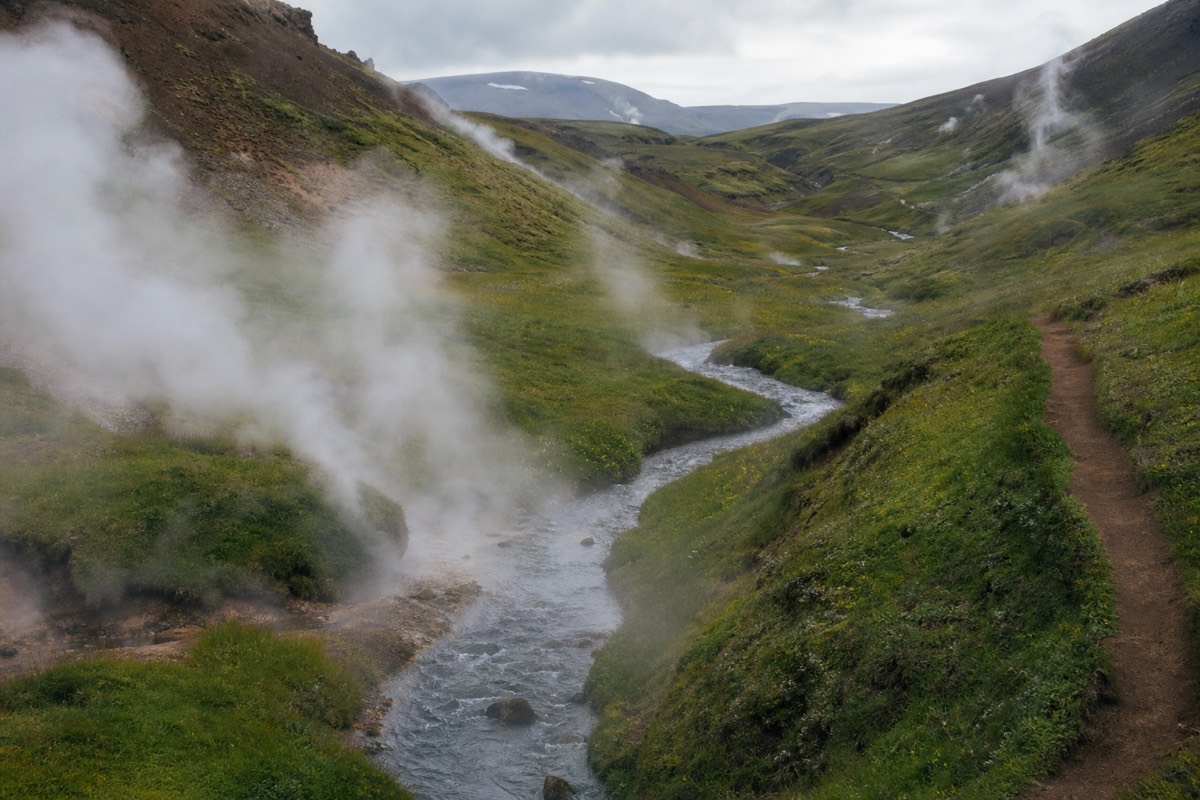
The name translates roughly as steam valley, and it earns it. Vents along the hillsides push white columns into the air, the ground in places is warm to the touch, and the whole basin smells faintly of sulphur in the way that everything geothermal in Iceland does. Hveragerdi below it is built directly on a geothermal field, which is why the town grows tomatoes in greenhouses heated by the ground.
What makes Reykjadalur unusual is the absence of infrastructure around the water. There is no building, no attendant, no ticket. There is a wooden boardwalk with a few changing screens along the bathing stretch, put there to protect the riverbank from thousands of pairs of feet, and that is the extent of the development. Everything else is a river in a field.
That is also the reason it has become one of the most visited free attractions within an hour of the capital. Iceland's paid lagoons are excellent and expensive. This is the version where the price of entry is a walk, and for a lot of visitors the walk turns out to be the better half.
How long is the walk, and how hard is it?
Three to three and a half kilometres each way to the bathing stretch, with roughly 150 metres of climbing. That is a moderate walk rather than a hike: steady uphill on a maintained path, no scrambling, no exposure. Allow 45 minutes to an hour and a quarter each way depending on pace and weather.
The gradient is front-loaded. The first section out of the car park climbs steadily beside a gorge, which is where anyone who underestimated the outing finds out, and then the valley opens and the path flattens into a gentler traverse along the hillside. Steam vents appear on both sides. There is a small bridge, a few boggy patches after rain, and then the boardwalk.
Underfoot it is dirt and gravel that turns to mud in wet weather and to ice in cold weather. Trainers work in dry summer conditions and are a poor idea in anything else. The path is well used and easy to follow in daylight, though in low cloud the valley loses its landmarks quickly.
| The number | What it is | What it means in practice |
|---|---|---|
| 3 to 3.5 km | One way to the bathing area | 6 to 7 km round trip on foot |
| About 150 m | Total ascent | Steady, front-loaded, no technical sections |
| 45 to 75 min | Walking time up | Faster coming down, roughly 40 to 60 min |
| 2.5 to 3.5 hrs | Whole visit from the car | Walk, soak, change, walk, allowing an hour in the water |
| ISK 300 per hour | Parking rate | Or ISK 1,000 for up to five hours, which covers a normal visit |
| About 45 km | Distance from Reykjavik | Roughly 40 minutes on Route 1, no gravel involved |
Compared with the highland days people attempt from the same city, this is a modest outing. The Landmannalaugar day trip asks for eleven hours and a 4WD to reach a warm river. Reykjadalur asks for a morning.
What does Reykjadalur actually cost?
ISK 300 per hour to park, or ISK 1,000 for up to five hours. That is the entire bill. There is no admission, no locker fee and no rental of anything, because there is nothing there to rent from. The river has no gate, no opening hours and nobody selling tickets at the top of the path.
The five hour ticket is the one to buy. A realistic visit runs two and a half to three and a half hours, and paying by the hour on a meter while you are an hour's walk up a valley is a needless piece of arithmetic to be carrying around. Buy the block, walk, and stop thinking about it.
| Line | Reykjadalur |
|---|---|
| Admission to the water | None |
| Parking | ISK 300 per hour, or ISK 1,000 for up to five hours |
| Towel | Bring one; nothing is available on site |
| Changing facilities | Wooden screens on the boardwalk, no building, no lockers |
| Food and drink | Nothing above the car park; carry water |
| Getting there without a car | Scheduled bus to Hveragerdi, then a walk or taxi to the trailhead |
Worth naming the hidden cost: there are no lockers, so whatever you carry up sits in a pile on a boardwalk while you are in the water. Take the minimum, keep valuables in a dry bag inside your rucksack, and do not leave anything visible in the car at the bottom.
How does it compare with the paid lagoons?
On price it is not a contest. Reykjadalur costs a parking ticket. The Secret Lagoon at Fludir is ISK 4,500 for an adult. Blue Lagoon Comfort entry starts at ISK 11,990 with dynamic pricing on top, and Sky Lagoon runs ISK 13,990 for Saman or ISK 16,990 for Ser.
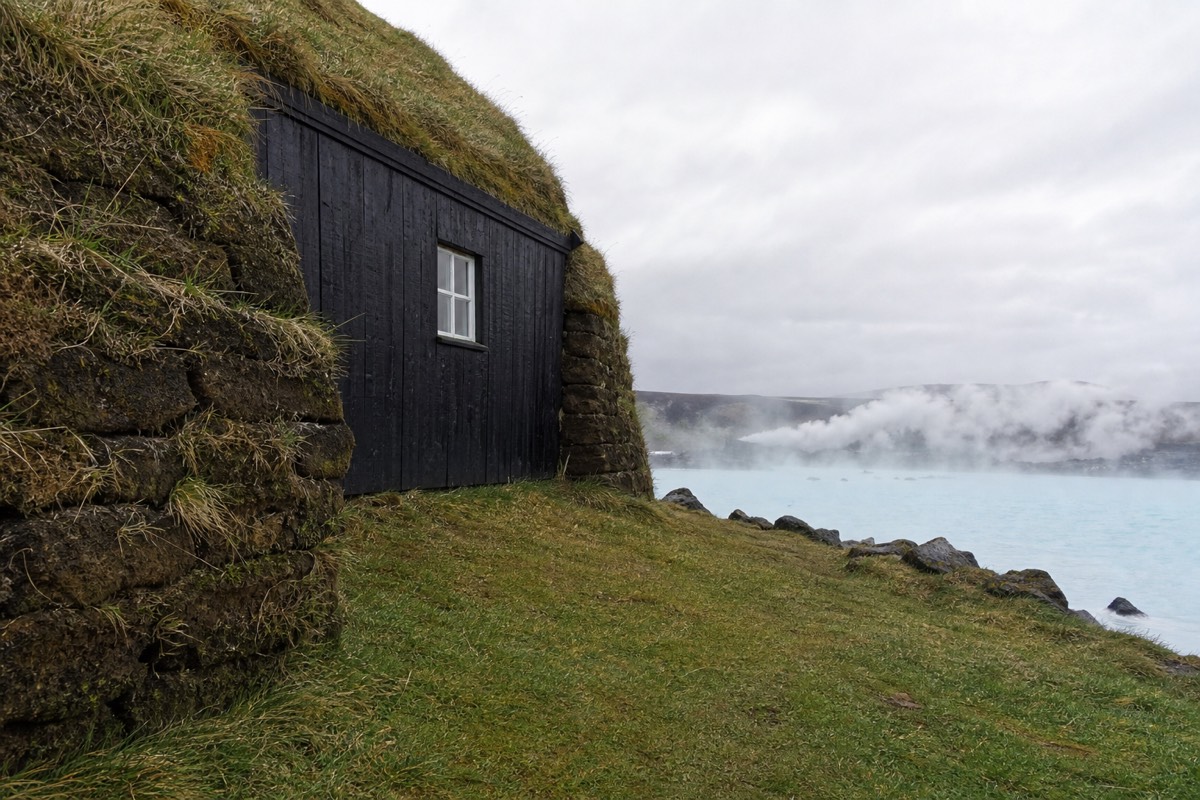
On experience they are different products entirely, and pretending otherwise does nobody any favours. The lagoons give you warm changing rooms, showers, a bar in the water, silica masks and a guaranteed temperature. Reykjadalur gives you a river in a valley, a wooden screen to change behind, and whatever the weather is doing to your shoulders while your legs are warm.
| Place | Adult entry | Effort to reach | What it is good at |
|---|---|---|---|
| Reykjadalur river | Parking only, ISK 1,000 for five hours | 6 to 7 km walk, 150 m climb | Free, wild, earned, no booking |
| Secret Lagoon, Fludir | ISK 4,500 | Drive up, walk in | Old-fashioned, uncrowded, on the Golden Circle route |
| Blue Lagoon | From ISK 11,990, dynamic | Drive up, timed entry | The famous one, full spa infrastructure |
| Sky Lagoon, Saman | ISK 13,990 | Seven minutes from downtown | Infinity edge over the sea, closest to the city |
| Sky Lagoon, Ser | ISK 16,990 | Same | Private changing, the upgrade tier |
The honest recommendation for a week in Iceland is one of each. Do Reykjadalur for the version with no roof and no queue, and one paid lagoon for the version where somebody hands you a towel. If you are choosing between the two big names, our Sky Lagoon versus the Blue Lagoon comparison settles it on price, travel time and crowd patterns, and our Blue Lagoon day trip guide covers the logistics of getting to the famous one from the city.
Where along the river do you actually get in?
At the top of the marked bathing stretch, where the boardwalk and the changing screens are. The water gets hotter the further upstream you walk and cooler as you move down, so people move along the bank until they find a section that suits them rather than picking a spot from a photograph.
The mechanics are simple once you are there. Hot springs feed the stream from above, cold tributaries join along the way, and the result is a temperature gradient rather than a single pool. Two people sitting six metres apart can be having noticeably different experiences. Move up if you are cold. Move down if your feet are complaining.
Depth is modest. This is a river to sit in with your legs out, not to swim in, and the bed is stones and gravel, so bare feet on the walk in and out of the water is the small discomfort everyone accepts. Water shoes or old sandals in the rucksack are a genuinely good idea and almost nobody brings them.
The changing screens are wooden, partial and public. Icelandic pool etiquette elsewhere involves a thorough shower before entry, and while there is no shower here, the same underlying courtesy applies: the river is a natural watercourse, not a bathtub, so no soap, no shampoo and nothing left behind. Carry everything out, including the things that are not yours.
Position matters for comfort as well as temperature. The bank on the boardwalk side is shallow and stony, which is where most people sit, while the far side runs slightly deeper and holds heat better on a windy day. If the wind is up, look for a stretch where the bank rises behind you, because the difference between shoulders in the wind and shoulders out of it is the difference between forty minutes in the water and ten.
Crowding follows a predictable curve. The boardwalk is quiet before ten in the morning, busy from midday until about four, and quiet again in the early evening. On a July Saturday the middle of that curve gets genuinely tight, with people sitting close enough to share conversations they did not intend to. On a Tuesday in September you can have a stretch of river to yourself for an hour.
What do you take up the valley?
A swimsuit worn under your clothes to skip the changing screens, a towel you do not mind losing, water shoes for the stones, a warm layer for the walk down while you are damp, and a dry bag for the wet swimsuit afterwards. That is the whole list, and forgetting the last two is what people regret.
The wet-and-windy sequence is the part first-timers underestimate. You are warm in the water, then you are standing on a boardwalk in Icelandic wind with wet skin, then you are walking three kilometres downhill. A proper insulating layer and a windproof shell turn that from miserable into pleasant. Our what to wear on an Iceland day trip guide covers the layering system in full, and it applies here with the addition of a towel.
| Item | Why | Skip it? |
|---|---|---|
| Swimsuit, worn underneath | Changing screens are basic and public | No |
| Towel, small and quick-drying | Nothing is available on site | No |
| Water shoes or old sandals | The riverbed is stones and gravel | Only if your feet are tough |
| Windproof shell and a warm mid-layer | For the damp walk back down | No |
| Dry bag or plastic sack | Wet swimsuit versus everything else in the bag | No |
| Head torch, autumn to spring | Daylight runs out fast outside summer | Only in high summer |
| Microspikes, winter | The path ices over and the gradient is real | Only in summer |
| Water and a snack | Nothing is sold above the car park | No |
Can you do Reykjadalur in winter?
Yes, and warm water under cold air is the best version of it, but two things change: the path ices over, and the daylight collapses. Late December in Reykjavik gives about four to five hours of light, sunrise near 11:20 and sunset near 15:30, barely enough for a seven kilometre round trip with a soak in it.
The practical winter plan is to be walking by half past eleven, in the water by half past twelve, and heading down by half past two. That leaves margin before the light goes. Microspikes over your boots make the icy sections ordinary rather than treacherous, and a head torch belongs in the bag even if the arithmetic says you will not need it.
Wind is the variable that cancels a winter attempt, not cold. Getting out of warm water into a 20 metre per second gust with wet hair is a different category of unpleasant, and the walk down after it is worse. Check the Icelandic Met Office forecast the night before and again at breakfast, and check SafeTravel for any alerts covering the southwest.
| Season | Trail conditions | Crowds | Verdict |
|---|---|---|---|
| June to August | Dry to muddy, easy | Highest, car park fills at weekends | Go early or late in the day |
| September and October | Wet, autumn colour in the valley | Falling fast | Arguably the best trade of all |
| November to January | Ice, short daylight | Low | Microspikes, head torch, midday start |
| February and March | Ice, but the light is returning | Low | The classic steam-in-snow version |
| April and May | Thaw, mud, meltwater in the stream | Rising | Good, expect wet feet on the path |
How does Reykjadalur fit into a day out of Reykjavik?
It is a half day, not a full one. Forty minutes each way on Route 1 plus three hours in the valley leaves most of the day free, which makes it the natural morning half of a pairing rather than a standalone outing.
Geography does the work here. Hveragerdi sits on the road east, so the valley pairs cleanly with almost anything on the south coast or the Golden Circle route. Do the river in the morning while the car park is empty, then continue east or north rather than backtracking to the city. That is the single best piece of routing advice on this page.
| Pairing | Shape of the day | Works because |
|---|---|---|
| River in the morning, Golden Circle in the afternoon | Full day, self-driven | Hveragerdi is on the way to the loop, not a detour |
| River, then east toward the waterfalls | Long day, self-driven | Same road, and the coast opens up an hour later |
| River in the morning, city in the afternoon | Half day | Back in Reykjavik by two with the evening intact |
| River, then an aurora hunt after dark | Split day, autumn to spring | Uses the daylight and the darkness separately |
| River as the day between two long tour days | Recovery day | Movement without eleven hours in a vehicle |
If you are already planning a full loop, the classic Golden Circle tour covers the same direction of travel with the driving handled, which frees the morning for the valley. For visitors trying to fill short windows rather than whole days, our half-day trips from Reykjavik guide lists what else fits into three or four hours, and the Reykjavik to Vik route picks up exactly where this road carries on east.
How do you reach Reykjadalur without a car?
Take the scheduled coach east to Hveragerdi, then cover the last stretch to the trailhead on foot or by local taxi. It is one of the very few genuinely wild spots near Reykjavik that a carless visitor can reach on public transport, though it adds time at both ends of the day.
Hveragerdi sits directly on the main road east, which is why the bus works here and does not work for most Icelandic hiking. The coach drops you in the town rather than at the trailhead, and the access road up to the car park adds a further walk on top of the 3 to 3.5 kilometres you were already planning. Budget for that honestly rather than discovering it in the rain.
The taxi option is worth considering for the outbound leg specifically. Walking the access road at the start of the day eats energy you want for the climb, and the fare from the town centre is short. Coming back down, the extra distance matters much less, because you are descending and the bus timetable rather than your legs sets the pace.
Check the return coach times before you start walking up, and then subtract half an hour from whatever you planned. Missing the last bus back from a town forty-five kilometres from the capital is a solvable problem, but it is an expensive one, and the valley gives you no phone signal to sort it out from. Our Reykjavik without a car guide covers which other stops are reachable the same way and which genuinely require wheels.
The alternative that solves all of it is to attach the valley to a day somebody else is driving. A guided route heading east passes the turnoff, so the practical carless plan for a short trip is often to spend one day on a full guided route and one morning on the bus to the river, rather than trying to make public transport carry the whole week.
What are the real risks in a geothermal valley?
Scalding, not drowning. The springs feeding the river are far hotter than the bathing stretch, the ground beside the path is unstable in places, and thin crust over hot mud is a genuine hazard. Every serious incident in valleys like this one comes from leaving the marked trail.
Stay on the path and stay in the marked bathing section. Upstream of it the water is too hot to sit in and gets hotter fast, and a pool that looks inviting can be well above the temperature skin tolerates. This applies double to dogs and to children, neither of whom read steam as a warning.
The second risk is ordinary and more common: weather. The valley is exposed, cloud drops into it quickly, and a comfortable walk up can become a cold, wet, disorienting walk down within the hour you spend in the water. Nobody has ever regretted carrying an extra layer up a hill in Iceland.
Third, and least dramatic, is the car park. It fills, it sits at the end of a short unsealed access road, and it is not supervised. Leave nothing on show. If the trailhead is full on a summer weekend, the answer is to come back at four in the afternoon rather than to invent a parking space.
Who should skip Reykjadalur?
Anyone who cannot comfortably walk seven kilometres with a hill in the middle, anyone travelling with very small children, and anyone whose idea of a hot spring involves a changing room and a drink. The valley is honest about what it is: a walk with a reward at the end, not a spa.
Mobility is the clearest line. There is no shorter route in, no shuttle and no accessible path, so if the walk is doubtful then the visit is doubtful. The Secret Lagoon at Fludir gives you the same warm water for ISK 4,500 with a car park thirty metres from the changing rooms, and our guide to day trips that work for seniors lists the rest of the low-effort options.
| If this is you | Reykjadalur | Better fit |
|---|---|---|
| Happy walkers, any season | Exactly what it is for | Go early, take spikes in winter |
| Limited mobility or a bad knee | No shorter way in | Secret Lagoon or Sky Lagoon |
| Toddlers in the group | Seven kilometres is a lot to carry | A town pool, or a lagoon with facilities |
| One day in Iceland | Uses a morning on a walk | A full-day route with more variety |
| Wants a bar in the water | Not that kind of place | Blue Lagoon or Sky Lagoon |
| Wants the free, wild version | The best one near the capital | Go, and go on a weekday |
For everyone else, this is one of the highest-value mornings within an hour of the capital, and it costs less than a coffee and a pastry in town. Pair it with one of the day trips from Reykjavik tours running east on the same road and you get a walk, a soak and a full coastal or Golden Circle day out of a single early start, which is about as much as one day in Iceland can reasonably hold.