Secret Lagoon Iceland: The Fludir Hot Spring on the Golden Circle
Gamla Laugin at Fludir is the oldest swimming pool in Iceland and the cheapest proper soak on the Golden Circle route. It has no swim-up bar, no robe, and no silica mask, which turns out to be most of the appeal.
Choose the Secret Lagoon when you want a simple Golden Circle soak; choose the right booking path according to whether you are driving, need transport, or prefer a full spa ritual. Explore Golden Circle And Secret Lagoon
Booking Choice: Best for a Golden Circle day: book admission if driving yourself or choose the inclusive Reykjavik tour if car-free. Travelers prioritizing elaborate facilities and an easier city-based transfer should compare Sky Lagoon instead. View Golden Circle And Secret Lagoon
What a self-driven Golden Circle day actually charges you
Three of the route's four headline stops are free to enter. The lagoon is the only real ticket, and it costs less than a third of what the famous ones do.
What is the Secret Lagoon, and why is it called that?
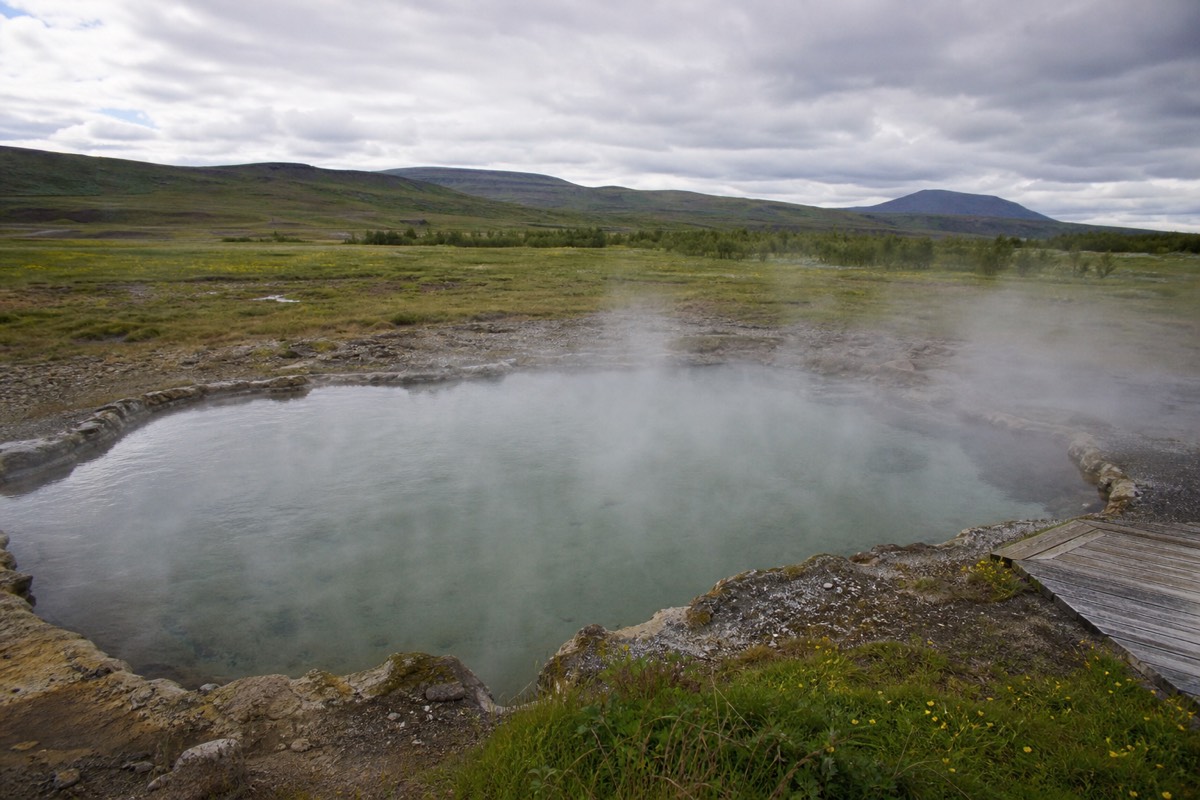
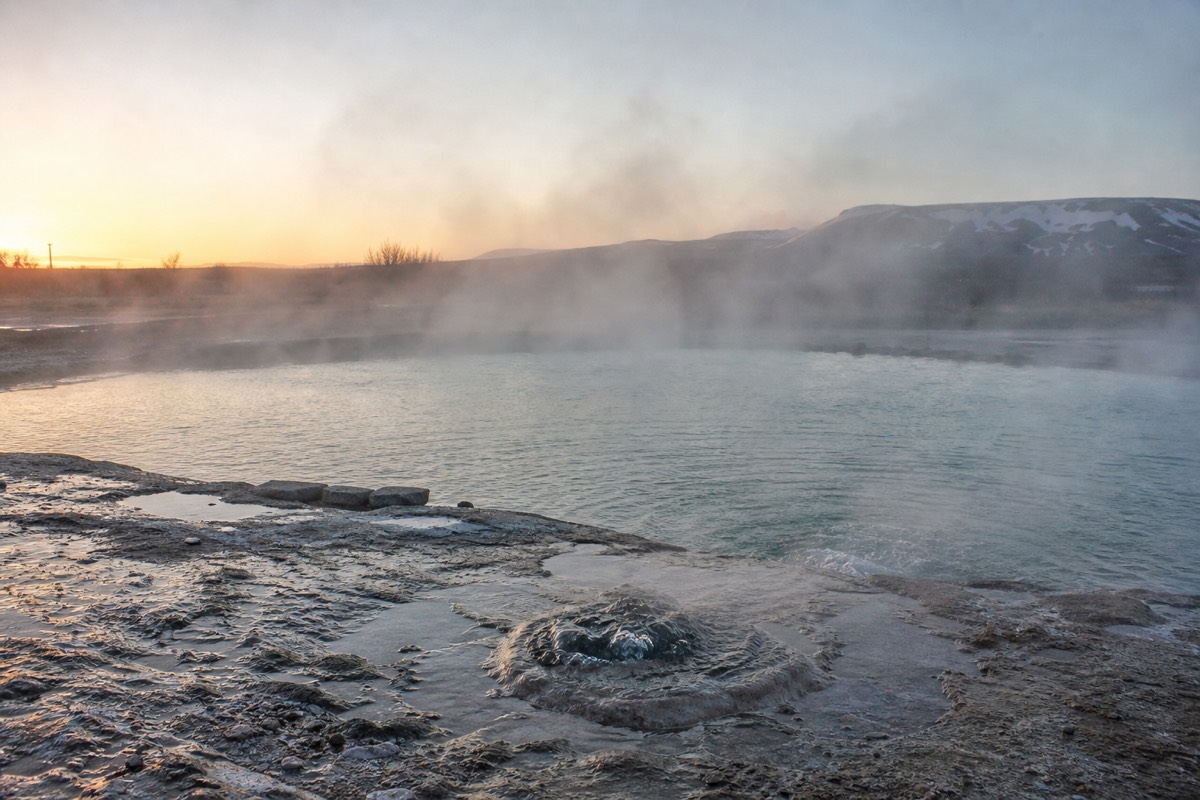
The Secret Lagoon is Gamla Laugin, the oldest swimming pool in Iceland, built in 1891 beside the village of Fludir about 110 km east of Reykjavik. It is a single natural-bottomed geothermal pool in a steaming field, fed by hot springs, with a small geyser erupting every few minutes at the edge. Adult entry is ISK 4,500.
The English name is a modern invention and slightly misleading, because the pool is neither secret nor hidden: it sits at the edge of a working village and appears on every Golden Circle itinerary that has a lagoon in it. The Icelandic name is more honest. Gamla Laugin means the old pool, and old is the point. Swimming lessons were held here from the 1900s, the village used it for decades, and it was left to sit for years before being cleaned up and reopened for visitors.
What you get is a rectangle of warm water with a rough natural floor, a boardwalk running around the steaming ground behind it, and a low wooden building with changing rooms and a small cafe. There is no silica, no swim-up bar, no seven-step ritual, no robe. The pool holds a steady soaking temperature all year because the springs feeding it do not care what month it is.
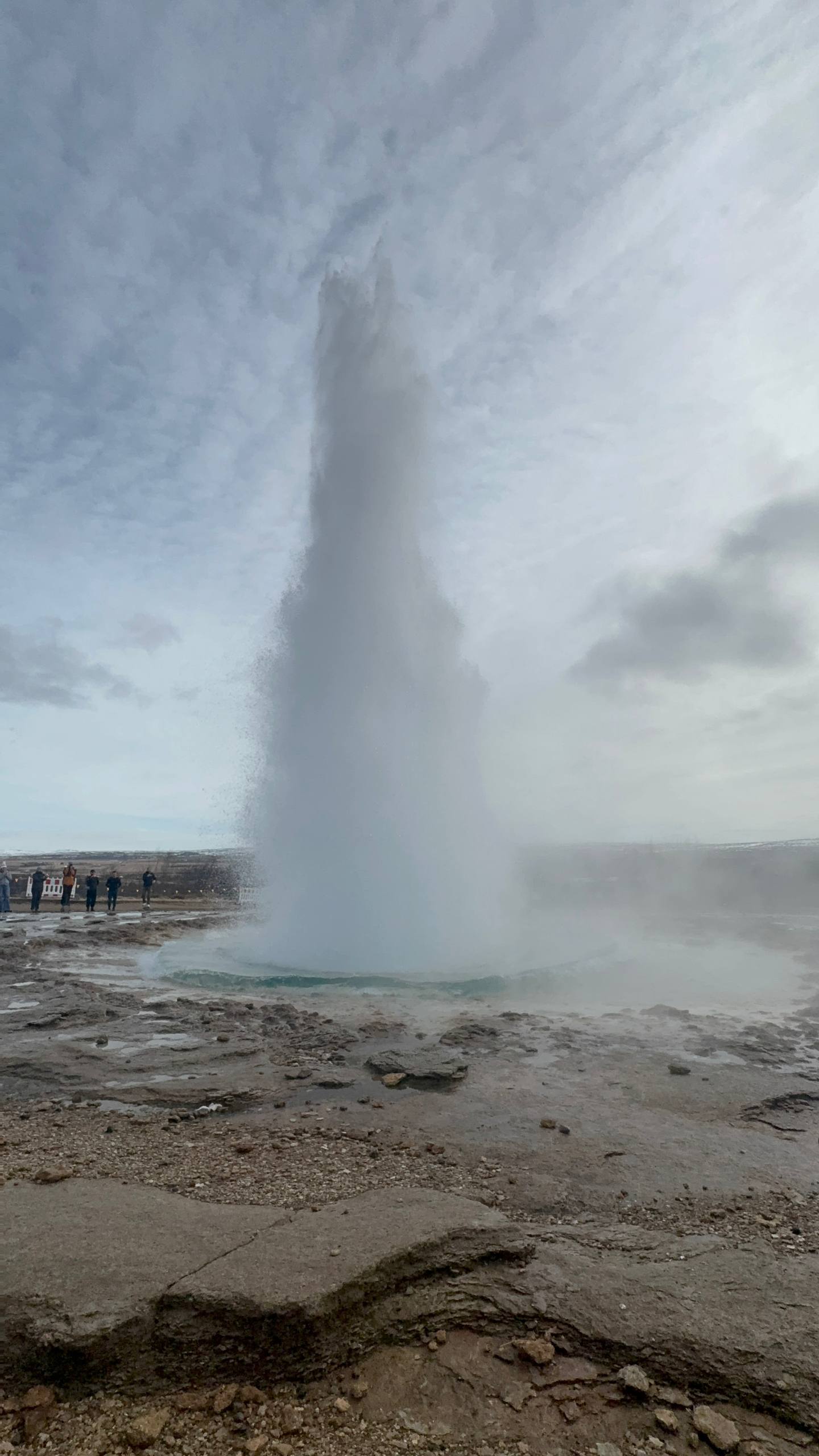
The geothermal field behind the pool is the part people underestimate. A short boardwalk loop takes you past bubbling vents, a hot stream, and Litli Geysir, a small geyser that puffs and spits on its own schedule. It is not Strokkur, and that is fine. Standing in warm water while the ground beside you steams is a more Icelandic experience than anything a spa can design.
| Secret Lagoon at a glance | Detail |
|---|---|
| Icelandic name | Gamla Laugin, the old pool |
| Built | 1891, the oldest swimming pool in Iceland |
| Where | Fludir, about 110 km from Reykjavik, on the Golden Circle route |
| Adult entry | ISK 4,500, ages 15 and over |
| Pool floor | Natural, rough in places; water shoes are not a bad idea |
| Facilities | Changing rooms, showers, small cafe, towel and swimsuit rental |
| On site | Boardwalk over the geothermal field, Litli Geysir, hot stream |
| Time needed | An hour in the water, 90 minutes door to door on site |
What does it cost, and how does that compare?
Adult entry is ISK 4,500 for anyone 15 and over. That is roughly a third of a Sky Lagoon Saman pass at ISK 13,990 and well under half of the cheapest Blue Lagoon Comfort ticket at ISK 11,990. Towels and swimsuits rent for a few hundred krona more if you turn up without them.
The price gap is not a quality gap in any simple sense. You are paying less because you are getting less built environment: no designed sequence of rooms, no bar in the water, no mask station, no branded skincare on the way out. What you are getting instead is a pool that costs a family of four less than one adult ticket at the famous lagoon on the Reykjanes Peninsula.
Put next to the rest of a Golden Circle day, the lagoon is also the only significant ticket. Thingvellir charges nothing to enter and ISK 1,000 per car to park, with one ticket covering the main lots for the whole day. Geysir and Gullfoss are free at both the gate and the car park. Kerid asks ISK 600 to 700 per adult with under-12s free. Add it all up and a self-driven day with a soak at the end costs less in entry fees than a single premium lagoon pass.
Set against a guided day the calculation changes shape, because a tour absorbs fuel, parking, entry fees and the driving itself into one number. Our comparison of self-drive vs guided days runs the arithmetic properly, and the gap is narrower than most visitors assume once a rental, insurance and fuel are on the table.
| Where you soak | Adult entry | Drive from Reykjavik | What you are paying for |
|---|---|---|---|
| Secret Lagoon, Fludir | ISK 4,500 | About 110 km, 1 hr 30 | A historic natural pool in a steaming field |
| Blue Lagoon Comfort | From ISK 11,990 | 49 km, 45 to 50 min | Silica water, mask, drink, towel, scale |
| Sky Lagoon Saman | From ISK 13,990 | 7 to 15 min | Ocean infinity edge, seven-step ritual |
| Sky Lagoon Ser | From ISK 16,990 | 7 to 15 min | All of the above plus private changing |
| Reykjadalur hot river | Parking from ISK 300 per hour | 45 min, then a walk | A free hot stream you have to earn |
Where is Fludir, and how do you get there?
Fludir sits in the Arnessysla farming country roughly 110 km east of Reykjavik, about an hour and a half of driving without stops. It is inside the Golden Circle loop rather than off it, sitting between Kerid crater and the Geysir area, which is why so many itineraries drop it in as the final stop before the drive home.
The village runs on geothermal heat, which is visible in the greenhouse rows on the approach and in the steam that hangs over the fields on a cold morning. The road in is paved the whole way and stays open through winter, though the last stretch is a rural route where the plough arrives later than it does on the main highway. Check road conditions before a December start rather than assuming.
Getting there without a car is the honest weak point. There is no scheduled bus that works as a day trip from Reykjavik, so the practical options are renting, joining a tour that stops there, or skipping it. If you are travelling car-free, the guide to Reykjavik without a car sets out which day trips actually work on the bus network, and the Fludir pool is not one of them.
Guided coverage is uneven. Not every Golden Circle listing includes a lagoon, and the ones that do split between the Secret Lagoon and the Blue Lagoon. A classic Golden Circle tour that ends at the Blue Lagoon is the more common shape, and it works because that lagoon sits on the way back toward the airport rather than in the middle of the farmland.
| How you get there | Time from Reykjavik | Cost shape | Verdict |
|---|---|---|---|
| Rental car, direct | 1 hr 30 each way | Car, fuel, ISK 4,500 entry | Best if the lagoon is the whole plan |
| Rental car, on a Golden Circle loop | Slots in at hour six or seven | Same car, no detour worth mentioning | The obvious way to do it |
| Guided tour with a lagoon stop | Depends on the itinerary | Entry usually inside the tour price | Check which lagoon before booking |
| Public bus | Not a workable day trip | n/a | Choose a city lagoon instead |
| Taxi | 1 hr 30 each way | Far more than the entry ticket | Only for groups splitting the fare |
What does an hour in the pool actually feel like?
Quieter than you expect and rougher underfoot. The floor is natural rock and gravel rather than tile, the steam sits low over the water in cold weather so you lose sight of the far end, and the loudest thing in earshot is the small geyser going off behind the boardwalk. Most people last an hour and leave pink and slow.
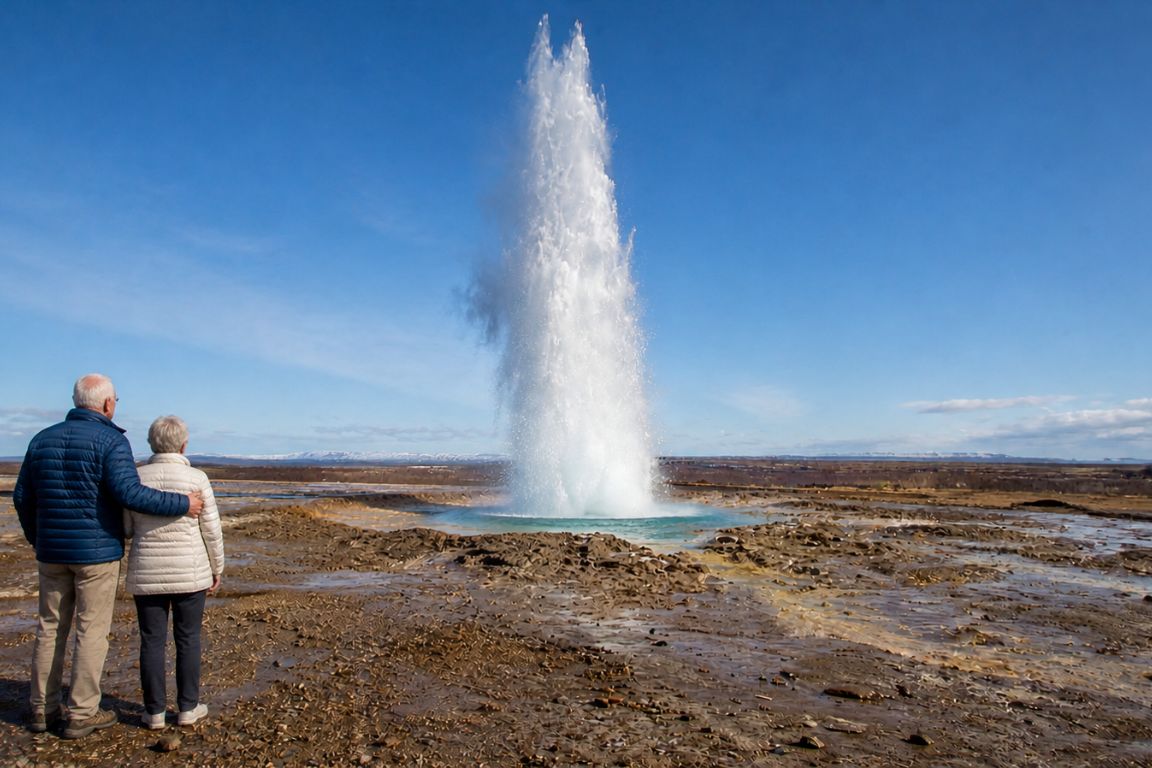
The arrival is unglamorous in the right way. A low building, a wooden deck, a changing room that smells of sulphur, and then a short cold walk to the steps. In January that walk is genuinely unpleasant for about eight seconds and then entirely worth it. In July it is nothing.
Once you are in, the pool reveals its shape slowly. There are warmer patches where the springs feed in and cooler ones near the far wall, so people drift around finding a temperature they like rather than staying put. The bottom is uneven, with patches of smooth rock and patches of loose gravel, which is part of the character but also the reason some visitors bring water shoes.
The geothermal field behind is worth ten minutes of your time before or after. The boardwalk loop is short, flat and safe, and it passes vents, a run of hot stream, and Litli Geysir, which spits without much warning on a cycle of a few minutes. Steam blows across the path when the wind is right, and in winter the whole area glows under the pool lights.
What is missing is any sense of occasion, and whether that matters depends on you. There is no bar, the cafe is small, and once you are warm there is nothing else to do. People who want a designed afternoon, with a ritual to follow and a bar in the water, are shopping for a different kind of place entirely.
How does it fit into a Golden Circle day?
It belongs at the end. Do Thingvellir first while the light is good and the car parks are empty, take Geysir and Gullfoss mid-morning, drop into Kerid on the way south, and put the lagoon at hour six or seven when everyone is tired of standing up. That order also keeps you away from the coach wave at every stop.
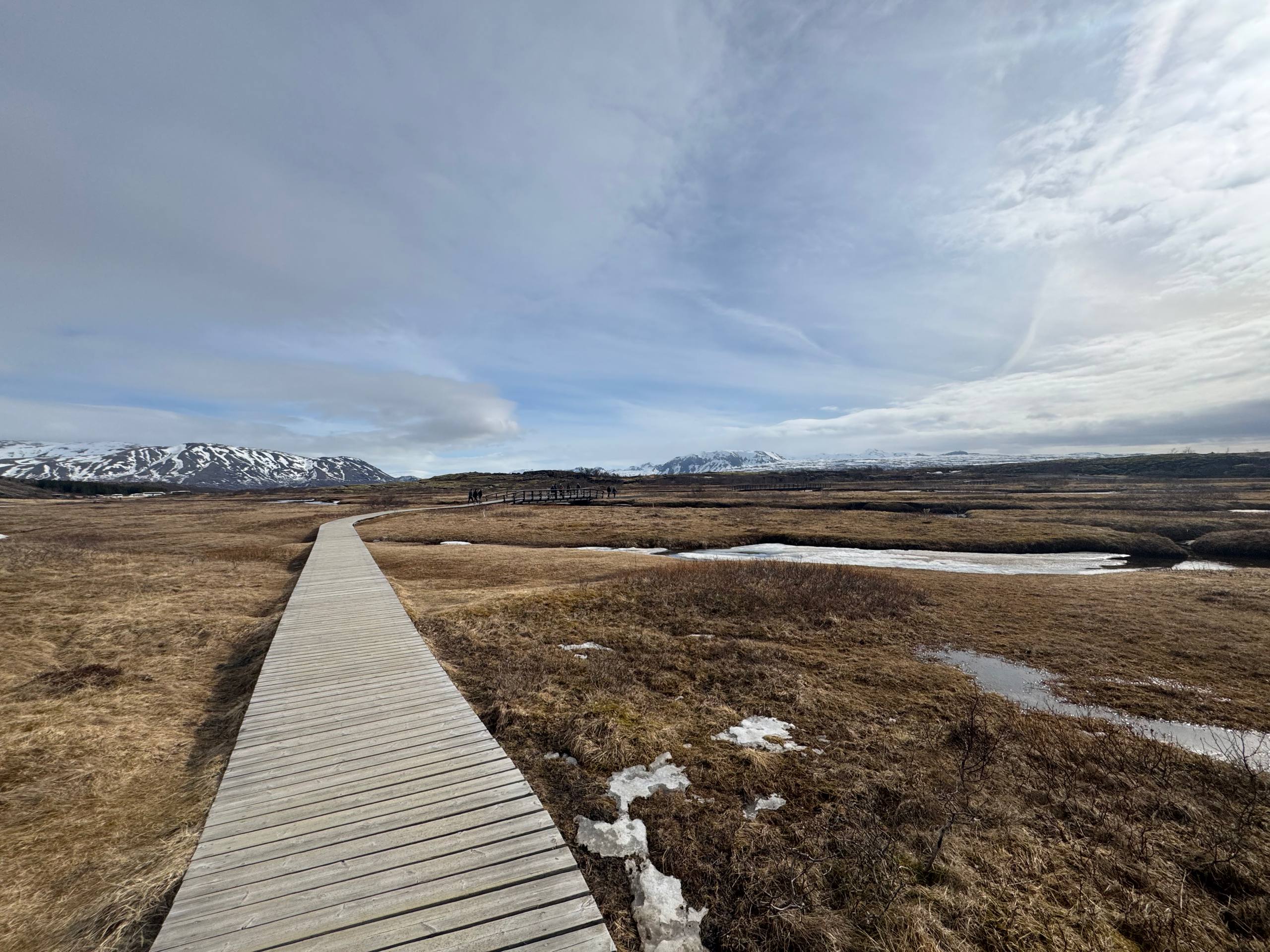
The loop itself runs roughly 230 km and takes six to eight hours with stops, so adding a 90 minute soak makes it a genuine full day rather than a long morning. In summer that is easy. In late December, with sunrise near 11:20 and sunset near 15:30, you get four or five hours of usable light, which means the sightseeing has to be compressed and the lagoon lands in the dark. That turns out to be pleasant rather than a problem, since the pool is lit and the field steams under the lights.
Two stops on the loop deserve their own planning. The Thingvellir National Park guide covers the rift walk and where to park, and the Kerid crater guide covers the rim loop and the fee. If you want to know what the whole day feels like from the passenger seat, what the Golden Circle day is really like walks through it stop by stop. The Day Trips From Reykjavik tours we run take the same stops in the same order for the same reason: the front of the day is where the quiet is.
| Hour | Where you are | Why it works here |
|---|---|---|
| 08:00 | Leaving Reykjavik | Beats the first coaches out of the city by an hour |
| 08:45 to 10:15 | Thingvellir rift and Oxararfoss | Empty paths, ISK 1,000 parking covers all lots |
| 11:00 to 11:45 | Geysir and Strokkur | Three or four eruptions is enough for anyone |
| 12:00 to 13:00 | Gullfoss and lunch | Falls first, food second, before the queue builds |
| 13:45 to 14:15 | Kerid crater | Quick rim loop, ISK 600 to 700 entry |
| 15:00 to 16:30 | Secret Lagoon, Fludir | Warm water at exactly the moment your legs give up |
| 18:00 | Back in Reykjavik | Enough left in the evening for dinner in town |
What do you need to bring?
A swimsuit, a towel and flip flops cover it. Everything else is optional, and everything you forget can be rented at the desk for more than it would have cost you at home. The one item worth adding that nobody mentions is a pair of water shoes, because the pool floor is natural rock.
The shower rule applies here as it does at every pool in Iceland: a full soap-and-water wash without a swimsuit, in a communal changing room, before you go anywhere near the water. Icelandic pools run very light chlorination and this is the trade. It takes 90 seconds and nobody is looking at you.
Hair is less of an issue than at the silica lagoons, because this water does not have the same drying effect. Long hair tied up is still sensible, mostly because there is nowhere to dry it properly and the drive back is cold.
| Item | Bring it? | Note |
|---|---|---|
| Swimsuit | Yes | Rental exists but costs more than it should |
| Towel | Yes | Also rentable at the desk |
| Flip flops | Yes | The walk from changing room to steps is cold and wet |
| Water shoes | Worth it | The pool floor is natural rock and gravel |
| Warm hat for afterwards | Yes in winter | Wet hair plus an Icelandic car park is miserable |
| Waterproof phone pouch | Optional | Steam is hard on phones; there is no photo package here |
| Cash | No | Card everywhere, as it is across the country |
| Snacks | Maybe | The cafe is small and closes earlier than you think |
Which season suits it best?
Winter, by a clear margin. Warm water matters more when the air is at freezing, the steam is thick enough to hide the far end of the pool, and the visitor numbers collapse. Summer is pleasant but the pool is small, busy and competing with sixteen hours of daylight you could be spending outside.
The counterintuitive part is that the water itself never changes. A geothermal spring does not have a season, so the difference between a January soak and a July one is entirely about the air, the light and how many other people are in the pool with you. In January the contrast is the whole experience. In July it is just a nice swim.
There is a genuine aurora angle in the dark months too. Fludir is well outside the city glow, and a lagoon at 20:00 in February with a clear sky puts you in warm water under a dark horizon. Nothing is guaranteed, and the sensible move is to check the aurora forecast before committing to a late slot, but the odds are far better here than from a Reykjavik street.
| Window | Air and light | Crowd | Verdict |
|---|---|---|---|
| December to February | Near freezing, 4 to 5 hours of light | Lowest | Best of the year; steam, dark sky, empty pool |
| March and April | Cold, days lengthening fast | Low | Strong choice, still cheap and quiet |
| May | Mild, long evenings | Rising | Good, and the field is green again |
| June to August | Warm, light all night | Highest, book ahead | Fine, but the least distinctive |
| September and October | Cooling, aurora season back | Falling | The best compromise month is September |
| November | Dark and wet | Low | Cheap and quiet; watch the rural roads |
Secret Lagoon versus the famous ones, honestly
The Secret Lagoon wins on price, on quiet and on the fact that it is on the way. It loses on facilities, on the water itself, and on the sense of arriving somewhere designed. If you have one lagoon in your trip and you want the photograph everyone recognises, this is not it.
Think about it as a stop rather than a destination. Nobody drives 110 km from Reykjavik specifically to soak here, and the pool is not built to justify that trip. It is built to be the warm end of a day that already had four other stops in it, and in that role it is close to perfect.
The two big lagoons are destinations, and they are priced and designed accordingly. The Blue Lagoon works around a flight because of where it sits. Sky Lagoon works around a full day because it takes so little of one. The comparison of Sky Lagoon vs Blue Lagoon covers the choice between those two in detail.
And if the appeal here is the cheapness and the lack of theatre, there is one more option below it. The Reykjadalur hot spring river asks for a walk of 3 to 3.5 km with about 150 m of climbing, charges nothing beyond parking at ISK 300 an hour or ISK 1,000 for up to five, and gives you a warm stream with no building of any kind attached.
| Factor | Secret Lagoon | Blue Lagoon | Sky Lagoon |
|---|---|---|---|
| Adult entry | ISK 4,500 | From ISK 11,990 | From ISK 13,990 |
| Distance from the city | 110 km | 49 km | 7 to 15 minutes |
| Water | Clear, natural floor | Milky, silica rich | Clear, geothermal seawater |
| Setting | Steaming farm field, small geyser | Black lava, industrial edges | Ocean horizon, turf walls |
| Time needed | 90 minutes | Half a day with transport | About 3 hours |
| Extras | Cafe, boardwalk | Mask, bar, restaurant, robes | Seven-step ritual, sauna, bar |
| Books out? | Summer afternoons | Days to weeks ahead | Popular evening slots |
| Best for | A Golden Circle day with a car | Arrival or departure day | A tired evening in the city |
Who should skip the Secret Lagoon?
Skip it if you have no car, if you have only one lagoon in the trip, or if the appeal of a hot pool for you is the surrounding luxury rather than the water. It is a modest place, and visitors who arrive expecting a spa leave slightly puzzled about what the fuss was.
Anyone travelling car-free should redirect entirely. There is no useful bus, and the taxi fare would buy several Sky Lagoon passes. The city lagoons exist for exactly this traveller.
Families should read the age rule first: entry is priced for 15 and over, with children admitted under the pool's own policy, so check before planning around it. And if your trip is short and heavy on driving already, a lagoon 110 km out that adds 90 minutes to a day you are already stretching may be the thing to cut. In that case a guided South Coast day trip gives more back per hour than a second warm pool.
Booking and etiquette that save the afternoon
Book ahead in summer, arrive with your own towel, shower properly, and put the visit at the end of the day rather than the middle. Those four decisions cover almost everything that goes wrong here, and none of them costs money.
The pool is small, so the difference between a good visit and a mediocre one is how many people are in it. Golden Circle traffic arrives in a clump between roughly 15:00 and 17:00 as self-drivers finish the loop. If you can be in the water before 14:00 or after 18:00, the same ISK 4,500 buys a noticeably better hour.
Check opening hours for your date rather than assuming. Rural Icelandic sites shorten their days in winter, and the cafe usually stops serving before the pool closes. If you are driving back in the dark, the safety service at SafeTravel is the right place to look for warnings on the rural stretches, which get less attention from the ploughs than Route 1 does.
Finally, treat it as what it is: a village pool with a good story and a great location. Arrive expecting Gamla Laugin rather than a resort and it is one of the better ISK 4,500 you will spend in this country.